Pakistan Steers Transit Routes Around Sanctions Pressure as Iran Trade Corridor Shifts
Islamabad has issued orders to reroute goods shipments to Iran via new corridors, a move that places the South Asian nation squarely in the crosscurrents of US maximum-pressure strategy and its own economic interests.
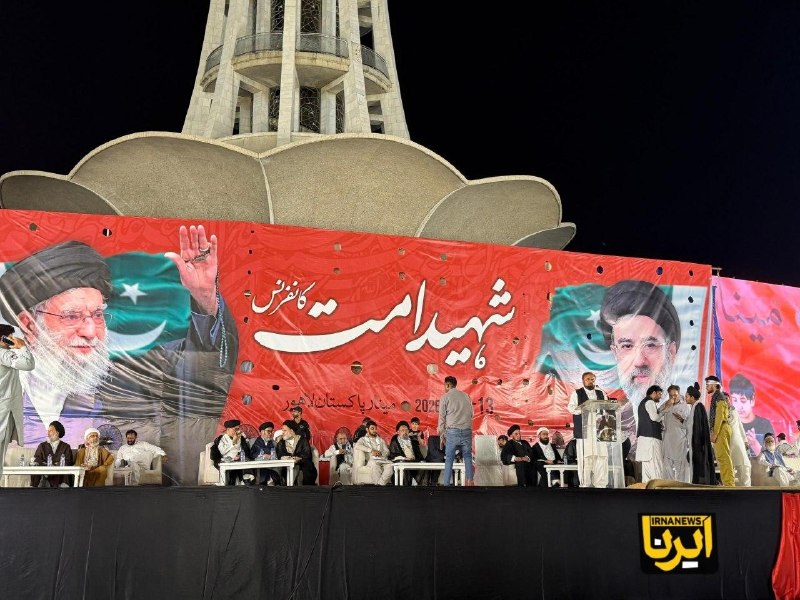
Pakistan's government has issued orders to reroute goods shipments bound for Iran through new overland corridors, according to a 26 April 2026 report by Pakistan's Tribune newspaper. The directive represents a deliberate shift in how Islamabad manages its eastern trade relationships at a moment when US sanctions architecture is applying acute pressure on states that continue commercial engagement with Tehran.
The order, which sources describe as a cabinet-level directive rather than an informal arrangement, signals that Pakistan intends to preserve its trade corridor with Iran even as Washington signals intolerance for what it classifies as sanctions-evasion infrastructure. Transit rerouting of this kind is not trivial — it typically involves border checkpoint upgrades, customs protocol realignment, and informal agreements with local authorities in border provinces who control the access points. That Islamabad has formalised the approach suggests the government considers the Iran trade relationship durable enough to warrant institutional investment.
The Geometry of the Sanctions Question
Washington's Iran sanctions regime does not operate uniformly across the Global South. Countries that share a land border with Iran — Pakistan, Afghanistan, Iraq, Turkey — have always faced a structural challenge: their eastern and northern trade relationships run through territory where sanctions-compliance is measured differently than in Western financial capitals. The result is a persistent grey zone where border commerce continues on terms that neither fully satisfy US legal standards nor trigger automatic enforcement actions.
Pakistan's position in this landscape is particularly exposed. The two countries share a 959-kilometre frontier that includes the Taftan crossing in Balochistan, a route that has historically handled everything from consumer goods to fuel shipments. Pakistani traders and logistics operators have long used the Taftan corridor because it is the shortest land route between the two markets — an economic fact that sanctions do not erase. The new routing arrangements, if the Tribune reporting is accurate, suggest Islamabad is attempting to maintain that trade function while reducing the visibility of its operations in ways that might attract Treasury Department scrutiny.
Where the Pressure Lands
The immediate effect of rerouted transit is felt not in Washington but in the border provinces of Balochistan and Sistan-Balochistan on the Iranian side. Local traders on both sides of the frontier depend on the movement of goods — textiles, machinery parts, foodstuffs, and consumer products — that feed provincial economies where formal employment options are limited. A disruption to transit routes without an alternative creates immediate hardship for these communities.
What the sources do not specify is whether the new routes involve third-country intermediaries — for example, goods routed through the UAE or Turkmenistan before reaching Iranian market entry points — or whether they represent a straight reconfiguration of existing crossing protocols. The distinction matters: a third-country intermediary structure would carry different sanctions exposure than a direct-but-disguised rerouting. Islamabad's silence on the specifics suggests the government is managing the disclosure carefully.
The Multipolar Dimension
That a South Asian state is reworking its transit architecture rather than terminating Iran commerce speaks to a broader pattern in how middle-tier states are responding to the post-2022 sanctions environment. Pakistan is not alone in seeking transactional arrangements that preserve commercial relationships with targeted states while maintaining sufficient distance from US secondary sanctions. India, Turkey, and several Central Asian republics have pursued similar strategies — not out of ideological solidarity with Tehran, but because their domestic economies require the trade flows.
This is the structural reality that maximum-pressure frameworks often underweight: sanctions work by cutting off access to the international financial system, but land-border trade operates through different channels that are harder to surveil and structurally more resilient to financial exclusion. A Pakistani truck operator moving goods across the Taftan border is not wiring money through SWIFT; the transaction happens in physical space and local currency. That fundamentally changes the leverage calculus.
For Washington, the challenge is that enforcement against physical transit flows requires either border interception — which implicates sovereignty questions with a nuclear-armed state — or intelligence-driven designation of specific companies and individuals, a slower process that can be outrun by route-shifting. The fact that Islamabad is actively rerouting rather than winding down suggests the Pakistani government has assessed that it can stay below the enforcement threshold while continuing to serve its commercial interests.
What Comes Next
The next phase to watch is whether the US Treasury Department or State Department issues any designation notices tied to Pakistani logistics operators or border-facility operators currently involved in Iran-facing commerce. Such notices — if they come — would be a signal that the new routing has attracted scrutiny and that Islamabad's risk calculation was wrong. If they do not come, the rerouting will have succeeded in its immediate aim, and other border states will notice.
Also relevant is whether Pakistan seeks IMF programme support in the coming months, which would create a structural tension: Islamabad would need to demonstrate sanctions compliance as part of any Fund arrangement, potentially pulling back from the Iran transit arrangements it is currently formalising. That tension — between commercial interests on the eastern border and financial support from Western multilateral institutions — is the fault line this story will ultimately run along.
This article was filed from the Asia desk. Wire coverage of the Pakistan-Iran transit rerouting was thin at deadline; the Tribune reporting provided the primary institutional frame, supplemented by regional press monitoring. Western wire services did not carry independent verification of the cabinet directive as of publication.
Wire provenance
This editorial synthesis draws on the following public wire/social posts:
- https://t.me/tasnimnews_en/29841
- https://t.me/JahanTasnim/19234