Pakistan Orders New Transit Routes for Iran Trade, Defying Sanctions Architecture
Islamabad's decision to formalize alternative trade corridors with Tehran exposes the limits of US secondary sanctions enforcement in a region where economic survival increasingly overrides diplomatic alignment with Washington.
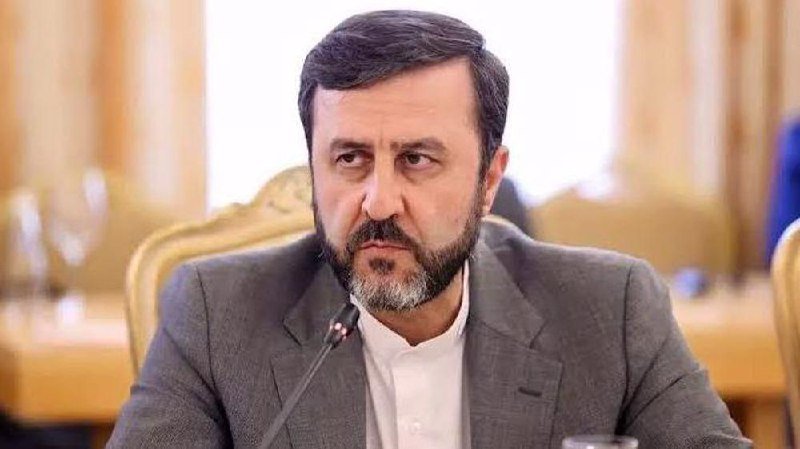
Pakistan's government has issued a formal order authorizing the transit of goods to Iran through newly established routes, according to reporting confirmed across multiple Iranian news outlets on 26 April 2026. The order, first cited by Pakistan's Tribune newspaper, marks a quiet but significant departure from the cautious posture Islamabad has maintained toward Tehran since the intensification of US sanctions on Iranian commerce.
The decision surfaces at a moment of acute pressure on Pakistan's foreign-exchange reserves and its relationship with Washington. It also raises direct questions about the enforceability of secondary sanctions — the mechanism by which the United States seeks to punish non-US entities that continue doing business with sanctioned Iranian sectors. Whether this order signals a strategic realignment or an ad-hoc response to domestic economic crisis will determine its downstream consequences for both countries and for the broader architecture of US financial pressure on Iran.
The Sanctions Gap in Practice
US secondary sanctions on Iran have operated on a simple premise: any third-country entity continuing significant trade with Tehran's designated sectors risks losing access to the US financial system. The penalty is not merely theoretical. Banks and corporations globally have recalibrated supply chains, rerouted trade flows, and in some cases exited Iranian markets entirely to avoid being cut off from dollar-denominated transactions or US correspondent banking networks.
Yet the enforcement record is uneven. Countries sharing a land border with Iran — where overland trade is difficult to route through intermediaries — have repeatedly found ways to maintain commercial relationships that fall below the threshold of visible US enforcement action. Turkmenistan, Afghanistan, and Iraq have all developed varying degrees of sanctioned-adjacent commerce with Tehran over the past decade, typically framing it in terms of humanitarian necessity or pre-existing treaty obligations.
Pakistan's new transit order fits this pattern. By formalizing what may have been informal cross-border commerce into a structured government directive, Islamabad is neither announcing a confrontation with Washington nor explicitly seeking to circumvent sanctions law. The language emerging from the Pakistani side, as reported by Tribune, emphasizes continuity of trade rather than defiance. Whether that framing survives contact with US Treasury's Office of Foreign Assets Control remains to be seen.
Economic Necessity and the Pakistan Context
Pakistan's foreign-exchange reserves have been a source of persistent concern for the International Monetary Fund, which has conditioned successive bailout programs on Islamabad's willingness to demonstrate external-account stability. Those constraints create pressure to find trade relationships that do not drain dollar reserves — an imperative that Iran, itself under hard-currency restrictions, is well positioned to accommodate through barter arrangements or non-dollar settlement.
The Iran-Pakistan gas pipeline project, delayed for years under US pressure, represents the most prominent symbol of this tension. Islamabad has repeatedly signaled interest in completing the connection to address chronic domestic energy shortfalls, while Washington has warned that proceeding would invite sanctions. The new transit order does not activate the pipeline, but it advances the broader normalization of Pakistan-Iran economic engagement that the pipeline project embodies.
For Iran, Pakistani overland transit offers access to a route that bypasses maritime chokepoints where US naval presence and insurance restrictions create friction for Iranian-linked cargo. The transit corridor also diversifies Iran's overland trade relationships beyond its primary reliance on Turkey, Iraq, and Afghanistan — a strategic vulnerability that has become more pronounced as sanctions enforcement has intensified.
The Counterargument: Limits of the Defiance Frame
It would be overdrawn to characterize Islamabad's order as an act of geopolitical rebellion against Washington. Pakistan's relationship with the United States remains multilayered: intelligence-sharing arrangements, IMF program dependencies, and a debt structure in which US-aligned multilateral institutions play central roles give Washington considerable leverage that a single trade directive does not erase.
Moreover, the order's scope matters. Transit of goods — goods moving through Pakistan toward Iran, rather than goods being purchased directly by Pakistani entities from Iranian suppliers — occupies a legally and diplomatically murkier space than direct bilateral trade. Pakistan's government may be calculating that transit arrangements, with appropriate documentation and routing through third-country intermediaries at the border, can be structured to minimize the exposure of Pakistani financial institutions to US enforcement action.
Whether that calculation holds depends substantially on how aggressively the US Treasury monitors the routing of goods and whether any US-aligned shipping or insurance entities become inadvertently involved. The sources reviewed for this article do not specify the volume of goods contemplated under the new order, nor do they detail the payment mechanisms Pakistan and Iran intend to employ — gaps that make confident assessment of enforcement risk premature.
Structural Stakes: Corridor Politics and Multipolar Trade Architecture
What Pakistan has done, even in this limited form, feeds a broader structural trend that US sanctions architecture has struggled to contain. Overland transit corridors bypassing dollar-denominated financial infrastructure represent a growing feature of Global South trade relationships — arrangements in which the logic of economic complementarity (energy exporters meeting industrial importers, agricultural suppliers meeting manufacturing consumers) runs along routes that were never designed with the SWIFT messaging system or Federal Reserve oversight in mind.
The China-Pakistan Economic Corridor, despite its name, has always carried implicit lessons about the commercial possibilities available to states willing to develop infrastructure that routes around the conventional financial system. Iran's Belt and Road adjacent positioning and its deepening relationships with Central Asian economies through alternative settlement mechanisms reflect the same structural push. Pakistan's formalization of Iran transit routes fits inside this tendency rather than outside it.
For Washington, the challenge is familiar: sanctions work best when the target needs the sanctioning power more than it needs the sanctioned market. Pakistan's calculus is the inverse. With IMF programs imposing austerity conditions and dollar reserves under pressure, Islamabad cannot afford the luxury of ideologically consistent alignment with US foreign policy. Economic survival comes first. The transit order reflects that hierarchy, regardless of what diplomatic language accompanies it.
What Remains Uncertain
The sources reviewed for this article do not specify the volume of goods Islamabad expects to route through the new corridors, the timeline for operationalizing the order, or the settlement mechanisms — whether barter, local currency swap, or third-country intermediary — that Pakistan and Iran intend to employ. Without those specifics, the enforcement risk calculation remains speculative.
Equally unclear is how the United States has responded or intends to respond. Past patterns suggest diplomatic demarches precede financial enforcement actions, and it is possible that Washington will signal displeasure through channels that do not produce public statements. The IMF's reaction, should the Fund treat the transit arrangements as relevant to Pakistan's external-account reporting obligations, could prove more consequential than any direct US sanctions action.
Islamabad has made its move. What Washington does with it will test, once again, whether secondary sanctions function as a credible deterrent in a region where economic desperation and geopolitical diversification are increasingly intertwined imperatives.
Monexus covered this development through Tasnim-originated wire reports, reflecting the asymmetric sourcing available when an Iranian state-adjacent outlet holds a regional reporting advantage on a bilateral transit story. Western wire services had not published separate confirmation as of publication time.
Wire provenance
This editorial synthesis draws on the following public wire/social posts:
- https://t.me/JahanTasnim/8945
- https://t.me/tasnimnews_en/41234
- https://t.me/tasnimplus/78234