Russia Welcomes Iran's Top Diplomat to Moscow as Regional Alliances Take Shape
Russian President Vladimir Putin is set to host Iranian Foreign Minister Seyyed Abbas Araghchi in Moscow on Monday, a meeting framed by Tehran as a bid to coordinate on regional stability at a moment when both states face intensifying Western diplomatic pressure.
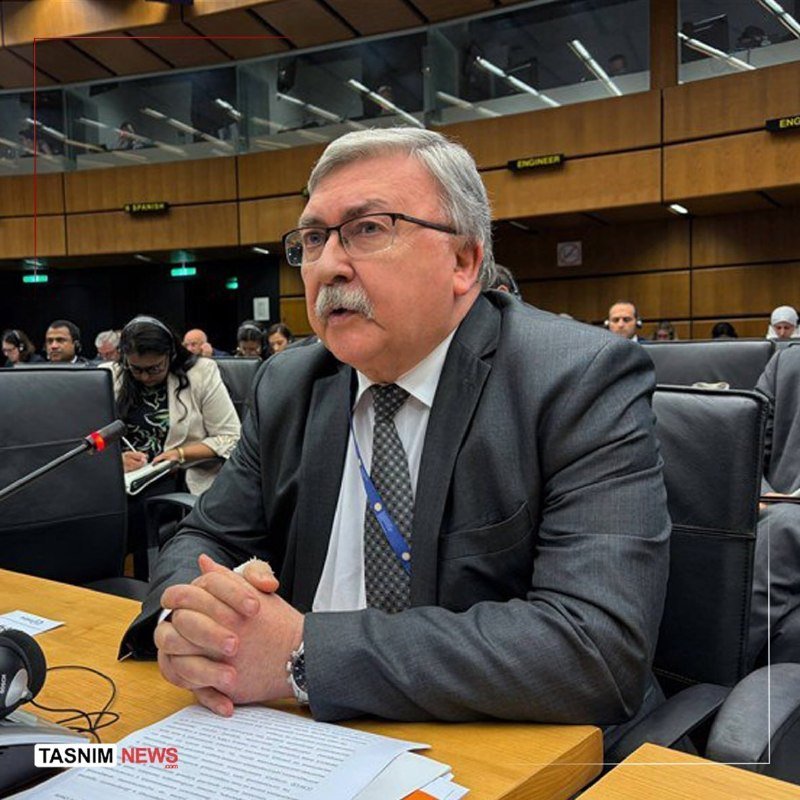
Russian President Vladimir Putin will receive Iranian Foreign Minister Seyyed Abbas Araghchi in Moscow on Monday, 27 April 2026, according to statements from the Kremlin confirmed by Iranian state media. The meeting, announced simultaneously by Russian and Iranian official channels, is cast by Tehran as a consultation aimed at "securing regional stability" — language that signals coordination on a set of dossiers where Tehran and Moscow's interests increasingly overlap.
The encounter comes at a moment of acute pressure on both governments. Iran is navigating renewed nuclear talks with Western powers while facing escalating sanctions that have squeezed its oil revenues and isolated its banking sector. Russia, for its part, remains under sweeping Western restrictions over its invasion of Ukraine, and has looked increasingly to Southern and Eastern partners to sustain diplomatic cover and economic channels that Western measures have tried to close. For both governments, a high-profile bilateral exchange serves an immediate diplomatic purpose — demonstrating that each retains counterparties willing to be seen in public with its leadership — and a structural one: reinforcing an alignment that has deepened across energy, military, and diplomatic vectors since 2022.
The bilateral calendar: visits and accumulated exchanges
Monday's meeting is not an isolated contact. Araghchi's visit follows a pattern of regular diplomatic traffic between the two capitals that has accelerated over the past two years. Iranian officials have made repeated visits to Moscow, and Russian delegations have reciprocated, with discussions spanning trade facilitation, energy cooperation, and what both sides describe as "regional security" — a formulation that, in practice, covers Syria, the Gulf, and the wider Middle East. The Kremlin's own statement, carried by Tasnim, described Araghchi simply as "the foreign minister of our country" — a phrasing that reflects the intimacy of the relationship from Moscow's side.
Neither the Russian nor the Iranian statements specified a formal agenda or a list of expected agreements. This is not unusual for pre-visit announcements from these channels, which tend to keep logistics vague until the meeting itself generates something quotable. What is clear is the timing: Araghchi's visit follows a period in which Iran has held indirect nuclear talks with the United States through Omani and Swiss intermediaries, with those negotiations reaching a phase that both sides have described as "challenging." Moscow has consistently signalled that it views USIran nuclear talks through the lens of great-power competition — a framework that places Russia's own grievances alongside Iran's.
Regional stakes: Syria, the Gulf, and competing frameworks
The phrase "regional stability" carries distinct weight depending on which capital is speaking. For Tehran, it reflects concern about the trajectory of the Syrian file, where Idlib and northeastern Syria remain contested, and where Iranian military and advisory presence has been a consistent point of friction with Israel — friction that has produced periodic cross-border strikes throughout 2025 and into 2026. For Moscow, the same phrase encompasses Ukraine, where Russia continues to prosecute a full-scale invasion, and where Iranian-supplied drones have featured in Russia's targeting of civilian infrastructure.
Western analysts have noted that the Iran-Russia relationship, while durable, is not frictionless. Moscow has occasionally shown willingness to moderate its posture on certain Gulf files in exchange for Saudi Arabian engagement on oil markets, a dynamic that Tehran watches closely. The meeting with Araghchi is, in part, a signal that whatever bilateral hedging Moscow conducts with Gulf states, the partnership with Tehran remains the primary axis of its Middle East posture.
The counterpoint to Tehran's framing is worth noting: the United States and several European governments have argued that Iran's nuclear programme — and its regional missile and drone capabilities — are themselves the primary source of instability in the Middle East, not the result of external pressure. Under that logic, a meeting designed to deepen Iran-Russia coordination on security could harden positions that Western governments are trying to soften through negotiations. That interpretation has advocates in Washington and European capitals. Whether it accurately describes Iran's calculus is a separate question — Tehran has consistently argued that its programme is defensive and that Western pressure, not regional behaviour, is the destabilising variable.
Structural context: what the alignment means
The Iran-Russia partnership operates across several registers simultaneously. Economically, Russia has become a significant importer of Iranian refined petroleum products and a conduit for sanctions-evasion mechanisms that Western governments have struggled to interdict. Diplomatically, both states have developed a habit of consulting before major multilateral sessions — the UN General Assembly, Vienna-based nuclear talks — in ways that Western officials have noted but found difficult to counter.
This is the broader pattern Monday's meeting sits inside: a deliberate, sustained effort by two governments facing Western pressure to present a coordinated alternative to the liberal international order that the United States and its allies built after 1991. That order is not dissolving — the dollar remains dominant in global trade, and Western financial infrastructure still shapes global capital flows in ways that no bilateral partnership can fully replicate. But the Iran-Russia axis is one of several alignments that, together, constitute a challenge to the assumption that Western norms and institutions will be the default framework for dispute resolution in the decades ahead.
What Monday's meeting does not yet produce is clarity on specifics. Neither side has indicated it will announce a breakthrough or a new agreement. The value of the encounter, from both governments' perspectives, may be as much symbolic as substantive — a visible display of continued partnership at a moment when each is under pressure to demonstrate that it is not isolated. Whether that symbolism translates into anything concrete, on Syria or on the nuclear file or elsewhere, will depend on conversations that have not yet happened.
What remains open
The sources available at time of publication do not include any formal joint statement or readout of Monday's meeting. The agenda, the list of officials who will accompany Araghchi, and the specific outcomes both sides are seeking remain unspecified. Whether the meeting produces a joint press conference, a written communique, or a quiet session with no published outcome has not been confirmed. Readers should expect the record to be supplemented as both governments issue their own summaries — summaries that, historically, have sometimes differed in emphasis, and occasionally in substance.
This article was published on 26 April 2026. Monexus will update when formal readouts from Moscow are available.
Wire provenance
This editorial synthesis draws on the following public wire/social posts:
- https://t.me/tasnimplus/98472
- https://t.me/presstv/156789
- https://t.me/alalamfa/234567