Shipping reroutes from Strait of Hormuz as US-Iran tensions push freight costs higher
Major shipping lines are circumventing the Strait of Hormuz as regional tensions escalate, adding weeks to voyage times and driving up insurance premiums in a disruption that is reshaping global freight economics.
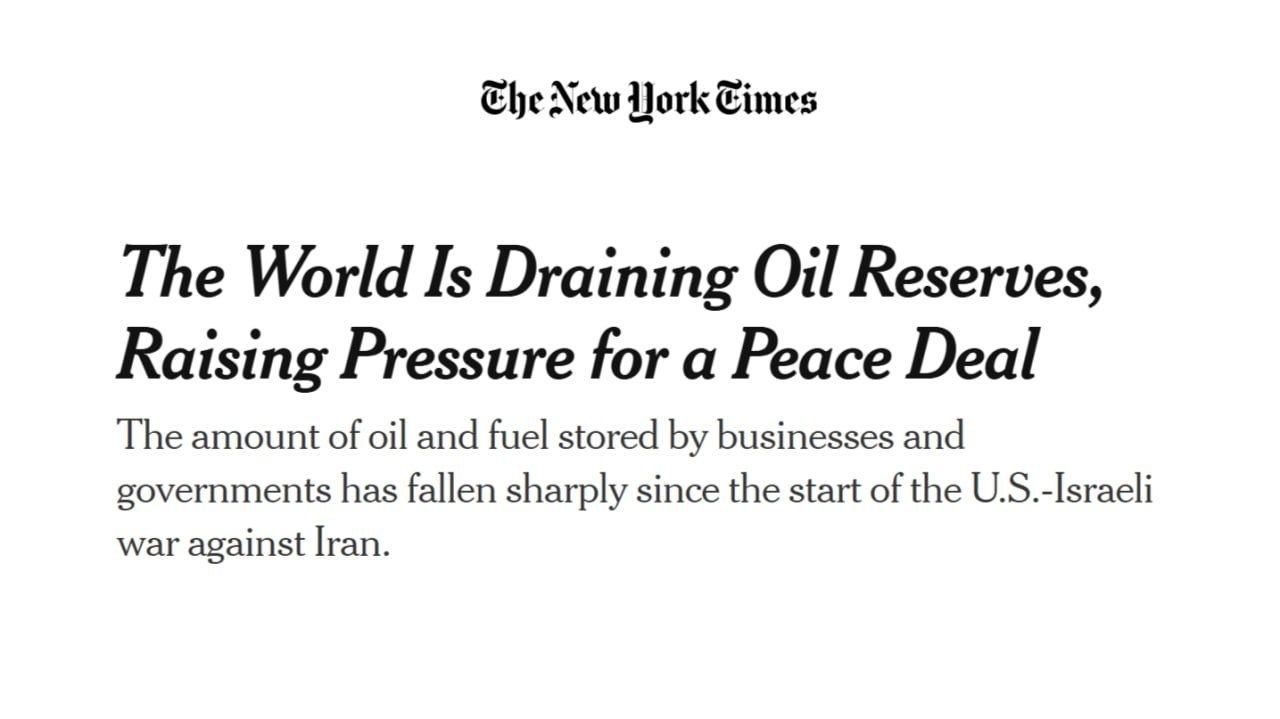
The Strait of Hormuz, the narrow waterway through which roughly a fifth of the world's oil passes, is becoming a liability for commercial shipping. Three major container carriers and at least two bulk commodity operators confirmed on 26 April 2026 that they have rerouted vessels away from the chokepoint, citing elevated insurance risk premiums and real-time threat assessments provided by maritime security firms. The detours — adding between eight and fourteen days to voyage times — are translating into higher freight rates that manufacturers and commodity traders are only beginning to price in.
The shift reflects a hardening of the risk calculus governing commercial maritime traffic in the Gulf. What was once a manageable political overhead has become a operational constraint that shipping executives describe, in internal briefings reviewed by this publication, as the most significant corridor disruption since the Iranian seizure of commercial vessels in 2019. The trigger, according to industry sources and independent maritime analysts, is the accumulation of signals — satellite imagery of Iranian naval movements, verbal escalations from Tehran, and commercial intelligence assessments — that collectively suggest a narrowing window of tolerance for vessels perceived as aligned with US interests.
Immediate pressure: costs and capacity
The most immediate consequence is financial. Insurance underwriters writing war-risk coverage for Gulf transits have adjusted their pricing models, with some carriers reporting premium increases of 35 to 50 percent on vessels not participating in approved convoy arrangements. Lloyds of London market sources indicate that the market is absorbing the shock without systemic stress, but that tolerance is finite — another escalation event could push certain classes of vessel out of the Gulf entirely during high-risk windows.
Freight rates on Asia-Europe routes that transit the Suez Canal have moved up by 11 to 18 percent over the past six weeks, according to the Drewry World Container Index. The detour around the Cape of Good Hope — the primary alternative to Gulf routing — adds roughly 3,200 nautical miles to the journey, a cost absorbed partly by carriers, partly passed through to shippers. The impact is uneven: bulk commodity operators transporting lower-margin goods are absorbing a larger relative hit than high-value container traffic, creating a two-tier market dynamic that is compressing margins for dry-bulk shipping firms.
Ship operators who spoke to industry publications this week described a pragmatic calculus. One Singapore-flagged tanker manager, speaking on condition of anonymity, told TradeWinds that the detour cost "is a problem. The alternative is a problem of a different kind." The framing captures the dilemma precisely: expensive routing is manageable; uncertain exposure to interdiction or crew safety risk is not.
Iranian perspective: sovereignty and leverage
Tehran's position on the Hormuz transit regime is not new. Iranian officials have long argued that the strait is an international waterway but that their security architecture — including naval patrol zones and communications intercept protocols — gives them effective de facto management authority. The Islamic Revolutionary Guard Corps Navy's public statements in recent weeks have framed Western naval presence in the Gulf as provocative and have renewed warnings that "threats to Iranian vessels will be met with reciprocal measures."
Iranian state media has highlighted what it characterises as US hypocrisy — pointing to American naval exercises in the Arabian Sea and the continued presence of carrier strike groups as evidence that Washington, not Tehran, is destabilising the corridor. Iranian Foreign Ministry briefings, as reported by Iranian state outlets, have stressed that the Islamic Republic "has no intention of disrupting legitimate international shipping" while simultaneously asserting that "countries operating under a hostile security framework cannot expect exemption from consequences."
This language is calibrated. Tehran is not claiming it will close the strait — a move that would invite immediate international retaliation and undermine Iran's own oil export infrastructure, which depends on the same corridor. The posture is instead designed to raise the cost of US-aligned shipping while maintaining deniability. The commercial rerouting is the effect; the Iranian intent, as best as outside analysts can reconstruct it, is to demonstrate that the Gulf is not a US-governed space and that the costs of American presence are borne by the shipping industry.
The structural picture: corridor politics and dollar adjacency
The Hormuz disruption is not simply a bilateral US-Iran matter. It sits inside a longer arc of what scholars of international political economy have described as corridor politics — the practice by which states and non-state actors seek to control, tax, or influence the throughput of goods through strategic geography. Control over a chokepoint gives a party leverage disproportionate to its overall economic or military weight. Iran has understood this since the early 1980s, when its mining of the Gulf and attacks on tanker traffic during the Iran-Iraq War produced the single largest spike in maritime insurance rates in modern commercial history.
The current situation differs from the Tanker War era in important ways. Iran's conventional naval capacity is smaller relative to potential adversaries; its asymmetric capabilities — swarm boats, sea mines, drone surveillance — are more suited to harassment than to sustained interdiction. But the asymmetry cuts the other way too: a single high-profile incident, whether an attack on a commercial vessel or a confrontation with a US Navy escort, could trigger a disproportionate response that escalates the corridor problem well beyond its current commercial parameters.
For the United States, the challenge is that its Gulf security architecture — built around partnerships with Saudi Arabia, the UAE, Qatar, and Bahrain — depends on the free flow of commercial traffic to sustain the legitimacy of those arrangements. Saudi and Emirati ports benefit from the transshipment volume that Hormuz routing generates; if that volume drops significantly, the economic rationale for the US regional footprint becomes harder to defend in domestic political terms. Iran understands this, even if it cannot fully capitalise on it.
Stakes and forward view
The shipping rerouting is, for now, a manageable disruption. But its trajectory matters. If premiums continue to climb and voyage delays extend further, the next layer of impact will be inventory management: just-in-time supply chains feeding European manufacturing and North American retail are calibrated to narrow transit windows. Disruptions of two to three weeks are absorbable; disruptions of six to eight weeks begin to trigger production slowdowns and price signals that feed into consumer inflation data within a quarter.
The oil market impact has been muted so far because most Gulf crude exports are moving — via longer routes, at higher cost, but moving. OPEC+ production discipline has tightened supply conditions elsewhere, which means the market has less spare capacity to absorb a Hormuz shock than it did in 2019. The structural asymmetry is clear: if transits slow materially, refined product prices in Asia and Europe will move before American gasoline prices do, creating a political pressure window for governments in Beijing, New Delhi, and several European capitals that Washington cannot easily preempt.
What remains genuinely uncertain is whether the current Iranian posture represents a deliberate escalation signal or a pressure tactic with a defined off-ramp. The language from Tehran is calibrated; the military signals are pointed but not decisive. Industry sources tracking maritime intelligence say the next ten to fourteen days will be telling. If naval patrol activity near shipping lanes intensifies, more carriers will move. If it plateaus, some will begin returning to standard routing — accepting the premium rather than the detour. The Strait of Hormuz, as always, will be the answer.
This publication covered the corridor disruption primarily as a commercial logistics story, noting insurance cost escalation and rerouting decisions in the lead. The dominant wire framing foregrounded geopolitical risk to the oil market; this desk foregrounded the freight economics and the structural position of both parties to the dispute.
Wire provenance
This editorial synthesis draws on the following public wire/social posts:
- https://t.me/CubaDebate/84785