The Night They Shot at the Correspondents' Dinner — and Trump Rebuilt the Story in 48 Hours
A shooter opened fire at the White House Correspondents' Dinner on 25 April 2026. President Trump and the First Lady were evacuated; the shooter was killed. What followed was a familiar playbook: chaos, contradiction, and a race to control the narrative before the facts settled.
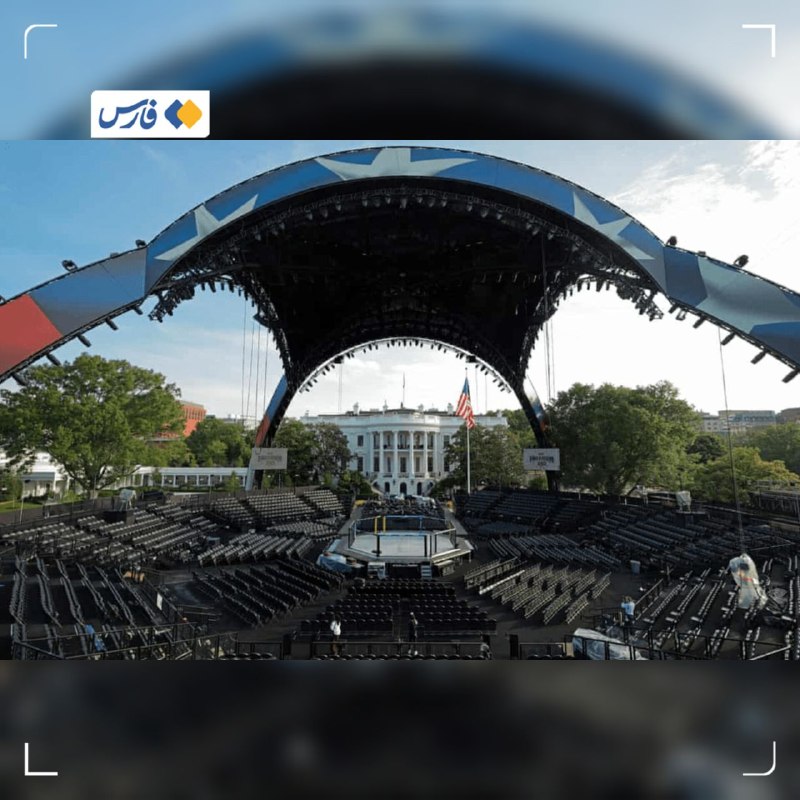
The first reports arrived at 00:43 UTC on 26 April 2026. Shots fired. President Trump and the First Lady evacuated from the stage of the White House Correspondents' Dinner at the Washington Hilton. By 00:54, the shooter was reportedly dead. By 01:33, the event was cancelled and the premises evacuated. By 01:41, Trump was set to brief the press from the White House within thirty minutes. That briefing never fully materialized as described. By the following morning, the Administration had moved on — not to the shooter, not to the security failure, but to a DOJ letter, a ballroom lawsuit, and a bee hive on the South Lawn.
This is how a near-assassination gets metabolized by an information environment that rewards speed and disincentivizes reflection.
What the night actually contained
The White House Correspondents' Dinner — an annual gathering of the press corps, political class, and celebrities that has run since 1921 — was in its 101st iteration. The event had survived Nixon-era boycotts, pandemic cancellations, and years of tension between a press corps that still found value in the ritual and a president who had made hostility toward legacy media a signature posture. On 25 April 2026, Trump arrived to speak. Thirty minutes later, he was off the stage.
According to reports circulating on the night, the shooter was killed by Secret Service agents. Details about identity, motive, or affiliation had not been confirmed by any authoritative outlet as of publication. The Washington Hilton was evacuated. The President and First Lady Melania Trump were moved to a secure location.
The immediate aftermath produced contradictory signals. Sources cited in posts on the night described Trump as saying the event "will not be cancelled" — a claim that was itself contradicted within minutes by the event's official cancellation. Whether Trump said this in the immediate chaos or whether the characterization was an artifact of fragmented reporting is unresolvable from the sources available at time of writing. Both the statement and its retraction arrived through the same channel: social media posts citing unnamed officials or unnamed witnesses.
The DOJ letter and the ballroom lawsuit
By 20:04 UTC on 26 April — roughly nineteen hours after the shooting — the Department of Justice had sent a letter to a federal court urging the dismissal of a lawsuit against Trump's White House ballroom. The letter cited "last night's events." The lawsuit itself, its parties, its subject matter, and its procedural posture are not described in the available sources. The DOJ's move, however, is legible: an Administration using a security incident to lever a legal proceeding in its favour.
This is not a novel maneuver. Emergency or crisis conditions routinely compress judicial timelines, shift public attention, and alter the leverage calculus of litigation. What is notable is the speed — less than twenty-four hours — and the explicit citation of the shooting as a reason to dismiss. The Administration was not merely benefiting from distraction; it was making the shooting a legal argument.
The ballrooms in question — there are at least two in public litigation over use of the White House complex for private events — have been a point of contention since at least 2025. The legal theory, presumably, involves the Establishment Clause or access regulations governing federal property. The DOJ's position now appears to be that an assassination attempt on the President renders such litigation improper, or at least moot. The court will decide whether that argument holds. The sources do not yet show how the court responded.
The correspondent community and the dinner's uncertain future
The White House Correspondents' Dinner has always been a contested institution. Critics on the right have long argued it normalizes a relationship between journalists and power that erodes the adversarial function of the press. Critics on the left have argued it is a vanity project that rewards access journalism over accountability. Both critiques coexisted uneasily for decades.
Trump's relationship with the dinner has been volatile. He skipped the event for years while in office, returning it only when politically useful. On 26 April 2026, he announced the dinner would be resumed within thirty days or sooner — a timeline that, if genuine, would compress a normally year-long planning cycle into weeks. Whether this represents genuine commitment, political theatre, or an attempt to demonstrate normalcy against the backdrop of a security failure is not yet clear.
The correspondent community faces its own calculus. Attendance means participating in an event whose security the State Department and Secret Service could not guarantee. Non-attendance means ceding the room to whatever alternative format the Administration constructs. The Washington Hilton was the venue on 25 April; whether it will be again is an open question.
The structural pattern
What the night of 25 April illustrates is not unique to this Administration, but it is legible through this Administration's particular habits. The sequence — incident, confusion, counter-narrative, legal action, and forward-looking declaration — maps onto a playbook that has been used repeatedly since 2017 and repeatedly refined since. Coverage of each new episode treats it as discrete. The pattern does not receive equivalent treatment.
In this case, the coverage on the night itself was, predictably, chaotic. Initial reports misidentified the venue, the nature of the shooting, and the President's location. Official channels were silent for critical minutes. Social media filled the gap with posts that had the velocity of reporting but not its verification infrastructure. By the time authoritative outlets had confirmed the basic facts — shooter dead, President safe, event cancelled — the Administration had already moved three moves ahead in shaping what the night meant.
The bee hive on the South Lawn is the most vivid example. Installed by Melania Trump, the First Lady participated in the installation of a functioning hive in the shape of the White House on the South Lawn. The story was seeded by a US government statement and surfaced by Euronews on the evening of 26 April, positioning the First Lady as a steward of continuity and domesticity against a backdrop of violence. Whether the timing was coincidental is impossible to determine. The effect is calculable.
What remains unknown
The sources available at publication do not establish the identity or motive of the shooter. They do not describe the security perimeter failures that allowed a firearm into the Washington Hilton. They do not include the substance of the DOJ's legal filing or the court's response. They do not clarify whether the President's statements on the night were improvised or scripted, or whether the timeline for resumption of the dinner is operational or political.
Reporting on these gaps will continue. The structural question — how an event this significant becomes a vehicle for legal and narrative management within hours — does not depend on those specifics. It depends on the incentives built into an information environment where speed is rewarded, verification is costly, and the gap between event and meaning is a space that powerful actors are eager to occupy.
Wire provenance
This editorial synthesis draws on the following public wire/social posts:
- https://x.com/unusual_whales/status/1915842297302470865
- https://x.com/unusual_whales/status/1915844687329837312
- https://x.com/unusual_whales/status/1915845069960573255
- https://x.com/polymarket/status/1915843437558472964
- https://x.com/polymarket/status/1915845687202361729
- https://x.com/polymarket/status/1915851462671757722
- https://x.com/polymarket/status/1915861967371776166
- https://t.me/euronews/138928