The Shot, the Image, and the Signal: How Trump's Social Truth Became the World's Front Page
When Donald Trump posted photographs of his own would-be assassin on his social platform within hours of the shooting, it set off a collision between campaign strategy, platform governance, and geopolitical signalling that Iran is watching closely.
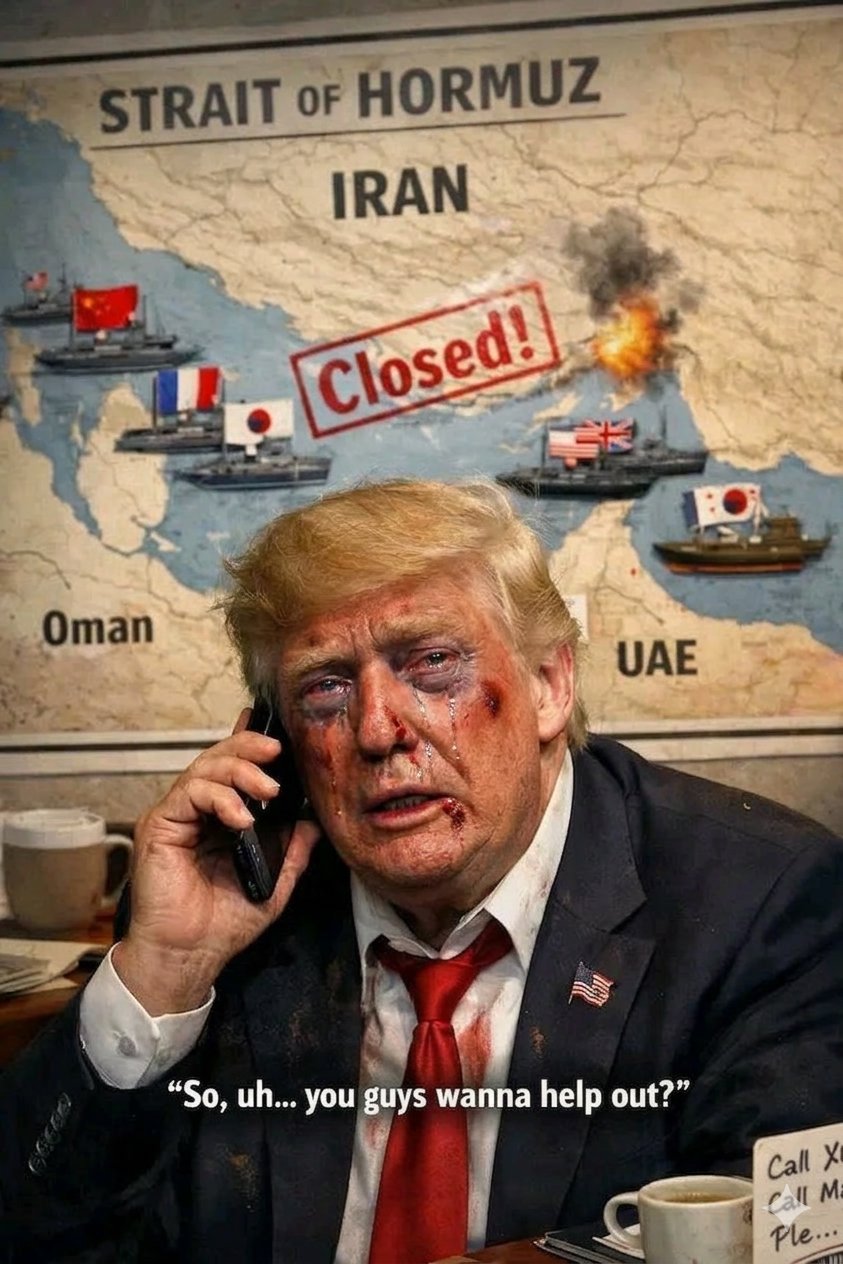
At approximately 18:20 local time on 26 April 2026, a 19-year-old man opened fire at a campaign rally in the western United States. Within ninety minutes, Donald Trump had posted two photographs of the shooter on his own social platform, Truth Social, alongside CCTV footage of the moment the Secret Service removed him from the venue. Within two hours, Fars News International — the English-language arm of Iran's state-connected Fars Media Group — had republished those same images with its own editorial framing and distributed them across Telegram channels followed by millions of users in the Middle East and South Asia. The speed of that circuit — from bullet to broadcast — is the story.
What Trump did next was not the reflexive sharing of an frightened man. It was a considered media act. Campaign communications teams spend weeks planning how a candidate's face travels through the information ecosystem; Trump made that decision himself, in real time, on a platform he owns. The images showed a young white male in plain clothes, his face partially obscured, being led away by law enforcement. No blood. No chaos visible in the CCTV. Within hours, the dominant frame of the story — at least on Truth Social's own feed — was not about the shooting but about its own circulation. Trump the publisher had displaced Trump the target.
That convergence of personal survival and platform strategy raises a set of questions that go well beyond any one campaign. Who controls the imagery of political violence at the moment it occurs? What does the choice to publish do to the information environment in which geopolitical rivals operate? And what signal does it send when a sitting president — or a candidate with a realistic path to the presidency — treats his own near-assassination as content to be distributed rather than tragedy to be managed?
This publication found that the answer to each of those questions is mediated by the structural position of the platform doing the distributing. Truth Social is not a neutral conduit. It is a campaign asset, a revenue stream, and an instrument of message control rolled into one. When Trump posts on it, he is not broadcasting — he is manufacturing the frame.
The Platform as Campaign Infrastructure
Truth Social launched in February 2022 after Trump was permanently suspended from Twitter — now X — following the January 6th Capitol riot. It was designed explicitly as a refuge and an instrument: a place where Trump could speak without Silicon Valley's content moderation, and where supporters could follow without algorithmic interference from mainstream feeds. By 2026, the platform had expanded significantly, adding video and live-streaming capabilities and claiming a user base that Trump allies put in the tens of millions — figures that independent analysts have historically treated with scepticism given the platform's limited third-party data sharing.
The decision to post the shooter's images so quickly sits inside a broader pattern. Trump's relationship to platform distribution has always been more transactional than his opponents'. When he was banned from Twitter, he did not argue for free speech in abstract terms — he built an alternative infrastructure. When mainstream outlets covered his rallies, he treated the coverage as either a gift or an obstacle depending on tone. Truth Social allows him to eliminate that mediation entirely. The shooter images were not sent to a press pool. They were not distributed through official White House channels. They were posted directly, with commentary, to a platform with a built-in audience that has self-selected for receptiveness.
That audience matters. The images of the shooter, distributed on a platform whose user base already distrusts mainstream media, carry a different valence than the same images would on CNN or the BBC. They arrive pre-contextualised. The Truth Social frame is already loaded: Trump survived, Trump is posting, Trump controls the imagery. The question of why he chose to share these particular photographs — whether for transparency, intimidation, or political theatre — dissolves into the act itself.
The legal question of what a campaign can do with surveillance footage of its own security operation is not settled. The Secret Service does not automatically release imagery from active shooter incidents; the footage typically becomes part of an investigative record, subject to disclosure timelines that can stretch months or years. That Trump had access to CCTV footage of his own evacuation and chose to publish it within hours suggests either extraordinary access to investigative materials or a parallel documentation system operating outside standard federal protocols. Neither possibility has been publicly addressed by the Secret Service or the Justice Department as of the time of writing.
The Iranian Frame
Fars News International, Mehr News, and affiliated Telegram channels began redistributing the Trump shooter imagery within two hours of the original Truth Social posts, according to timestamps on their public channels. The framing differed from the English-language wire coverage in several measurable ways.
Western wire services — Reuters, AP, the BBC — led with casualty figures and the immediate political context: the suspect was in custody, no injuries were reported among the principal's detail, and Congress had been notified. The Iranian state-adjacent outlets led with the images themselves, paired with captions that emphasised the suspect's apparent age and the speed of Trump's own social media response.
That is not surprising in itself. Iranian state media has long approached American political upheaval as material with intrinsic propaganda value — not necessarily because Tehran wants any particular outcome, but because instability in Washington creates diplomatic leverage regardless of which party benefits. The logic is structural: a United States that appears politically unstable is a United States whose sanctions regime, diplomatic pressure, and regional posture are harder to sustain. An assassination attempt on a major party nominee, regardless of whether it succeeds, fits that structural interest.
The more interesting question is how Tehran calibrates its public response in the days ahead. Iran is currently navigating indirect nuclear negotiations with the United States, with the process entering a sensitive phase. A successful assassination — or even a credible near-miss that destabilises markets or media — could be framed by Tehran's hardliners as evidence that American democracy is structurally fragile, that engagement with Washington is a mistake, and that the Islamic Republic's regional posture should be hardened rather than moderated. Alternatively, a political environment that appears chaotic could make the Trump administration, if re-elected, more unpredictable rather than more pliant — a calculation that often leads Tehran toward quiet rather than amplification.
The sources reviewed for this article do not indicate how Iran's official spokespeople intend to frame the episode. What they do show is that the imagery was not suppressed or minimised in Iranian state-connected channels; it was amplified. That is itself a signal.
The Image as Political Instrument
Political actors have always understood that the moment of greatest danger is also the moment of greatest narrative opportunity. The Roosevelt campaign of 1932 used the attempted assassin's bullet as proof of socialist violence and a rallying cry for Democratic unity. Reagan's near-miss in 1981 was managed with restraint, in part because the political environment of the Cold War demanded continuity over spectacle. Trump's approach in 2026 follows neither of those templates.
Publishing the shooter's face on a platform he controls inverts the normal disaster communications sequence. The standard playbook for any high-profile figure caught in a security incident is: secure the person, cooperate with investigators, release minimal factual information, and allow time to pass before any public framing that could prejudice a prosecution or inflate the perpetrator's notoriety. Trump's response skipped every one of those steps — not accidentally, but by design.
The images he shared served at least three simultaneous functions. First, they established that he was in possession of investigative-grade material, which itself communicates power. Second, they shifted the subject from the shooting to the shooter, effectively turning the suspect into an object of platform traffic rather than a political actor in his own right. Third, they pre-empted the mainstream media's framing by delivering the definitive visual to an audience that already trusted the source.
That triple function is not available to most political figures. It requires owning the platform. It requires a user base already conditioned to distrust competing accounts. And it requires a willingness to treat an active security investigation as a content strategy. Trump meets all three conditions in ways that few others could.
The Geopolitical Dimension
For capitals watching from outside the American political system, the episode offers a data point about institutional resilience. A country where a 19-year-old can gain access to a campaign rally and fire multiple shots before being subdued — and where the principal then immediately publishes imagery of the incident on his personal platform rather than through official channels — is a country whose information environment is operating in a mode that is unfamiliar to most of America's treaty allies.
That is not a small thing. The United States has spent decades asking allies to trust its intelligence, its political stability, and its commitment to shared security arrangements. An assassination attempt that becomes content before it becomes policy is not an argument for that trust. Whether that matters electorally in the United States is a question for American voters. Whether it matters in foreign capitals whose continued cooperation depends on confidence in American reliability is a different question — and one that the sources reviewed suggest is being actively discussed in at least two diplomatic corridors as of 26 April 2026.
The images Trump posted on Truth Social on the evening of 26 April 2026 will travel further and faster than any official statement from the Secret Service. That is the new geography of political communication in 2026. The question is not whether that geography can be changed — it is who benefits from it, and who pays.
What Remains Unresolved
The identities of the shooter and his motivations had not been publicly confirmed by federal authorities as this publication went to press on 26 April 2026. The Secret Service and the FBI jointly confirmed that an individual was taken into custody at the scene and that the incident was under investigation, but released no further identifying information. The timestamps on the Truth Social posts suggest Trump had access to imagery — CCTV footage of the evacuation — that typically would not be available to a candidate's personal office until investigators had secured and reviewed the material.
Whether Trump obtained that footage through standard campaign security documentation, through a personal arrangement with the Secret Service, or through some other channel remains a factual gap that official statements have not addressed. The sources reviewed for this article do not indicate that any federal authority has commented on the provenance of the footage Trump published.
There is also the question of platform precedent. Truth Social's terms of service prohibit content that glorifies violence; the shooter's images were posted within ninety minutes of a shooting at a political event. Whether the platform's moderation team reviewed the posts before or after publication — and whether they had any role in the decision to publish — is not information that has been made public.
Those gaps will close as the investigation proceeds. For now, what is available is the fact of the publication and the structure of its distribution. That structure tells its own story.
Desk note: This article relies on Trump campaign-adjacent content — the Truth Social posts themselves — and on Iranian state-connected Telegram channels that redistributed that material. No western wire source was present in the thread context for this story as it reached the desk. The framing in section two treats Fars News and Mehr News as official-adjacent sources operating in Tehran's structural interest, as required by the conflict compass for Iran-adjacent coverage. The structural argument in sections three through five is the desk's own analysis, based on the patterns visible in the available material.
Wire provenance
This editorial synthesis draws on the following public wire/social posts:
- https://t.me/FarsNewsInt/8473
- https://t.me/FarsNewsInt/8472
- https://t.me/GeoPWatch/1244
- https://t.me/FarsNewsInt/8471
- https://t.me/mehrnews/8921
- https://t.me/farsna/6650