Shots at the Hilton: The White House Correspondents' Dinner Shooting and the Fracturing of American Ritual
A shooter opened fire at the Washington Hilton during the White House Correspondents' Dinner on 26 April 2026, killing the assailant and prompting the evacuation of President Trump. The incident raises urgent questions about the security of political rituals, the changing calculus of public exposure, and what the targeted assassination of a media event means for American institutions.
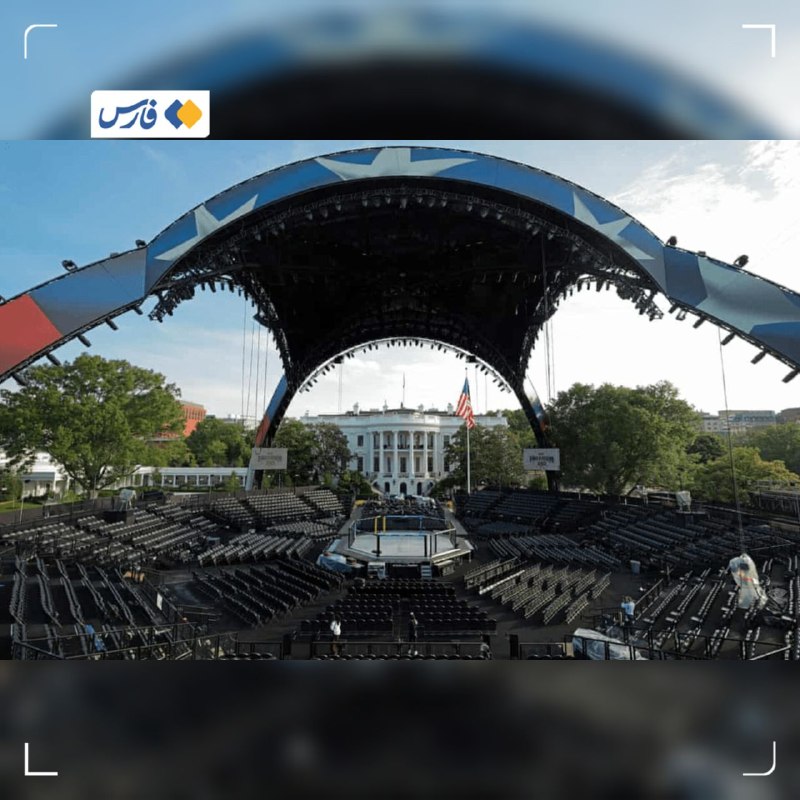
The first indication that something had gone catastrophically wrong arrived at approximately 00:55 UTC on 26 April 2026, when footage from the Washington Hilton showed armed Secret Service agents moving with urgent purpose through the hotel's corridors. Within minutes, reports surfaced that gunshots had been fired at the White House Correspondents' Dinner. President Trump, who had been on stage, was rushed off by protective detail. The suspected shooter was killed on the premises. CNN confirmed the President was safe within the hour; no injuries were reported beyond the assailant.
The Correspondents' Dinner is among the oldest continuous rituals in American political life. Since 1921, news organisations affiliated with the White House press corps have gathered annually to celebrate the relationship between journalism and governance, raising funds for journalism scholarships and offering an evening in which the press corps and the administration trade barbs in a tradition of calibrated irreverence. That the event has always been a performance—carefully managed theatre staged for cameras and donors—did not make it dispensable. Ritual matters in democratic societies precisely because it is visible: it signals that institutions function, that the press and the executive can occupy the same room without mutual annihilation, and that the symbols of democratic culture endure.
The shooting fractures that symbol. Whatever the shooter's specific grievance—and authorities have not yet disclosed a motive as of publication—the choice of venue and moment carries its own argument. To fire into a gathering of journalists and the politicians they cover is to make a claim about the nature of that relationship. Whether the shooter saw the dinner as complicity, as elite cosplay, as political theatre, or as a personal grievance attached to a public figure in proximity, the effect is the same: a statement was made with bullets, and that statement now reverberates through every capital in the world where political journalists work in environments of degraded safety.
The Scene at the Washington Hilton
The timeline of the evening, reconstructed from multiple OSINT sources and wire reports, runs tight. The dinner was underway at the Washington Hilton in northwest Washington D.C. when loud noises—initially described by some attendees as possibly a microphone malfunction or a sound system error—were heard. Within moments, US Secret Service and Capitol Police were observed running through the hotel corridors with firearms drawn. The shooting had occurred in the lobby of the venue.
DC Police instructed bystanders to stand back as officers responded. The Washington Hilton was placed on lockdown and surrounding roads were cordoned off. According to NewsNation and other news outlets reporting from the scene, the suspect was killed by Secret Service in the lobby area. NewsNation and other outlets reported that the suspect had been killed, a detail corroborated by subsequent wire accounts confirming no injuries to attendees beyond the shooter.
The President was evacuated from the stage. The White House Correspondents' Dinner hosts indicated within minutes that the program would resume momentarily once security protocols were completed—a decision that struck some observers as jarring given the circumstances, but that also reflects the institutional logic of an event determined not to be intimidated by violence. Reports that the dinner would resume as planned circulated within an hour of the shooting, underscoring the event's determination to project continuity.
Security Calculus in a Post-Threat Environment
The Secret Service's response was rapid and, by initial accounts, effective. The assailant was neutralised before causing additional casualties. This outcome—while cold comfort to the family of the shooter and to the psychological toll on attendees—reflects the counter-assassination capabilities the agency has developed over decades, including since the 2024 attempted assassination attempt that reshaped protective service doctrine.
What the incident reveals, however, is a tension internal to protective security: the Correspondents' Dinner occurs in a hotel, not a purpose-built secure facility. The Washington Hilton is not Fort Bragg. It is a commercial venue with public corridors, limited access control at the perimeter, and a guest list that, while screened, numbers in the hundreds. The Secret Service does exceptional work, but its capacity to prevent a determined attacker from reaching a public event venue is constrained by the nature of the venue itself.
The decision to hold the dinner in a hotel rather than a secure government facility reflects the dinner's self-conception: it is a celebration of the press corps, not a military briefing. It takes place in an atmosphere of semi-public sociability. That atmosphere is itself a target. The question now facing protective services is whether the ritual cost of hardening the dinner into a fortress—making it look like a war council rather than a gala—is worth the security dividend, or whether the very nature of the event is incompatible with the threat environment of 2026.
The after-action analysis will almost certainly examine whether the guest screening process was adequate, whether the Secret Service's outer perimeter assessment missed indicators, and whether hotel security personnel—whose training and incentives differ markedly from federal protective services—played any role in the breach. Those details are not yet public, and the sources reviewed for this article do not contain specifics on the security protocols in place at the time of the shooting.
The Correspondents' Dinner as Institutional Symbol
The White House Correspondents' Dinner has survived presidents who despised the press, budget cuts that threatened its scholarship fund, and a pandemic that forced it virtual. Its persistence is not accidental. It represents a specific theory of democratic governance: that the executive and the press, however adversarial their reporting relationship, share a civic space in which confrontation is ritualised and managed rather than suppressed.
That theory has always had critics. The dinner's critics—drawn from across the ideological spectrum—have long argued that it normalises a relationship that should be more adversarial, that it congratulates journalism for its existence rather than evaluating its performance, and that the scholarship fund, while admirable, is a fig leaf over an event that serves the social networking needs of the powerful more than the informational needs of the public. These are serious critiques, and they do not disappear because bullets were fired.
What changes is the stakes of the debate. Before 26 April 2026, the critique of the Correspondents' Dinner was an argument about culture. After the shooting, it becomes an argument about security architecture. The question is no longer whether the dinner is a hollow ritual but whether it is a dangerous one—and whether the people who attend it have a right to evaluate that risk before deciding whether to accept the invitation.
The decision of attendees to remain or depart in the immediate aftermath will be scrutinised for what it says about their assessment of the threat. The fact that hosts announced the program would resume suggests institutional stakeholders believed the security situation was contained. That belief, and the authority to make it, belongs to the Secret Service, not to the hosts. Whether that authority was properly consulted before the announcement is a question the after-action review will need to answer.
The Structural Pattern: Targeting Political Ritual
Attacks on political rituals are not new. Assassinations of heads of state, ambushes of campaign rallies, bombings of party offices: the catalogue of political violence aimed at symbolic targets runs through the 20th century and into the 21st. What has changed is the scale of public exposure and the speed at which an attack becomes a global event.
The Washington Hilton shooting occurred at approximately 00:55 UTC on 26 April 2026. Within fifteen minutes, OSINT channels were carrying footage and commentary. Within thirty minutes, the news was confirmed by wire services including CNN. The President was confirmed safe within the hour. This compression of the news cycle means that the event's meaning is contested in real time, before authorities have disclosed a motive, before the shooter's identity and background are known, and before the security community has begun its analysis.
In that compressed timeframe, the shooter's act acquires a meaning that the shooter may or may not have intended. If the goal was to disrupt the ritual, it succeeded for the duration of the lockdown. If the goal was to kill the President, it failed. If the goal was to make a statement about the press, the statement is now being written by commentators, not by the shooter, and the outcome of that writing process is not within the shooter's control.
This structural feature—public political violence as a communication act whose meaning is contested by audiences the attacker cannot control—is familiar from attacks on media organisations, religious institutions, and electoral events. The pattern suggests that the attacker operates from a position of informational disadvantage relative to the institutions they target: the system has more bandwidth to narrate the event than the individual has. That is typically a压制 on political violence. It was not on 26 April 2026.
The Weeks Ahead: Accountability, Reform, and the Price of Visibility
The immediate aftermath will be dominated by three concurrent processes. The first is the security review: a technical assessment of how the attacker reached the lobby, what screening protocols were in place, and what modifications to protective service doctrine the incident demands. The second is the criminal investigation: identification of the shooter, reconstruction of motive, and determination of whether the act was directed, inspired, or improvised. The third is the political communication battle: competing framings of what the shooting means for American institutions, for press freedom, and for the safety of public figures.
The sources reviewed for this article do not yet include a confirmed identity for the shooter, nor any substantive disclosure of motive from law enforcement authorities. Initial reports from NewsNation and other outlets focused on the security response and the President's safety. News accounts at the time of publication had not yet provided a named suspect or a declared motive. This article will not speculate where the sources are silent.
What is already clear is that the dinner will be harder to hold in future. The security costs will rise. Some attendees will decline invitations. The atmosphere of the event—the carefully managed informality that makes the ritual work—will be altered by the knowledge that the protection is imperfect and that the venue is penetrable. The dinner will survive, as it has survived before. But it will not survive unchanged.
The broader lesson is about the price of visible political ritual in a democracy. The Correspondents' Dinner works because it is public: public attendance, public commentary, public fundraising. That visibility is its institutional strength and, as of 26 April 2026, its vulnerability. Every ritual that makes governance visible also makes it a target. The question for American institutions is not whether to hold such rituals—the answer to that question is yes, because democracy requires visible institutions—but how to hold them without converting them into assassination vectors.
That question does not yet have an answer.
This publication covered the Washington Hilton shooting by leading with confirmed wire and OSINT reports of the security response and the President's evacuation. The dominant US wire framing led with political reaction and the security review; Monexus prioritised the institutional significance of the target and the structural pattern of political violence directed at symbolic gatherings. Sources on shooter identity and motive remain limited; that reporting will follow as authorities disclose further information.
Wire provenance
This editorial synthesis draws on the following public wire/social posts:
- https://twitter.com/sentdefender/status/2048
- https://t.me/BellumActaNews
- https://t.me/BellumActaNews
- https://t.me/rnintel
- https://t.me/rnintel
- https://t.me/wfwitness
- https://t.me/osintlive
- https://t.me/osintlive