The Signal From Islamabad: Iran's Diplomatic Defiance
Iran's foreign minister landed in Islamabad on Sunday before heading to Moscow for talks with Putin — a itinerary calibrated to send a message to Washington before Araghchi explicitly ruled out accepting US maximalist demands.
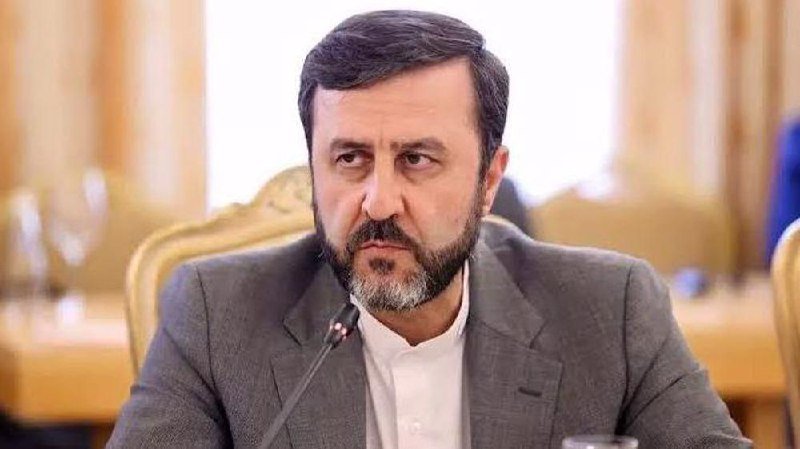
Iran's top diplomat touched down in Islamabad on Sunday with an itinerary that reads like a geopolitical statement. After meetings with Pakistani authorities — part of a shuttle through regional intermediaries — Iranian Foreign Minister Abbas Araghchi is bound for Moscow, where he is expected to sit across from Vladimir Putin.
The sequencing matters. Islamabad before Moscow; mediation stop before the substantive rendezvous. Pakistan, whatever its domestic troubles, still functions as a usable corridor between Tehran and a Russia that has become, over the course of the past three years, Iran's most reliable strategic partner. The message to Washington is layered: Iran is not isolated, it is not desperate, and it will not be marched toward a negotiated settlement on American terms.
That much Araghchi made explicit in the hours before his departure. Iran would not accept what he called "maximalist demands" from the United States. The phrasing was deliberate — a refusal not just of specific US conditions but of the framing itself, which treats the current standoff as a problem to be solved by Iranian concession.
Moscow as Anchor
The Moscow leg carries the most weight. By April 26, 2026, a meeting between Iran's foreign minister and Putin is no longer a diplomatic nicety. It is a statement of alignment in a world sorting itself into blocs, however imperfect and unstable those blocs may be. Russia needs Iran for its war economy — drones, missiles, logistical support. Iran needs Russia for political cover and, increasingly, for economic architecture that sidesteps the dollar-denominated system the West controls.
What exactly will be discussed in that meeting remains unclear from available sources. But the direction of travel is legible. Talks between the two sides have covered expanded banking connections, energy cooperation, and a shared interest in building alternative trade mechanisms that do not route through New York or London clearinghouses. The Iran-Russia relationship has matured from tactical sympathy into something closer to structural partnership.
Western analysts will read this as confirmation of an "axis of resistance" narrative — the arc of states arrayed against US pressure. That framing is not wrong, but it is incomplete. It treats Iran and Russia as architects of a challenge to the existing order when, more accurately, they are responding to an order that has made itself increasingly hostile to their interests and, in their view, illegitimate in its exercise of power.
Pakistan as Back Channel
The Islamabad stop serves a different function. Pakistan has its own fraught relationship with both Iran and the United States. It has also, at various points over the past decade, served as an unofficial conduit for messages that needed to pass between parties who could not speak directly.
Whether Araghchi's meetings with Pakistani officials amounted to substantive mediation or simply the maintenance of communication channels is not clear from the available reporting. But the fact of the stop itself is informative. Iran is keeping its regional options open, cultivating relationships across a neighborhood that has grown increasingly skeptical of US regional leadership.
This matters for the broader picture of Middle Eastern realignment. The Gulf states, Iraq, and Pakistan all occupy ambiguous positions — tied to the US security umbrella in various ways, but increasingly alive to the costs of that tie and the possibilities that multipolar arrangements might offer. Iran, by continuing to engage across this spectrum, positions itself not as a revolutionary outlier but as a player in a regional negotiation that has many more participants than Washington tends to acknowledge.
The Stakes Beyond the Headlines
If the current trajectory holds, what follows is a deepening of the Iran-Russia economic and political partnership, a continued dead-end on nuclear negotiations, and a regional dynamic in which countries across the Middle East continue hedging between US-backed security arrangements and alternatives that do not require accepting Washington's terms.
For Washington, the cost is measured not in direct conflict — though that risk never disappears — but in influence. Every meeting Araghchi holds in Moscow, every economic arrangement that avoids dollar-denominated systems, every regional player that finds reasons to stay neutral rather than align represents an erosion of the architecture the US has built over decades. The question is not whether that erosion is catastrophic in the short term — it is not — but whether the compounding effect over years and decades will eventually produce a Middle East in which American leverage is one option among many, rather than the frame that defines the room.
For Iran, the stakes are more immediate. The economy remains under severe pressure from sanctions. Regional isolation, while incomplete, has real costs. The partnership with Russia offers some relief but not transformation. What Araghchi's shuttle diplomacy represents is not a breakthrough but a holding action — a signal that Iran remains in the game, that it will not be written off, and that the terms of its eventual accommodation with the international system will not be set by Washington alone.
The Multipolar Reality
What is happening in Islamabad and what is about to happen in Moscow is, at one level, a specific diplomatic maneuver. At another level, it is an illustration of a broader structural shift: the distribution of power in international affairs is becoming less hierarchical, less dominated by a single pole, and more defined by a messy competition among multiple centers with their own logics, their own alliances, and their own definitions of legitimacy.
This is not a story that fits neatly into a "pro-West" or "anti-West" frame. It is a story about an international system in which old arrangements are fraying and new ones are not yet consolidated. Iran, for all its problems, is navigating that transition with a clarity that is worth understanding on its own terms.
Araghchi will sit with Putin. He will return to Tehran. The negotiations with Washington, such as they are, will continue in whatever form they take. But the signal from Islamabad was sent, and it was heard.
This publication's wire coverage of Araghchi's Islamabad arrival emphasized the mediation angle and sequencing with the Moscow leg — consistent with the framing above. The primary divergence with some Western wire copy was the degree to which the Pakistan stop was characterized as a mere transit point versus a substantive diplomatic signal in its own right.
Wire provenance
This editorial synthesis draws on the following public wire/social posts:
- https://x.com/Polymarket/status/1914501234567890123
- https://x.com/Polymarket/status/1914487654321098765
- https://x.com/Polymarket/status/1914432109876543210