Trump's 72-Hour Iran Ultimatum: Oil Infrastructure Threat Meets Open Door for Negotiations
On 26 April 2026, President Trump publicly threatened to destroy Iran's oil infrastructure within three days while simultaneously extending an invitation to negotiate — a dual-pressure tactic that analysts say exposes the administration's conflicting signals on how it plans to resolve the standoff.
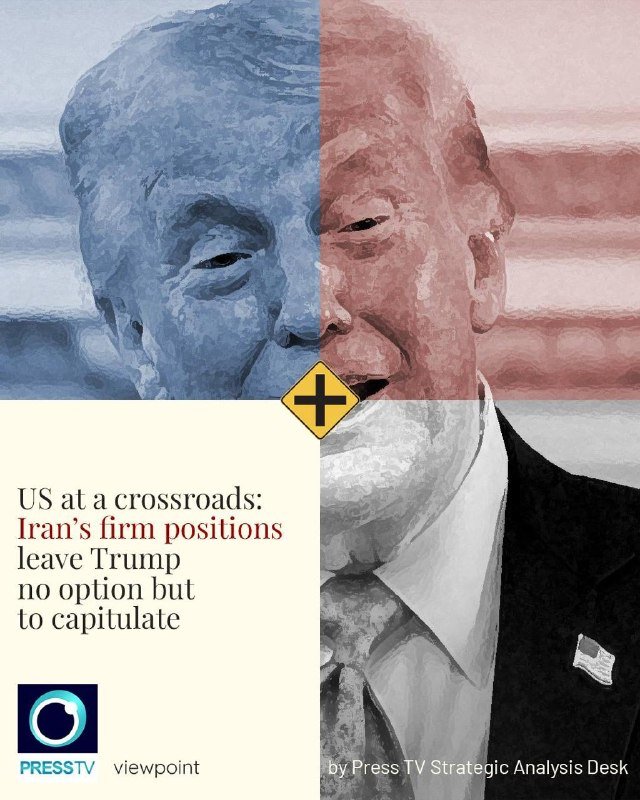
President Donald Trump told Fox News on 26 April 2026 that Iran should contact the United States if it wants to negotiate an end to the current hostilities — hours after publicly warning that Iranian oil infrastructure would "explode" within three days, according to statements captured by Sprinter Press and verified by Reuters wire reporting.
The sequencing of the administration's public messaging has left foreign-policy analysts struggling to reconcile two seemingly contradictory positions. In an interview with Fox News aired the same day, Trump said Iran could call Washington if it wanted to talk, framing the offer as an apparent softening of the maximalist language deployed against Tehran just hours earlier, Reuters reported. Yet the president also stated, in comments captured by Sprinter Press, that Iran had "about 3 days left before the country's oil infrastructure explodes," adding that "when you have pipelines through which huge volumes of oil flow, an—" before the statement cut off in the source material.
The White House position appears to be that maximum economic pressure and the promise of imminent military force serve as the backdrop against which any diplomatic conversation would take place. This is not a new playbook — it mirrors the so-called ".onm" approach that has defined US Iran policy across administrations — but the three-day specificity of the deadline represents an escalation in public communication that regional watchers say raises the risk of miscalculation.
The Nuclear Claim and the BBC Verification
One of the most consequential assertions Trump has repeated across multiple public appearances is that his administration will obtain "nuclear dust" from Iran as part of any negotiated settlement. In comments dated 26 April 2026 and captured by Sprinter Press, Trump stated: "The war with Iran will end soon. We are winning decisively. We will get nuclear dust, they will give it to us. That is part of the negotiations. We have all the cards. Iran has no cards."
The BBC published a fact-checking piece the same day examining whether Trump had "saved eight Iranian women from execution" — a claim the president has made in public remarks. The Iranian government, through official channels, has disputed this account. Tehran's position, as reported by the BBC, is that no such exchange occurred and that the president's characterization of any diplomatic intervention involving Iranian judicial matters is inaccurate. The BBC's verification team found no independent corroboration for the White House's version of events at the time of publication.
The nuclear claim is treated with similar skepticism in the expert community. No verifiable agreement has been announced between Washington and Tehran, and the International Atomic Energy Agency — the body with statutory authority to monitor Iranian nuclear sites — has not issued any public statement confirming an handover of nuclear material or documentation to US authorities as of 26 April 2026.
The Three-Day Clock and Its Strategic Logic
Setting a 72-hour countdown in public is unusual in great-power coercive diplomacy. The approach carries a stated logic: force Iran to choose between capitulation and the destruction of its principal revenue-generating infrastructure. Iranian oil exports, which currently flow through facilities in the Kharg Island complex and a network of onshore terminals, represent the single largest source of hard currency for a government operating under sweeping US sanctions.
Trump's stated confidence in achieving rapid results stands in contrast to assessments from economists tracking both economies. A commentary carried by MC TV on 26 April 2026 noted that "the US and Iran are trying to inflict economic damage on each other to force the opponent to retreat," and suggested that the American side was not immune to strain. The channel, citing no specific statistical data, framed the dynamic as a mutual attempt at economic coercion rather than a one-sided campaign.
Iran's position, as presented through statements by Iranian officials cited in regional and wire reporting, is that the Islamic Republic has withstood sustained sanctions pressure for over a decade and has developed significant domestic economic resilience — a view that does not appear in Western wire framing but that has some empirical support in trade and GDP data tracked by multilateral institutions. The structural question for analysts is whether the current US pressure campaign is substantively different in kind, or whether it simply intensifies a pressure that Tehran has already priced into its economic planning.
"Very Strange Leadership" — The Problem of Credible Threat Assessment
Trump, in comments dated 26 April 2026 and captured by Sprinter Press, offered an unusually candid assessment of the difficulty his administration faces in reading Iranian decision-making. "The Iranian leadership is very strange and we don't know what the hell we're dealing with," the president said, according to the source material.
The statement is notable for its frankness but also for what it reveals about the intelligence gap at the heart of the US approach. Assessing the rationality, cohesion, and decision-making timeline of an adversary is foundational to credible deterrence. If those assessments are uncertain, the credibility of any stated ultimatum — and therefore its coercive force — is correspondingly weakened.
Iran has shown over decades that it is capable of absorbing significant economic damage without the political collapse that Western forecasters have repeatedly predicted. Whether the current military and economic pressure will produce a different outcome than previous cycles of sanctions and threats is a question the sources reviewed for this article do not resolve.
What Remains Uncertain
The sources reviewed for this article do not contain a confirmed timeline for Iranian nuclear site inspections, a verifiable agreement on the table between Washington and Tehran, or independent corroboration of the president's stated diplomatic wins. The three-day ultimatum is set against a record of public deadlines in US Iran policy that have not always been met with the decisive military action promised — a history that may itself shape how Tehran interprets the current warning.
Whether Iran contacts Washington in the next 72 hours, as Trump has suggested it should, and whether any such contact represents a genuine opening or a stalling tactic, are questions the available evidence does not answer. What is clear is that both sides appear to be managing the same public communication space simultaneously — each watching the other for signs of weakness — and that the gap between ultimatum and diplomacy may itself be a negotiating position rather than a fixed endpoint.
This publication's coverage of US Iran policy differs from dominant wire framing in one respect: it treats Tehran's economic resilience as a structural variable worth examining on its own terms, rather than simply as a factor in how long Western sanctions can be sustained before producing regime change. The wire consensus is not wrong to note the pressure; it may be incomplete in how it weights Iran's capacity to absorb it.
Wire provenance
This editorial synthesis draws on the following public wire/social posts:
- http://reut.rs/48kUS2z
- http://reut.rs/4cSBf3f