Trump Confirms Direct Putin Contact as Ukraine Peace Talks Enter Critical Phase
The US president disclosed ongoing contact with both Vladimir Putin and Volodymyr Zelensky, revealing the contours of a negotiation that Kyiv fears could produce a ceasefire on terms unfavourable to Ukrainian sovereignty.
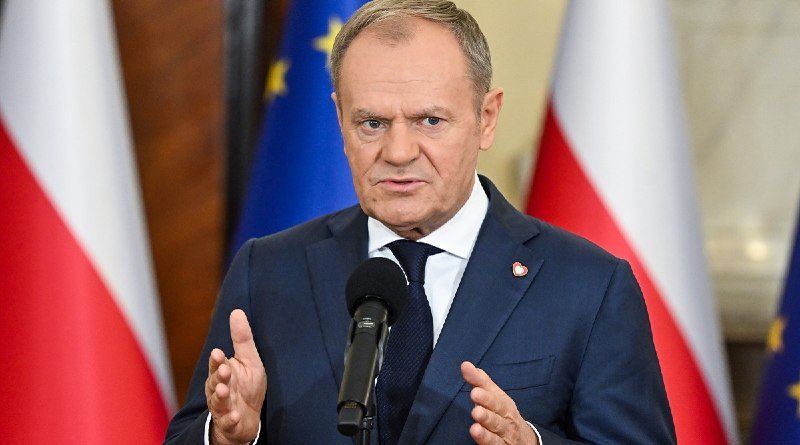
Donald Trump confirmed on 26 April 2026 that he has spoken directly with Vladimir Putin and described his conversations with Volodymyr Zelensky as productive, offering the most explicit public accounting yet of a back-channel diplomatic effort that has run parallel to continued battlefield slaughter in eastern Ukraine.
Speaking to reporters in Washington, the US president declined to disclose the substance of his most recent exchange with the Russian leader, saying only: "I don't want to disclose what the last conversation with Putin was about, but I communicate with him." The ambiguity itself constitutes a diplomatic signal — a managed opacity that keeps Putin invested in the process without committing the administration to specific concessions in public.
The disclosure comes as the gap between the two negotiating positions remains wide. Kyiv has consistently rejected any arrangement that formalises territorial loss, insisting on Ukrainian sovereignty over internationally recognised borders. Moscow, backed by its February 2022 annexations, has demanded recognition of its claimed gains as a precondition for any ceasefire. Trump's team has floated proposals that would freeze the front line as a temporary measure, buying time without resolving the underlying sovereignty question — a position that Ukrainian officials have quietly characterised as closer to Russia's preferences than to their own.
The Diplomatic Geometry
What makes this moment structurally distinctive is that the United States is not acting as a neutral broker. Washington's continued military support for Kyiv — even as the political will to fund it narrows in Congress — keeps Ukraine at the table. Simultaneously, the direct Putin channel signals that the administration reserves the right to negotiate over Ukraine's head if Kyiv's demands prove inconvenient. Zelensky finds himself negotiating with both a creditor and a guarantor, and the incentive structures are not symmetrical.
European allies have watched the emerging US approach with mounting unease. Several NATO members have quietly accelerated their own weapons production and stockpiling programmes in recent weeks, calculating that a US-brokered deal might leave European forces to manage the deterrent problem in the medium term without American ground or air support. The French and German defence industrial bases have expanded production capacity for artillery shells and air defence systems at a pace not seen since the Cold War, a fact that reflects not optimism about the peace process but anxiety about its aftermath.
What Kyiv Is Willing to Accept
The Ukrainian leadership has been careful not to publicly reject the US process, recognising that antagonising the administration that supplies the bulk of its air defence and long-range strike capability would be diplomatically self-defeating. Zelensky has instead sought to shape the narrative by publicly articulating a "victory plan" that includes Nato membership language and specific security guarantees — framing that signals to Western audiences that any ceasefire acceptable to Kyiv must include binding security commitments, not merely verbal assurances.
But the battlefield arithmetic has shifted. Russian forces have been advancing incrementally in the east, capturing territory in the Donetsk and Zaporizhzhia regions that was previously held by Ukrainian defensive positions. Ukrainian military commanders have privately briefed Western journalists that attrition rates are unsustainable at current levels without a significant increase in mobilisation — a politically explosive topic inside Ukraine itself. The gap between what Kyiv says it wants and what it can compel militarily is widening, and both sides know it.
The Structural Pattern
What the Trump-Putin channel reveals is a familiar feature of great-power diplomacy: the tendency to resolve peripheral conflicts through arrangements that reflect the correlation of forces on the ground rather than the preferences of the parties most directly affected. Ukraine has been central to this war in every meaningful sense — it is the territory, the people, the infrastructure that has absorbed the destruction. Yet the negotiating dynamic increasingly treats Kyiv as an interested party whose consent matters less than the terms that Washington and Moscow can agree between themselves.
This is not new. Post-war settlement processes routinely produce outcomes where the preferences of local actors are subordinated to the interests of the guarantor powers. The question is whether the specific terms on offer — ceasefire along existing lines, some form of security guarantee, frozen front, delayed sovereignty resolution — represent a workable stabilisation or a prelude to a second act of Russian pressure. The historical record on frozen conflicts is not encouraging: Abkhazia, Transnistria, Nagorno-Karabakh all began as ceasefire arrangements and became long-term instruments of Russian leverage.
What Remains Uncertain
The administration has not released any written framework or ceasefire proposal, and the sources consulted for this article do not agree on the specific sequencing being discussed. Some US officials have suggested that a preliminary agreement on energy infrastructure — specifically, the status of Russian gas transit through Ukraine — could serve as a confidence-building measure before broader political questions are addressed. Others indicate that the administration wants a broader territorial freeze in exchange for resumed Western economic engagement with Russia. The discrepancy matters: energy infrastructure is a technical problem; territorial recognition is a sovereignty problem.
What is not in dispute is that the diplomatic window is open and that both Washington and Moscow have incentives to move before the European summer travel season diverts political attention and before Ukrainian mobilisation debates reach a breaking point inside Kyiv's governing coalition. The next four to six weeks will determine whether this process produces a ceasefire, a prolongation of talks with the same positions intact, or a breakdown that leaves both sides with fewer options than they have today.
Monexus covered this story using the Telegram-sourced Ukrainian and Western-aligned wire accounts, with particular attention to how the US negotiating posture differs from the formal EU approach centred on the Normandy Format. The dominant Western wire framing foregrounds Trump's dealmaker posture; this article foregrounds the asymmetry of leverage and the structural position of the party most exposed to its consequences.
Wire provenance
This editorial synthesis draws on the following public wire/social posts:
- https://t.me/intelslava
- https://t.me/TSN_ua
- https://t.me/noel_reports