Trump Declares Victory Over Iran as Oil Infrastructure Deadline Looms
On 26 April 2026, President Trump announced the war with Iran was effectively won and that Tehran's oil infrastructure faced imminent destruction, while framing concessions on Iran's nuclear programme as a negotiating chip.
President Trump told Fox News on 26 April 2026 that military operations against Iran were approaching their conclusion, declaring the United States was "winning very bigly" in a conflict that has seen sustained strikes on Iranian energy infrastructure over recent weeks. Speaking hours before his White House Correspondents' Association dinner appearance, Trump said Iran had approximately three days before its oil facilities faced what he described as imminent destruction. "We will take Iran's nuclear dust and that's part of our negotiations," he added, in comments that conflated ongoing military action with the diplomatic process. The statements, reported across multiple channels including GeoPWatch and ClashReport, represent the administration's most direct framing yet of a conflict that began with precision strikes on Iranian nuclear facilities in mid-March.
The nut graf is straightforward: Washington has consistently framed this as a war it intends to win on its own terms, but the language of triumph is running ahead of the facts on the ground. Iranian state media has not acknowledged anything resembling a capitulation. Oil markets have reacted with caution rather than relief, reflecting genuine uncertainty about whether the strikes have disabled Iran's enrichment capacity or simply set back its programme. The administration is projecting confidence partly because confidence is itself a negotiating instrument — the question is whether Tehran reads it that way.
The Specific Threats
Trump's three-day deadline on Iranian oil infrastructure represents the most concrete temporal marker the administration has set since launching operations against the Islamic Republic. The phrasing — "before their oil infrastructure explodes" — suggests a continued bombing campaign rather than the conclusion of one. According to GeoPWatch's reporting of Trump's remarks, the president also stated that had the United States "had to continue military operations in Iran, we would have completely eliminated them very quickly." That claim sits uneasily with the fact that operations have continued for weeks, suggesting either that the pace of strikes is being ramped up or that the timeline for complete destruction has contracted sharply.
The reference to "what remains of the Iranian regime" is notable for what it implies about current assessments in Washington. It suggests the strikes have already degraded Iran's governing apparatus in ways the administration considers significant — enough that "what remains" is a phrase the president deploys without apparent hesitation in a nationally televised interview. Whether that assessment reflects operational reality or is itself a messaging choice designed to pressure Tehran into concessions is a question the available sources do not resolve.
The Nuclear Dimension
The phrase "nuclear dust" has no established legal or diplomatic meaning in non-proliferation discourse. It appears to be Trump's own formulation, and its vagueness is itself informative. In the same breath, he described whatever Iran has lost — or will lose — as "part of our negotiations," which suggests the administration is treating the destruction of nuclear facilities not as a standalone military outcome but as leverage in a broader bargaining process. That framing implies Washington wants something from Tehran beyond the cessation of enrichment: a restructuring of Iran's relationship with its nuclear programme that outlasts the current conflict.
The problem with that framing is that it requires an adversary willing to negotiate under conditions of continued bombing. Iran's supreme leader has not publicly signalled any willingness to engage on American terms. Iranian state media, in coverage not drawn from the Telegram threads above, has consistently characterised the strikes as acts of aggression rather than events that open diplomatic off-ramps. The administration may be timing its triumphalism for an audience that includes both Tehran and the American domestic electorate ahead of midterm positioning — but declarations of imminent victory carry risks if the other side does not accept the premise.
The Context of Energy Markets
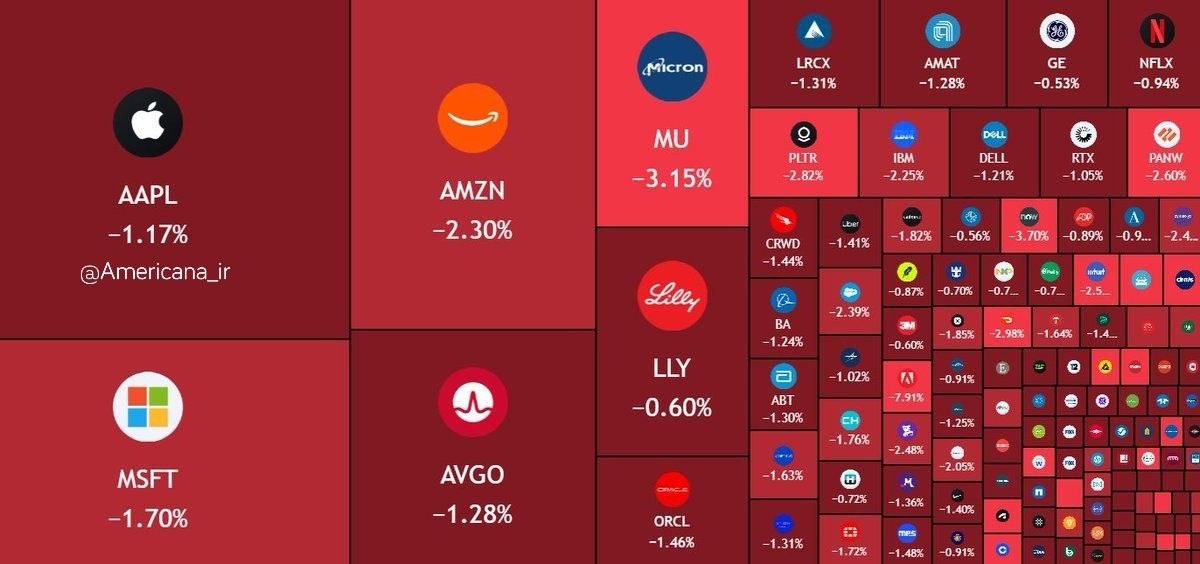
Brent crude has traded in a compressed range since the initial strikes began, a signal that markets are not fully pricing in either a rapid resolution or a prolonged escalation. Traders are watching for several variables simultaneously: whether Iranian export capacity has been genuinely impaired, whether Saudi Arabia or the UAE will be asked to compensate any supply gap, and whether the three-day deadline produces visible strikes on facilities that matter to global supply. The silence from OPEC+ on the conflict has been notable — Riyadh has not publicly aligned itself with the American military campaign, and that restraint may reflect a calculation that a weakened Iran serves Saudi interests but that American behaviour more broadly is not a reliable basis for long-term energy planning.
The structural point here is not simply that oil is a weapon in this conflict — it has been since the first sanctions were reimposed after 2018. The more significant dynamic is that the United States is attempting to destroy the energy infrastructure of a major producer while simultaneously demanding that global energy markets remain stable. That requires cooperation from other producers who have their own geopolitical calculations and who have watched Washington exit nuclear deals, reimpose sanctions, and now launch direct strikes with limited allied endorsement. The absence of a formal coalition does not mean the strikes are unsupported, but it means the costs of managing the aftermath fall disproportionately on the United States.
Forward View
The three-day deadline gives external observers a concrete benchmark against which to measure the administration's claims. If strikes on Iranian oil infrastructure materialise as described, the conflict enters a new phase — one in which the damage is not merely to military assets but to the economic foundations of the state. If the deadline passes without the predicted destruction, the credibility of the administration's framing suffers accordingly. Either outcome narrows the range of possible diplomatic outcomes, because it becomes either much harder or much easier for Tehran to claim it has survived.
The negotiation framing Trump employed — treating nuclear destruction as a bargaining chip rather than a standalone objective — suggests the administration has not abandoned the possibility of a deal. But deals require two parties willing to talk, and Iranian officials have not crossed that threshold publicly. What Washington is projecting as inevitability may read in Tehran as desperation, or as a signal that American patience with the campaign is not unlimited. The correspondence between domestic political calendars in both countries and the actual trajectory of events is, as ever, imperfect.
This desk covered the initial strikes on Iranian nuclear facilities when they began in March 2026. At that point, the administration framed the action as precision and limited. The language has since shifted to declarations of imminent victory. The gap between those framings — and the facts on the ground that would justify either — remains the central question this coverage will track.
Wire provenance
This editorial synthesis draws on the following public wire/social posts:
- https://t.me/GeoPWatch/18920
- https://t.me/GeoPWatch/18918
- https://t.me/GeoPWatch/18919
- https://t.me/ClashReport/21456
- https://t.me/Middle_East_Spectator/18921