Trump Declares Victory Over Iran While Tehran Anchors Its Position
U.S. forces intercepted a shadow fleet tanker near the Strait of Hormuz on 25 April as Trump declared the Iran war would end soon and we will be victorious, while Tehran told Islamabad it will not negotiate while the blockade holds.
The gap between Washington's declared confidence and Tehran's stated position has rarely been wider. On 25 April 2026, U.S. Central Command announced that American forces had intercepted a sanctioned vessel operating as part of what Western officials describe as Iran's shadow fleet, escorting the tanker back toward Iranian waters. Hours later, according to Polymarket-sourced reporting, Iran delivered a direct message to Pakistan: there would be no peace talks with the United States while the American naval and economic blockade remained in place. Then, on 26 April, standing alongside Pakistan's civilian and military leadership in Islamabad, President Donald Trump offered a different read of the situation. The Iran war, he said, would come to an end very soon, and the United States would be very victorious.
That framing — a war declared over before a settlement is reached — sits uncomfortably against what Tehran has communicated to a regional interlocutor. The sources do not specify the exact channel through which Iran relayed its position to Islamabad, but the substance is consistent with months of Iranian public and private messaging: lifting the blockade is a precondition, not a variable to be negotiated away.
The Interception and the Blockade's Architecture
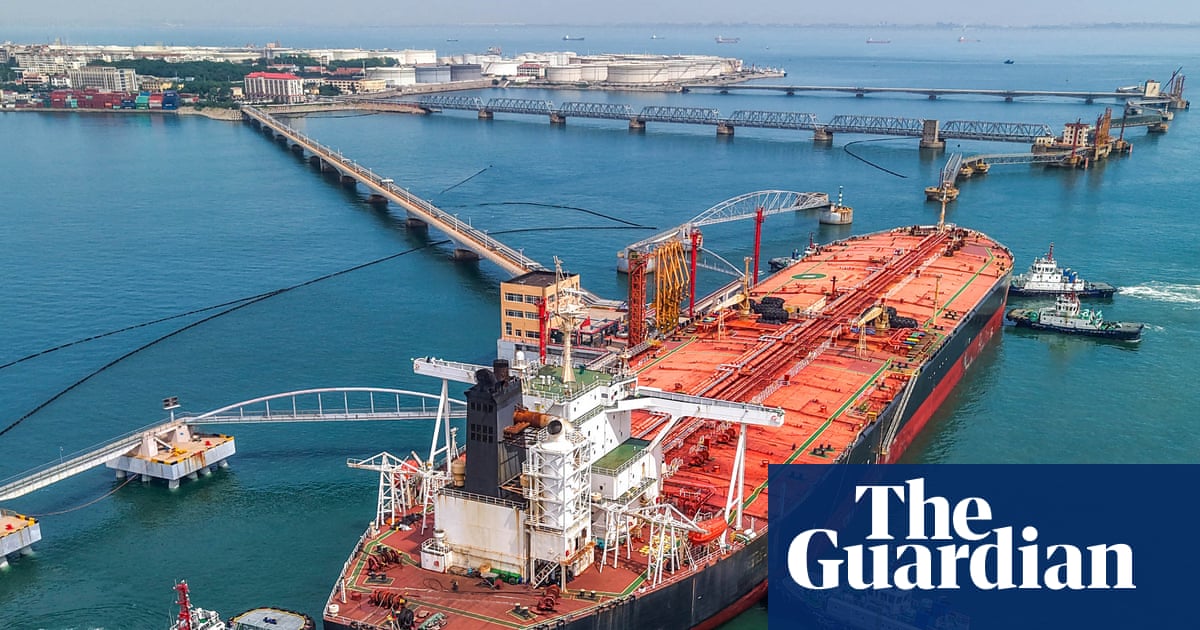
The CENTCOM announcement on 25 April described an interception operation targeting a single vessel from the fleet of oil tankers that has become central to the sanctions-evasion ecosystem surrounding Iran. The shadow fleet — a loose, deliberately opaque network of vessels that routinely switch registration, turn off transponders, and conduct ship-to-ship transfers in international waters — has allowed Iran to continue exporting oil despite near-total financial isolation. U.S. officials have described these operations as a direct violation of the sanctions regime; Iranian and regional analysts counter that the maritime restrictions constitute a form of economic warfare that itself sits outside accepted norms of peacetime commerce.
The timing of the interception matters. It came as diplomats and intermediaries have been quietly exploring whether any formula could bring the two sides to a table. That no such formula has yet emerged is itself significant. The blockade — naval pressure combined with secondary sanctions that cut off most of Iran's banking system and oil customers — is the primary instrument through which Washington is seeking to force concessions. Tehran's position is that this instrument must be removed before any talks begin, a sequencing demand Washington has so far rejected.
Pakistan's Precarious Intermediary Role
Trump's visit to Islamabad on 26 April was accompanied by warm language toward both Pakistan's Prime Minister and its Army Chief, the field marshal. We have great respect for the field marshal of Pakistan and for the prime minister of Pakistan, the President told reporters. They are great people. The effusiveness of that praise — directed at an institution and an individual that the U.S. intelligence community has, in previous administrations, treated with deep wariness — reflects the centrality Islamabad has assumed in Washington's efforts to open a back-channel with Tehran.
Pakistan shares a 959-kilometre border with Iran and maintains economic and tribal ties that no amount of American pressure has fully severed. It is also, under the current government, actively engaged with both parties. Whether that intermediary role is welcome in Tehran is a separate question. Iran, according to the Polymarket-sourced reporting from 25 April, told Pakistan it would not talk while the blockade holds. That message, if accurate, suggests Islamabad's diplomatic capital with Tehran is limited when the core demand is on the table. The sources do not indicate how the Pakistani government responded to Iran's message or whether Islamabad relayed it to Washington in full.
The Domestic Politics of Victory Claims
Trump's assertion that the war will end soon and the U.S. will be victorious is not new. Versions of this claim have appeared in American statements since the escalation began. What is notable in the 26 April statement is the pairing of a declared outcome with continued military operations and an explicit acknowledgment that talks have not begun. The sources do not indicate what intelligence or diplomatic developments, if any, underpin the confidence.
Separately, on 25 April, Trump told an audience that he felt an obligation to ensure the crypto industry prospers. The connection between cryptocurrency policy and the Iran file is not direct, but it underscores the broader economic ideology driving the current administration's approach: sanctions and financial pressure are tools, and the ecosystem that surrounds them — including digital asset markets that some officials view as a counterweight to traditional financial chokepoints — is part of the same architecture of economic statecraft.
Stakes: A Settlement Architecture or a Frozen Conflict
The structural logic of the current standoff is relatively clear. Washington wants concessions — on the nuclear programme, on regional proxy activity — before easing the pressure that is causing economic damage to Iran. Tehran wants the pressure lifted first, treating the blockade as illegitimate before any negotiating table is set. Neither side, on the evidence available, is close to blinking.
The interception of a single shadow fleet tanker is a message, not a turning point. The shadow fleet is large enough, and Iran's alternative routes resilient enough, that one intercepted vessel does not constitute a strategic shift. But it does signal that the naval component of the blockade remains active and that Washington intends to keep it that way.
The stakes of a frozen conflict are asymmetric. A continued blockade deepens Iran's economic strain but also solidifies the nationalist case inside Tehran that Washington cannot be trusted to negotiate in good faith. A settlement that lifts the blockade in exchange for verifiable nuclear constraints would be the most stable outcome — but it requires both sides to accept risk simultaneously, and neither appears ready to move first. Pakistan's intermediary role is real, but it cannot substitute for direct American-Iranian engagement that neither government has yet signalled it is prepared to undertake.
What remains uncertain is whether Trump's declared confidence reflects a specific diplomatic development not yet in the public record, or whether it is a negotiating posture — a public assertion of inevitability designed to shape Iranian calculations rather than describe them. The sources do not resolve that question.
This desk noted that Western wire framing of the interception centred on enforcement of international sanctions, while Iranian and regional sources emphasise the blockade's extraterritorial dimensions. Monexus has sought to hold both framings simultaneously.
Wire provenance
This editorial synthesis draws on the following public wire/social posts:
- https://t.me/ClashReport/12345
- https://t.me/ClashReport/12346
- https://t.me/alalamarabic/67890
- https://x.com/polymarket/status/11234567890
- https://x.com/polymarket/status/11234567891
- https://x.com/polymarket/status/11234567892