Trump's Economic Gravity Problem Is Getting Worse, Not Better
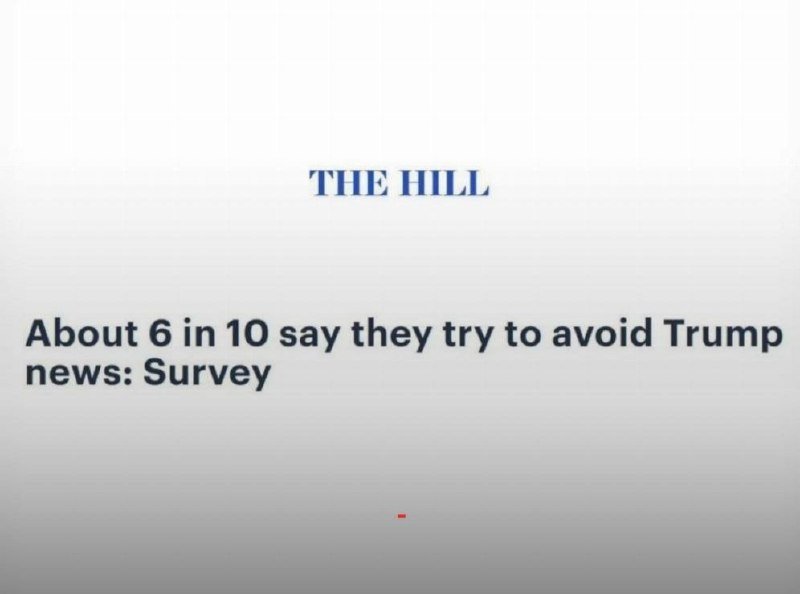
The numbers landed quietly on a Sunday evening, as polling findings usually do. But the Daily Beast survey published on 26 April 2026 carried a finding that the Trump administration would prefer to dispute rather than address: 73% of all voters now hold the President and his administration responsible for the ongoing rise in consumer prices. More striking still, 57% of Republicans share that view. A President who ran on economic competence — on being the businessman who could fix the economy — is now owned by an inflation problem he cannot manufacture enough spin to escape.
That is the thesis in its plainest form. The cost-of-living crisis has ceased to be a secondary concern or a media narrative. It has become a first-order political fact, measurable in percentages, detectable in party ID, and increasingly resistant to the rhetorical counters the White House has deployed. The question is no longer whether voters blame Trump for prices. The question is whether that blame has become structurally irreversible.
The Poll Tells a Story the White House Cannot Spin
Let us be precise about what the data says. The Daily Beast polling, carried out in late April 2026, found that roughly three-quarters of the entire electorate — not independents, not swing voters, but all voters — attribute the rise in prices to Trump and his administration. That figure alone would be notable. But the more politically significant finding is the 57% among Republicans. In a party where tribal loyalty remains the dominant electoral currency, more than half of the base acknowledging economic failure is not a blip. It is a fracture line.
Presidents have survived bad economic news before. Ronald Reagan did not lose the 1984 election despite unemployment at 7.5%. George W. Bush navigated 2008 with a housing crash in the background. But those presidents inherited their crises or had elapsed time to build retrospective rationalizations. Trump faces a different geometry: he owns the inflation story from its beginning, having spent the first two years of his second term presiding over tariff regimes, trade disruption, and supply-chain instability that economists across the ideological spectrum linked — with varying degrees of certainty — to consumer price increases. When 73% of voters draw a direct line from the administration to their grocery bills, they are not being manipulated by the media. They are doing basic political arithmetic.
The Economics Have Outrun the Narrative
The difficulty for the White House is that the economic explanation has not kept pace with the political experience. Official communications have leaned on two arguments: that price rises are a global phenomenon predating the administration, and that tariff revenue represents a net positive for American workers. Both arguments have structural merit in a technical sense. Neither has penetrated the lived experience of households that continue to see prices elevated relative to 2024 benchmarks.
This is not a failure of communication. It is the limits of communication. When a voter watches the price of eggs or beef or household essentials hold steady or creep upward month after month, no amount of tariff-speak or global-causation framing repairs the political damage. The administration understood this when it imposed tariffs as a negotiating tool; it understood the economic trade-off less clearly. What the polling reveals is that the trade-off has been made, and voters have rendered their verdict.
The 57% Republican figure is the most instructive data point in the entire dataset. Republican voters are not default skeptics of their own party's record. They are, historically, the most willing to accept reassuring framing from party leadership. The fact that more than half of them have broken with the administration on economic responsibility suggests either a level of personal financial stress that overrides partisan loyalty, or a recognition — however vague — that the policy choices made in 2025 and 2026 have not delivered the economic relief that was promised. Either explanation points to a serious problem for the coalition.
The Political Implications Are Not Abstract
Elections are won and lost on economic perceptions more reliably than on any other variable. The political science is old and consistent: pocketbook voting is real, and it operates with a lag that usually benefits incumbents who inherit good conditions and punishes incumbents who do not. Trump, returning to office in 2025 with a promise to reverse economic malaise, now faces the inverse scenario. He is the incumbent. The conditions are not, by majority voter assessment, improving fast enough.
The 2026 midterm calendar means that congressional Republicans have already begun the delicate work of dissociating their electoral brands from White House economic management. This is not a new political maneuver — the distance between a congressperson's economic stance and the executive's record is a permanent feature of divided-party governance. But the polling gives permission to a certain kind of Republican candidate: the one who says, quietly, that the administration got the economic timing wrong, that tariff discipline is admirable in principle but painful in practice, and that their own economic agenda will be distinct.
The Democrats, meanwhile, have been handed a framing they have been unable to manufacture on their own. Economic accountability is a potent message when it resonates across party lines. A 73% national attribution figure is not a Democratic talking point. It is a bipartisan consensus, and the party that captures that consensus in policy terms — not just in opposition research — will have something to build on.
The Stakes Are the 2026 Map and Beyond
The proximate stakes are the November 2026 congressional elections, where economic dissatisfaction tends to punish the party in power more severely than it rewards the opposition. If these polling figures hold — and there is no structural reason to expect them to reverse without a significant and visible decline in consumer prices — Republicans enter the midterms with a coalition problem they cannot paper over with border-security messaging or cultural-war framing. The economy, specifically the cost of living, is not a secondary issue for voters who are calculating whether their grocery budget stretches to the end of the month. It is the primary issue.
The longer stakes concern Trump's legislative agenda and the institutional credibility of the executive on economic management. A President who is seen as the author of a cost-of-living crisis is a President whose leverage on Capitol Hill diminishes. Deals require credibility. Credibility, in this context, requires voters to believe the administration can fix what it broke. The Daily Beast poll suggests that belief is weakening inside the coalition that most needs to hold it.
What remains uncertain — and the sources do not resolve — is whether the polling reflects a durable shift in voter assessment or a transient reaction to a specific price spike in early 2026. Polling is a snapshot, not a trend line. If prices stabilise or fall in the coming months, the 73% figure may soften. If they do not, the political damage compounds in ways that no messaging operation can reverse. The administration is hoping for the former. The data gives no strong reason to expect it.
Wire provenance
This editorial synthesis draws on the following public wire/social posts:
- https://t.me/tasnimplus/12345
- https://t.me/alalamarabic/67890
- https://t.me/alalamarabic/67891