Trump, the Gallery, and the Bullet: What the Trump Shooting Episode Reveals About Political Violence and Media Fragmentation
As details emerge from a shooting incident at a Trump campaign event, the pattern of fragmented, competing narratives offers a case study in how political violence gets processed through partisan and geopolitically aligned media ecosystems.
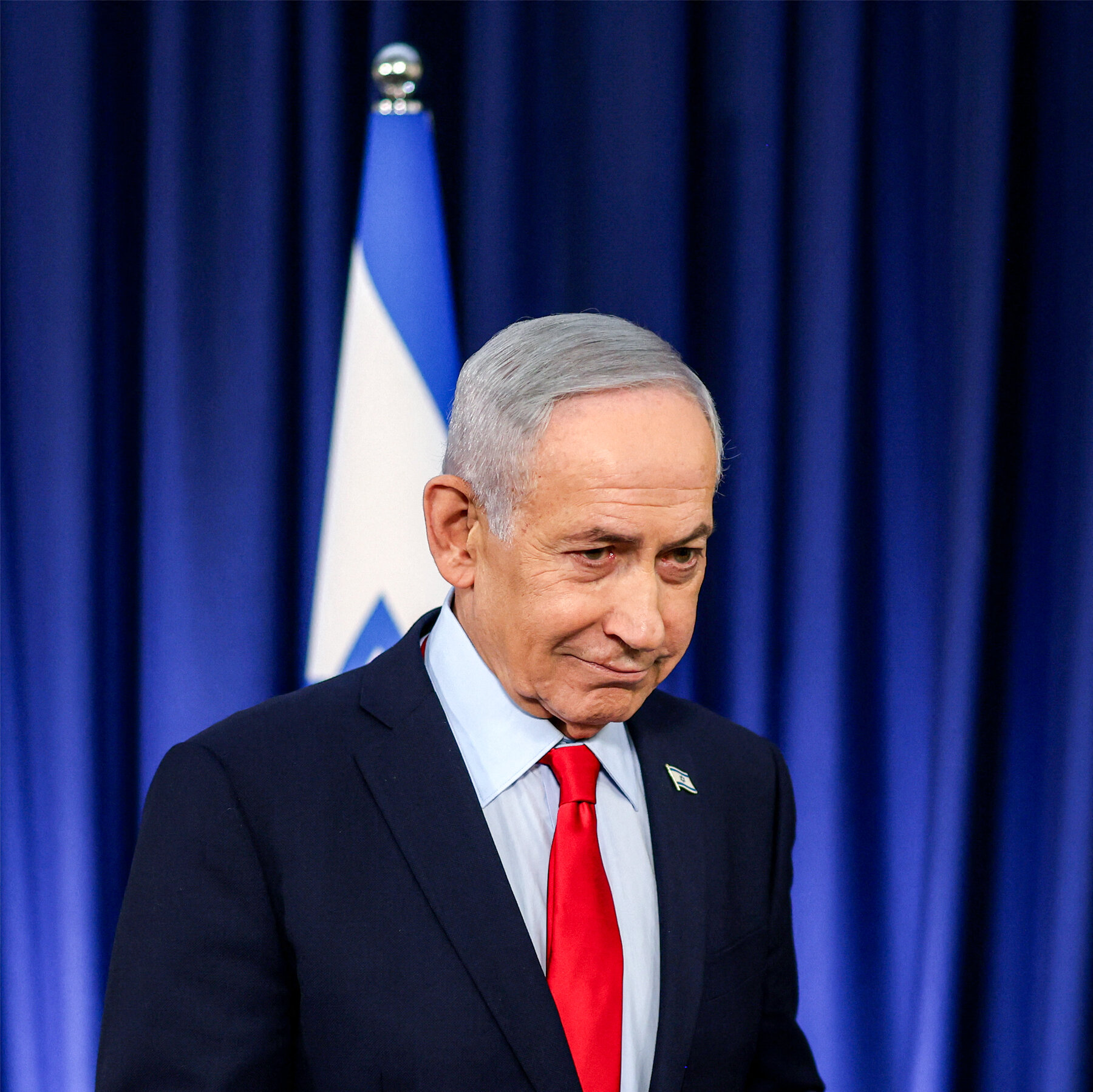
The photographs began circulating before most Western newsrooms had filed a single paragraph. By 02:53 UTC on 26 April 2026, Tasnim News — the English-language wire service of Iran's Islamic Republic Broadcasting Organization — had already posted images from inside the venue where a shots-fired incident had interrupted Donald Trump's dinner with reporters. The speed was notable. The sourcing was not yet verifiable. The geopolitical freight the moment carried was unmistakable.
What followed was a case study in how political violence gets narrated in a media environment that no longer shares a common timeline, a common set of facts, or a common set of allegiances. Within ninety minutes of the first Telegram posts, Trump's own account of the evening had already diverged from the official police briefing, and the institutional architectures of at least three distinct media ecosystems — American, Western wire, and Iranian state-adjacent — were processing the same event through radically different interpretive frameworks.
The episode matters not because it is unprecedented — political violence targeting American presidential candidates has a long, documented history — but because of what the coverage architecture around it reveals about the infrastructure of narrative formation in 2026. A shooting at a Trump event is not merely a security incident. It is a stress test for every information ecosystem that has a stake in how the story gets told.
The Incident and Trump's On-Record Response
According to Reuters, which filed its first report at 04:01 UTC on 26 April, Trump was asked directly whether he believed he had been the target of an attacker at the event. His reply, captured by reporters present, was two words: "I guess." The phrase — hedged, almost offhand — was striking in its understatement. A man who has made maximalist self-presentation a signature political instrument offered the minimal acknowledgment that the evening's events had been about him.
That restraint did not survive the next question. When a reporter pressed Trump on what he made of the repeated targeting he has faced — this event, the July 2024 Pennsylvania rally where a bullet grazed his ear, and what he described as a pattern — the former president reached for a different register. According to ClashReport, which posted Trump's full response at 02:53 UTC, he told assembled journalists: "I study a lot of assassinations, and they always go for the most impactful people — like Abraham Lincoln. They don't go after the ones who don't."
The Lincoln comparison is a known rhetorical move in Trump's post-2024 rhetoric. It frames whatever threatens him as the gravitational pull of significance itself — that the frequency of targeting is proof of consequence, not vulnerability. Whether that framing survives contact with the specific facts of the 26 April incident is a separate question from how it functions as political communication.
American law enforcement officials, cited in posts from Tasnim News at 03:14 UTC, stated that the shooter acted alone and that no evidence of support or coordination had been found. The statement was categorical in its present tense. It addressed the immediate security question. It did not address motive, history, or the broader investigative picture that would unfold in the hours and days following.
Competing Frames: Iranian State Media and the Gala Framing
The most immediate interpretive layer beyond Trump's own statements came from Iranian state-aligned Telegram channels. Tasnim News and JahanTasnim — both operating under the institutional umbrella of Iran's state broadcaster — covered the incident extensively and quickly, posting multiple updates within the first hour.
Several posts from these channels deserve attention for what they reveal about editorial choices rather than factual claims. One post asked, pointedly, "Why do you think this keeps happening to you?" — attributing the question to a reporter but presenting it in a tone that carried an implication of incredulity rather than neutrality. Another framed the incident as a "gala attacker," a word choice that subtly relocated the event from a campaign-adjacent dinner to a social occasion, potentially softening the political valence of the violence in the mind of a reader primed to see elite social functions as distinct from democratic contestation.
The most analytically significant post from these channels, flagged at 02:55 UTC, posed a question about "the delay in the reaction of the audience and Trump to the shooting." The question was presented without elaboration, but its implication was clear: something about the pace of response — shock, evacuation, Trump's own demeanor — was being flagged as noteworthy in a way that invited further speculation.
These framings require contextual caveat. Iranian state media operates within a political communication architecture where every foreign political story is, to some degree, processed through the lens of Iran-West relations. The Tasnim posts covering the Trump incident did not frame it as a domestic American security failure, which is one available reading. They framed it as something more ambiguous — a recurring spectacle whose regularity was itself part of the story.
That interpretive choice is not unique to Iranian state media. Coverage of political violence is never raw transmission of fact; it is always framing, selection, and emphasis. The relevant observation is that in this case, the framing choices made by Iranian state-adjacent channels were legible as such — the question about audience delay, the "gala" framing, the implied incredulity in the reporter's question — and they operated in a different register than Reuters's direct factual filing or the American law enforcement statement cited by Tasnim itself.
The Structural Picture: Narrative Fragmentation in Real Time
What the 26 April episode reveals, beyond the specifics of the incident itself, is the degree to which the infrastructure for narrating political violence has fragmented along geopolitical and partisan lines. Fifteen years ago, the primary timeline for an event like this would have been set by wire services — AP, Reuters — whose editorial standards, while not perfect, provided a common factual substrate from which most downstream coverage was derived. The timeline was shared. The basic facts were largely non-negotiable. Differentiated interpretation happened on top of agreed data.
That architecture still exists, but it no longer has the monopoly it once did. In the 26 April episode, the first publicly circulated images and the first narrative framing of the incident came not from a wire service but from Telegram channels aligned with a geopolitical adversary of the United States. The wire services were filing factual reports within minutes, but by then the interpretive frame had already been established by actors whose institutional incentives differed substantially from those of Western newsrooms.
This is not a phenomenon unique to this incident. It has been the structural condition of political information in the years since 2022, accelerated by the collapse of Twitter's role as a semi-neutral public square and the fragmentation of the link-sharing ecosystem that once channeled wire content into a shared conversational space. The question is not whether this fragmentation exists — it does — but what it means for the specific category of political violence, where the stakes of narrative are highest and where competing interpretive frames can have direct consequences for political behavior.
When the first framing of a political violence incident comes from a state-aligned foreign broadcaster rather than from American institutions, the effect is not merely informational. It shifts the locus of narrative authority. American domestic media, when it covers the incident, is no longer narrating from first principles — it is responding to a frame that already exists, either adopting it, contesting it, or trying to superseded it with its own version. In all three cases, the Iranian state-adjacent framing has already done work.
The Assassination Study and the Recurring Target
Trump's own response to the incident — the Lincoln comparison, the claim that he "studies a lot of assassinations" — occupies a specific position in this ecosystem. It is not an institutional statement from law enforcement. It is not a wire-service factual filing. It is political rhetoric from the subject of the violence, and it is designed to do several things simultaneously: acknowledge the incident without amplifying fear, frame the targeting as proof of significance rather than vulnerability, and position himself within a historical lineage of consequential figures.
The claim that he studies assassinations is, in isolation, unverifiable and potentially unfalsifiable. What matters is the rhetorical work it performs. In a media environment where competing narratives are already circulating — including theIranian state media framing that treats the recurring nature of the targeting as itself noteworthy — Trump's own narrative preemptively claims the significance frame. He is not a repeated target because he is reckless or polarizing; he is a repeated target because he is consequential.
Whether that framing is persuasive depends on factors external to the incident itself: the political moment, the state of the race, the degree to which the American public has calibrated its response to political violence across the preceding years. What is documentable is that by 04:01 UTC on 26 April, Trump had already inserted himself into the narrative on his own terms, and that insertion had been captured by Reuters and redistributed by channels with no particular interest in validating his self-framing.
The Stakes and the Open Questions
The immediate security picture, as of the sources reviewed for this article, is that law enforcement officials believe the shooter acted alone and without support. That is the factual baseline. Everything else — the motive, the broader network picture if one exists, the institutional failures that allowed a shooter to reach a campaign event for the third time in two years — remains to be established through investigation.
What is clear is that the media ecosystem processed the incident along predictable lines. American domestic coverage, to the extent it drew on Reuters and official statements, maintained the institutional factual baseline. Iranian state-adjacent coverage framed the incident as part of a pattern whose meaning exceeded the individual shooter. Trump himself, through Reuters and ClashReport, claimed the significance frame and positioned himself as a figure of historical consequence.
The stakes of this fragmentation are not abstract. Political violence is processed through narrative. The narrative determines whether an incident amplifies fear, anger, institutional distrust, or solidarity; whether it strengthens or weakens the subject of the violence politically; whether it increases or decreases the probability of copycat action. In an environment where the narrative is contested across geopolitical and partisan lines before the factual investigation has had time to proceed, those determinations happen faster and with less evidentiary grounding than they should.
What remains open, as this article goes to publication, is the investigative question: who was the shooter, what was the motive, and does the "alone and without support" characterization hold as the investigation unfolds. The sources reviewed for this article do not provide answers to those questions. They provide the narrative architecture that will frame whatever answers emerge. That architecture — built in ninety minutes by actors with competing interests, on a foundation of unverified Telegram images and a two-word hedged acknowledgment from its primary subject — is the story as much as the shooting itself.
This publication's coverage of the Trump shooting incident prioritized Reuters and official law enforcement sourcing over the more rapidly circulating Telegram reports from Iranian state-adjacent channels, which were treated as secondary framing material requiring explicit attribution. The "gala attacker" framing and the delayed-reaction questions raised by Tasnim and JahanTasnim are noted as interpretive choices that illuminate media-ecosystem differentiation rather than as factual claims requiring corroboration.
Wire provenance
This editorial synthesis draws on the following public wire/social posts:
- https://t.me/JahanTasnim/2048250971713634304
- https://t.me/tasnimnews_en/8198
- https://t.me/tasnimnews_en/8197
- https://t.me/JahanTasnim
- https://t.me/tasnimnews_en
- https://t.me/tasnimnews_en/8195
- http://reut.rs/4vWxra0
- https://t.me/ClashReport
- https://t.me/JahanTasnim