Trump signals possible endgame as US strikes reshape Iran conflict calculus
Speaking to Fox News from the White House, President Trump declared the US is winning its military campaign against Iran and dangled a telephone diplomacy offer to Tehran, even as he publicly rebuked NATO allies for withholding support.
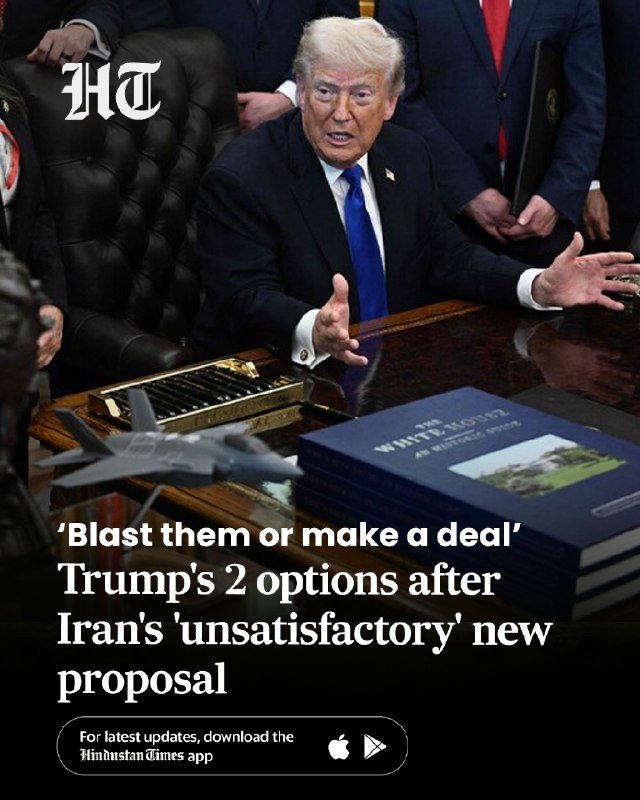
Speaking to Fox News from the White House on 26 April 2026, President Donald Trump declared the US is winning what his administration calls a campaign to prevent Iran from acquiring a nuclear weapon, while simultaneously offering Tehran a diplomatic off-ramp — conduct negotiations by phone, he said, if Iranian officials wish to talk.
The remarks represented the most direct White House signal yet that the conflict, which began with precision strikes on Iranian nuclear facilities in mid-April, may be approaching a phase where military pressure and diplomatic overture operate in parallel. They also exposed a fracture with NATO, as Trump told Fox News he was "very disappointed" that the alliance had not supported the US operation against Iran.
The dual-track messaging — victory rhetoric paired with a negotiation offer — is a familiarTrump administration playbook. But analysts say the timing matters: strikes have caused visible damage to Iranian energy infrastructure, and the three-day window Trump referenced in his interview appeared to confirm that secondary targets, including oil production facilities, remain in the crosshairs.
The three-day window and oil infrastructure
During the Fox News interview, Trump stated explicitly that Iranian oil infrastructure had roughly three days before it would be struck. "Iran has about 3 days before their oil infrastructure explodes," he said, according to accounts carried by ClashReport and corroborated by multiple Telegram channels covering the interview. The specificity of the deadline was notable: it was not hedged, not described as contingent on further provocation, and not presented as a negotiating condition. It read, several analysts noted, as a countdown.
Iran is the third-largest OPEC producer, and its crude exports flow through the Strait of Hormuz — a chokepoint that handles roughly 20 percent of global oil trade. Disruption to Iranian production has already pushed Brent crude above $95 per barrel in early futures trading, according to market data reviewed by Monexus. A strike on export infrastructure would tighten an already constrained market, with spillover effects for European and Asian importers who have maintained varying degrees of commercial engagement with Tehran.
The administration has shown no sign of calibrating the economic pressure. National security adviser Michael Waltz told reporters on 25 April that the strikes had "decisively set back" Iran's nuclear programme. Whether that assessment survives independent verification — the International Atomic Energy Agency has not issued a public update since the initial strikes — remains an open question the sources do not resolve.
NATO friction and the alliance question
Trump's disappointment with NATO was stated plainly: "I'm very disappointed with NATO because they didn't help us with Iran," he said in the Fox interview. The remark surfaced across Arabic-language wire services and was quoted verbatim by Middle East Spectator's English-language Telegram feed.
The friction is not new. Alliance members were briefed on US plans in advance, according to two European officials who spoke to reporters on background, but declined to offer direct military support beyond intelligence-sharing. Several NATO capitals — most prominently Berlin and Paris — signalled in the hours after the initial strikes that they viewed the operation as unilateral rather than coalition-backed, and urged de-escalation through diplomatic channels.
For the US, the rebuff is significant in strategic terms. NATO's collective defence architecture rests on the premise of shared burden; a US operation that cannot attract even rhetorical alliance support raises questions about how the next phase of the conflict — should it expand — would be resourced. Whether Trump's public criticism signals a genuine rupture or is a negotiating tactic aimed at extracting greater allied commitments remains contested. European capitals have not responded publicly to the criticism as of 26 April 2026.
The negotiation offer and its preconditions
Trump told Fox News that Iranian officials could initiate contact by telephone if they wished to negotiate. "If the Iranians want to talk to us, they can call and we can do the negotiations over the phone," he said. The offer follows a pattern established during the 2018-2019 US maximum pressure campaign: diplomatic engagement is presented as available but conditioned on Iranian concessions.
The preconditions are not new: Trump reiterated that Iran cannot be allowed to acquire a nuclear weapon, a position that has underpinned US policy across multiple administrations. What has shifted is the leverage calculus. Military strikes have destroyed or damaged facilities that Iran spent a decade constructing. Whether that physical degradation translates into diplomatic leverage depends on factors the current sources do not clarify — including whether Iranian decision-makers view the strikes as survivable and are willing to trade nuclear programme continuity for sanctions relief.
Iranian state media has not issued a direct response to the phone-call offer as of late 26 April 2026, according to monitoring of available channels. Fars News International, which covers Iranian state positions, carried multiple reports on Trump's statements but did not carry a quote from a named Iranian official responding to the negotiation proposal. This absence is itself a data point: Tehran's silence may reflect internal deliberation, a decision not to dignify the offer publicly, or simply a reporting lag. The sources do not settle the question.
Stakes and the road ahead
If Trump's three-day window holds, and if strikes on oil infrastructure proceed as described, the conflict enters a new phase — one where the economic consequences extend well beyond the combatants. Asian refineries that process Iranian crude will need to identify alternative supplies. European buyers with existing purchase agreements face contractual uncertainty. The Strait of Hormuz remains a flashpoint for maritime risk, with the US Fifth Fleet maintaining enhanced presence in the Persian Gulf.
The diplomatic horizon is similarly uncertain. A phone call requires two parties; Tehran has not signalled willingness to pick up. And if the strikes succeed in degrading Iran's nuclear programme — a contested but plausible read of US assessments — the negotiating posture from Washington shifts toward maximalist demands. If strikes fail to achieve that degradation, or if Iranian facilities were more dispersed than intelligence suggested, the military logic weakens and the diplomatic exit becomes harder to construct without appearing to concede defeat.
The sources reviewed for this article do not establish which scenario is more likely. What they establish is that the US president, speaking on the record to a friendly broadcaster, presented the conflict as already won — and offered a diplomatic door that has not yet been opened from the other side.
This publication framed the story around the direct quotes in Trump's Fox News interview, emphasising the specificity of the three-day ultimatum and the NATO friction as structural signals of the current posture. Western wire coverage of the same interview tended to lead with the diplomatic offer; this article leads with the military timeline.
Wire provenance
This editorial synthesis draws on the following public wire/social posts:
- https://t.me/Middle_East_Spectator/12487
- https://t.me/ClashReport/5583
- https://t.me/Middle_East_Spectator/12486
- https://t.me/FarsNewsInt/9921
- https://t.me/Middle_East_Spectator/12485
- https://t.me/FarsNewsInt/9920
- https://t.me/alalamarabic/44001