Trump's Victory Claims Collide with Tehran's Reality — and Neither Side Can Afford to Blink
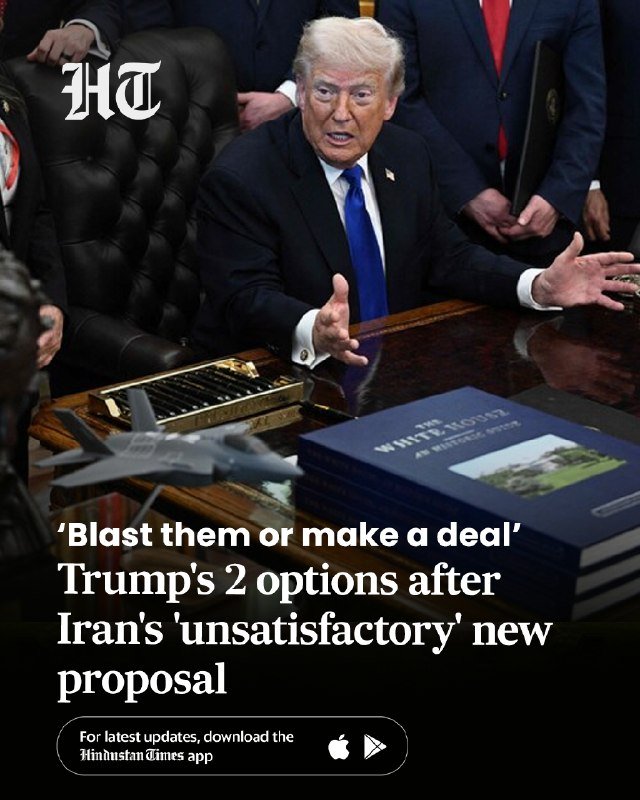
On 26 April 2026, President Trump announced that his administration had secured the release of eight Iranian women who, he said, faced imminent execution. Within hours, Iranian state-adjacent channels pushed back hard — denying the premise, dismissing the claim, and redirecting attention toward what Tehran casts as an American escalation campaign dressed up as diplomacy.
The episode encapsulates the wider dynamic animating US-Iran talks in the spring of 2026. Washington projects confidence. Tehran projects defiance. Neither side can afford to be seen blinking first.
The Trump administration's framing — that it had extracted a humanitarian concession from a hostile regime — was the kind of statement designed for a domestic audience already inclined to view the White House as the decisive actor in any room. But the substance was immediately contested. Iranian officials and their allies rejected the premise that women had been facing execution, raising questions about the evidentiary basis for the president's claim and about whether the announcement reflected a genuine diplomatic win or an manufactured one.
That uncertainty matters. When the world's most powerful state issues a public claim about saving lives and the target government denies the very premise, it becomes harder for outside observers to assess what's actually being negotiated — and for how long.
"We Have All the Cards"
The president's public posture has been unambiguous. Speaking at the White House on 26 April, Trump declared the US was "winning decisively" in its standoff with Iran. "We will get nuclear dust — they will give it to us. That is part of the negotiations," he said, in remarks carried across wire services. "We have all the cards. Iran has no cards."
The language — declarative, winner-take-all — is characteristic of a negotiating style that treats asymmetry of military power as a proxy for leverage at the table. The phrase "nuclear dust" drew particular scrutiny. Whether Trump meant fissile material, a disarmed program, or something more sweeping was not immediately clear. The ambiguity may be deliberate.
On the military dimension, the president was equally direct. "I hope we won't have to deal militarily with the remnants of the Iranian regime," he said, before adding: "But if we have to continue military operations in Iran, we would very quickly and easily eliminate them." The phrasing is notable: it presupposes continued military operations while expressing hope they won't be necessary. That framing — we will strike unless you concede — is pressure tactic and threat wrapped in a single sentence.
Tehran's response has not been deferential. Mohammad Reza Aref, Iran's vice president, offered a counter-projection: post-war Iran, he suggested, could shift from a country subject to sanctions to one capable of imposing them. The remark inverts Washington's preferred narrative — the idea that pressure has brought Iran to the table — and substitutes one in which the eventual outcome leaves Iran stronger rather than chastened.
The Assassination Frame
Separately, a senior Iranian official gave an interview that reframed an episode Washington had apparently used to bolster its negotiating position. Mohammad Mahbar, an adviser to Iran's supreme leader, addressed the attempted assassination of President Trump — an event that has featured in US-Iran discussions as a pressure point. Mahbar's framing was blunt: he described it as a "semi-cinematic attempt to create a victim-hero," designed, in his account, to cover up the failure of the operation itself.
The characterisation matters for several reasons. It refuses the victim-hero framing on which Washington may have been relying for moral leverage. It positions the assassination attempt — and the official Iranian response — as a strategic communication operation in its own right, not simply a criminal act to be condemned. And it signals that Tehran is not passive in the information environment surrounding the negotiations.
Whether Mahbar's account reflects internal Iranian deliberation or performance for external audiences is not verifiable from open sources. But the existence of a competing narrative, issued by a named official close to the supreme leader, means any US claim that the assassination plot strengthens its negotiating position must contend with a direct Iranian rebuttal.
The Structural Gap
What these competing accounts reveal is a structural problem in the current US-Iran dynamic: both sides are talking largely to their own audiences.
Washington's rhetoric — "we have all the cards," the promise of decisive victory, the implied threat of continued strikes — is calibrated for a domestic political base that values strength signals over nuance. The language is legible and politically useful at home.
Tehran's rhetoric — the denial of executions, the reframing of the assassination attempt, the projection of post-war leverage — is calibrated for a domestic base that has lived under sanctions for years and is not inclined to accept narrative defeat. It also reaches an international audience that is growing more attentive to multipolar dynamics and more skeptical of unipolar displays.
Neither side is wrong about having leverage. Iran has a functioning state apparatus, a population that has survived sustained economic pressure, and a regional network — in Yemen, Iraq, Lebanon — that gives it reach beyond its borders. The United States has military superiority, dollar-dominant financial architecture, and the ability to tighten sanctions that bite. The question is whether those asymmetries produce a deal both sides can present as survivable, or whether they produce a prolonged standoff in which both sides keep the heat up while talking.
The historical record on that question is not encouraging. Talks between the US and Iran have repeatedly produced high-profile statements followed by stalls, withdrawals, or reimpositions. The 2015 JCPOA was built on the premise that sanctions relief would sustain Iranian compliance. It collapsed. The current round is shaped by that collapse — and by four years of maximum pressure that did not produce capitulation.
What Comes Next
The stakes are concrete. A deal, if one materialises, would reshape the regional order. Iran gains sanctions relief, legitimacy for its civilian nuclear program, and a seat at a table it has been denied for years. The United States gains something it can call "nuclear dust" — a constrained program, verifiably frozen or rolled back.
A breakdown is equally consequential. Continued strikes on Iranian nuclear facilities — which the president's conditional language leaves on the table — would set back Iran's program but not destroy it, while hardening the political posture of a regime that has survived assassination campaigns, Stuxnet, and maximum pressure. Regional proxies would likely escalate. The oil market would reprice risk.
What is not clear from the source material is the actual state of the negotiations beneath the public statements. Both sides are posturing. Both sides are deniable. The eight women, the nuclear dust, the post-war leverage — these are arguments in a conversation that may or may not be happening in a room where it matters.
The most honest reading of the available record is that the gap between Washington's declared dominance and Tehran's rejection of it is real — and that it has not yet been bridged. Whether it gets bridged depends on whether both capitals can agree on a face-saving formula that lets each present the outcome as a win. That is harder than winning decisively. It is also the only thing that produces a durable outcome.
This publication's coverage of the US-Iran standoff prioritises named-source attribution over narrative momentum. Where wire outlets carried the president's direct quotes, we quote them verbatim. Where Iranian state-adjacent sources offered direct rebuttals, we note them with appropriate sourcing caveats. The goal is not balance-as-performance — it is a ledger in which the reader can see what each side is claiming, and what remains unverifiable.
Wire provenance
This editorial synthesis draws on the following public wire/social posts:
- https://t.me/abualiexpress/5847
- https://x.com/sprinterpress/status/1915071829381753298
- https://x.com/sprinterpress/status/1915071189476073772
- https://x.com/sprinterpress/status/1915070647390441475
- https://x.com/sprinterpress/status/1915069644489498823