Trump's War Frame: How a Shooting Became a Rallying Cry Before the Blood Dried
Hours after a shooter opened fire near President Trump at the White House Correspondents' Dinner, he was already reframing the incident as evidence that his Iran policy must continue — a pattern that reveals how the White House converts chaos into political momentum before the facts land.
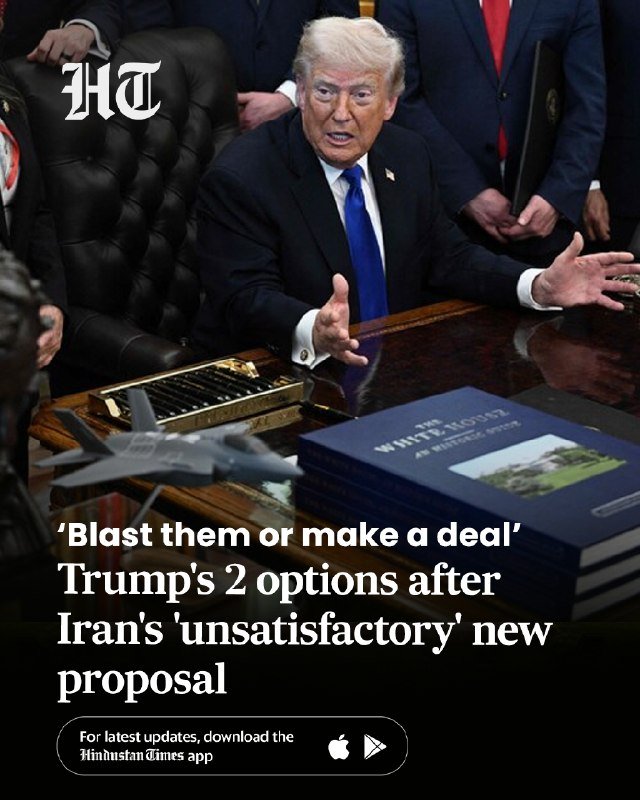
Within minutes of a shooter opening fire near the White House Correspondents' Dinner venue on 26 April 2026, President Trump was speaking from the White House podium. He had already seen the officer hit. He had already seen the footage. He had already decided what the event meant.
"This is not going to deter me from winning the war in Iran," Trump told reporters, according to Telegram wire services that captured his remarks within the hour. He allowed that he didn't know if the shooting was connected to the conflict. He allowed that "you never know." But the deterrence — the framing that this was a test of resolve, and that resolve must hold — came first. The qualification came second.
The speed of that pivot is worth examining on its own terms, not as a partisan attack but as a communication pattern with identifiable structural consequences.
What the Incident Actually Was — And Wasn't
Initial reports describe a shooter who charged toward the security perimeter from approximately 50 yards away. Officers drew their weapons before contact. One officer was struck in his bullet-resistant vest and survived; Trump said he had spoken with him and he was "doing great." The suspect was in custody by the time Trump addressed cameras from the White House. A suspect has been identified, and the sources do not yet establish a motive.
That is what is factually confirmed as of 26 April 2026, according to wire dispatches from the incident scene. The room where the Correspondents' Dinner was held was, by Trump's account, "very, very secure." The suspect was armed with multiple weapons, according to his own account of the briefing he received.
What is not confirmed: any link to Iran, to any foreign actor, or to any political organisation. What is not confirmed: whether the timing of the dinner — coinciding with active U.S. military operations against Iran — was incidental or deliberate. What is confirmed: a violent attempt on a major public gathering, an officer injured, a suspect detained.
Trump's immediate framing — that this was a test of his commitment to a specific foreign policy objective — arrived before any of those open questions had been answered. That sequencing is the story.
The War Frame as Communication Architecture
When a violent incident occurs near a sitting president, the normal information cycle runs roughly as follows: confirm the facts, assess the security response, identify the actor, establish motive, contextualise. This is not a neutral process — institutional actors push their preferred framing at every stage — but the process exists because the facts do not arrive fully formed.
Trump's response collapsed that cycle. He did not wait for the investigation. He did not express concern for the injured officer as the primary message. He made a direct connection between the shooting and his Iran policy within minutes of speaking at the podium, telling reporters that the incident would not deter him from a stated objective that is, as of this writing, actively ongoing.
This is a documented communication strategy. It treats every event that occurs in proximity to a president as evidence for the policy agenda the White House was already advancing. A shooting near the president becomes, in this framing, a vindication of the confrontational posture that produced the Iran tensions in the first place. The implicit argument: "This is what they do. We were right to take the stance we took."
The difficulty with that logic is that it is unfalsifiable. If the investigation finds the shooter was motivated by domestic political grievances, or mental illness, or something unrelated to Iran policy, the frame still works — because the original statement was not a factual claim about motive. It was a positioning claim about resolve. "This will not deter me" does not require the shooting to actually relate to Iran. It requires only that the president frame it as a test of his nerve.
That framing works regardless of what the facts eventually show.
The Correspondents' Dinner as Political Theatre
The White House Correspondents' Dinner is already a contested cultural space — a gathering of the press corps that many in the current administration regard with open hostility. The fact that a shooting occurred at or near the event gives the administration a second framing opportunity: the press, in the White House's preferred narrative, is not merely biased but is now tangentially associated with violence.
This is not an accusation that can be made explicitly without evidence. But the structural advantage of the "political violence" frame is that it operates at the level of association rather than assertion. Trump noted, when asked whether political violence was part of contemporary U.S. politics, that "We're not the only country. You look at this great violence with all countries." He was positioning the incident as part of a global phenomenon — one that, by definition, is larger than any individual event.
That positioning serves a purpose beyond the immediate moment. It normalises the occurrence and reframes it as a data point in a larger argument the White House was already making about threats, about resolve, about the necessity of a confrontational foreign posture. The dinner, a setting already freighted with political meaning, becomes another piece of evidence for the same case.
The sources do not establish who the shooter was or what they hoped to accomplish. They do establish that Trump spoke from the White House within minutes and that his first extended comment on the incident connected it to his Iran policy. The sequence matters.
What This Pattern Means for the Next Incident
If this behaviour were an anomaly, it would be notable but not structurally significant. The problem is that it is not anomalous. The White House has shown, across multiple crisis moments in this administration, a consistent capacity to convert incidents into agenda items before the factual record is established. The shooting at the WHCD fits a communication model where the primary goal of the initial response is not to inform but to position.
The implications for the press corps are uncomfortable. The White House Correspondents' Association exists to represent journalists covering the administration. A violent incident at their dinner now becomes, in the administration's framing, a test of national resolve — not a matter of press freedom, security protocols, or the safety of the people in the room. The officer who was shot survives; the press's relationship to the administration becomes slightly more fraught.
The broader implication is more structural. When a president uses a violent incident — any violent incident — as an immediate occasion to reinforce a specific foreign policy position, the incentive structure for future political violence becomes slightly more favourable. The act gains a significance beyond its own content. It becomes part of a narrative the president controls.
That is not an accusation. It is a description of a communication architecture. The sources confirm the remarks. The sources do not confirm the motive. The framing arrived before the motive.
That gap — between what is known and what the White House said within minutes of the shooting — is where the story actually lives.
This publication covered the shooting and Trump's immediate remarks from the White House on 26 April 2026, alongside the broader Iran conflict, as parallel but structurally distinct events. Wire framing emphasised the security response and the officer's survival; this article focuses on the communication architecture around the remarks and the implications of speed in crisis positioning.
Wire provenance
This editorial synthesis draws on the following public wire/social posts:
- https://t.me/wfwitness
- https://t.me/GeoPWatch
- https://t.me/JahanTasnim
- https://t.me/ClashReport
- https://t.me/AMK_Mapping