Trump's Photo Op With the Accused
Posting photos of an accused man before trial may serve political theater, but it does not serve justice — and it sets a precedent that will outlast any individual administration.
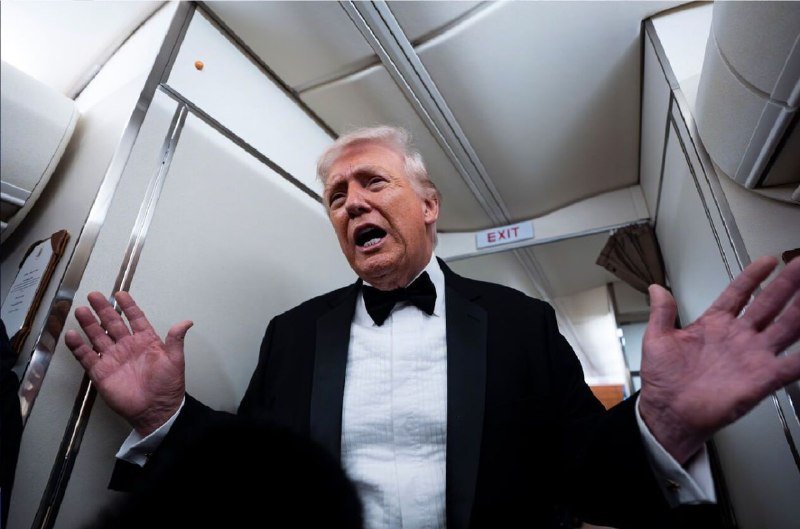
On the evening of 25 April 2026, a man named Cole Thomas Allen opened fire near the White House Correspondents' Dinner venue in Washington, D.C. One law enforcement officer was wounded. Allen, a 31-year-old teacher from California, was taken into custody. By the early hours of the following morning, photographs of him on the ground — apparently taken by officials at the scene — were on the front page of the president's social media feed. The images had no caption explaining their evidentiary status. No court had adjudicated anything. A man was presumed innocent.
This is the part that should trouble everyone, regardless of what one thinks of the president, the dinner, or the accused.
Within hours of the shooting, Donald Trump posted close-up images of Allen to TruthSocial. The president described the suspect as "from California" and said he had been captured, adding that a wounded officer was in "great shape." Within the same window, Trump released security footage from the venue. U.S. Attorney Jeanine Pirro confirmed two counts against Allen: using a firearm during a crime of violence. All of this — the photographs, the footage, the charging language — arrived via the executive branch itself, before any judicial proceeding had occurred.
No one is disputing that something violent happened. The question is what the president of the United States is doing in the hours after an arrest, acting as if conviction has already arrived.
The Pre-Trial Spectacle
There is a reason criminal justice systems distinguish between arrest, charge, and conviction. The distinction is not procedural minutiae. It exists because premature declaration of guilt — particularly by agents of the state — corrodes the mechanism by which guilt is actually determined. Posting a man's photograph on the ground, bleeding, to a social media audience of millions, does not merely inform the public. It shapes it. It performs guilt before any finder of fact has evaluated the evidence.
The White House Correspondents' Dinner is not merely a journalism award ceremony. It is a symbol — however compromised, however exclusive, however subject to legitimate critique — of the press corps' institutional relationship with the executive branch. That relationship is built on norms, not only laws. Norms about when official information flows, about who sees what first, about the difference between a press briefing and a political performance. When the president circumvents those norms to publish crime scene imagery before investigators have finished collecting it, he is not being transparent. He is staging a verdict.
Due Process Is Not a Convenience
The charges against Allen are serious, and firearms offenses carry substantial penalties. But charges are not convictions, and the Sixth Amendment does not pause its protections because a shooting occurred near a political event. The Speedy Trial Act, the presumption of innocence, the right to an impartial jury — these exist precisely because the machinery of justice is fallible. Courts, not social media feeds, are where that machinery operates.
This is not an abstract concern. Pirro, a former judge and current U.S. Attorney, confirmed the charges via public statement. That is within the bounds of her office. But the simultaneous release of visual evidence — by the same administration whose Justice Department will be prosecuting the case — is a conflation of roles that would draw scrutiny in any less charged a moment. The White House is not a crime scene photographer. It is the institution that will be represented on one side of the courtroom.
The footage Trump released is, in isolation, unremarkable. Security cameras capture incidents. That footage eventually becomes evidence. What matters is timing, context, and who controls the release. An administration that publishes its own visual evidence of a crime — and frames it with its own accompanying narrative — is not a neutral recorder of events. It is a participant.
The Pattern Beneath
This is not the first time an executive has used imagery of an accused person to shape public perception. It is not even the first time in recent memory. But the specific venue matters. The White House Correspondents' Dinner is where journalists and the administration nominally share space. It is where the press corps is supposed to have access, even if that access is always contested. Using that moment of proximity — a shooting at the dinner itself — as a pretext for publishing visual evidence outside legal channels is not a coincidence.
It is a signal. The signal is that the normal separation between executive action and judicial process is negotiable when the executive finds it convenient. The signal is that evidence does not belong to the courts first; it belongs to the narrative first. This is not a Democratic concern or a Republican concern. It is a rule-of-law concern, which is to say it is a structural one.
The precedent is not that imagery may never be released. It is that its release is controlled by whoever is in power, for whatever purpose that power serves in the moment. That is a different proposition entirely.
What the Press Corps Owes Itself
The journalists present at the dinner that night — covering an event they are often right to mock, but an event that still represents institutional access — will now have to cover the legal aftermath of a shooting that occurred at their own venue. They will report on charges, court appearances, motions. They will be reminded, in every story, that the man they are covering was photographed on the ground and posted online before he had a lawyer. That framing is now baked into the record.
They owe themselves a clear-eyed accounting of what happened and what it means. Not a reflexive defense of the dinner's legitimacy — that defense has never been fully earned — but an honest reckoning with what it means when the executive branch decides, on its own, to publish evidence. The story of 25 April 2026 is not only about a shooting in Washington. It is about who controls what the public sees, and when, and for whom.
Allen will have his day in court. The question is whether the public will enter that courtroom with open minds — or with the president's photograph already in mind.
Wire provenance
This editorial synthesis draws on the following public wire/social posts:
- https://t.me/ClashReport/12451
- https://t.me/osintlive/19482
- https://t.me/osintlive/19479
- https://t.me/osintlive/19477
- https://t.me/osintlive/19476
- https://t.me/osintlive/19471
- https://x.com/disclosetv/status/2048237114546958432