Yemen Warns Israel of Regional War Escalation as Cross-Border Hostilities Intensify
Yemen's Ministry of Foreign Affairs issued a pointed warning on 26 April 2026, cautioning Israel that continued attacks on Palestine and Lebanon risked drawing the wider region into full-scale war, and accusing Tel Aviv of exploiting international focus on Iran to advance objectives in Gaza and southern Lebanon.
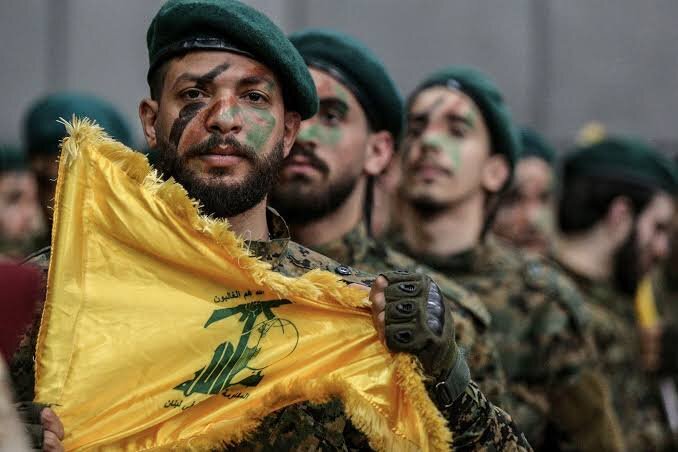
Yemen's Ministry of Foreign Affairs issued a formal warning on 26 April 2026, cautioning Israel that its continued military operations across multiple fronts risked igniting a wider regional conflict threatening international peace and security.
The statement, carried by Iranian state-linked news agency Al-Alam and the semi-official Mehr News agency, condemned what it termed "the enemy's crimes in Palestine and Lebanon," describing them as clear violations of international law and existing ceasefire agreements. Sana'a specifically accused Tel Aviv of attempting to exploit the international community's attention on the recent strikes against Iran to advance its objectives in Gaza and southern Lebanon without adequate scrutiny.
The warning arrives at a moment of acute cross-border volatility. Israeli military operations in Gaza have continued despite ceasefire negotiations, while exchanges along the Lebanon frontier have intensified in recent weeks. Yemen's statements suggest the conflict is spreading beyond any single theatre—and that actors previously thought to be on the margins of the Israel-Gaza confrontation are now actively repositioning themselves within the broader geopolitical calculus.
The Charges: Ceasefire Violations and International Law
The Yemeni Foreign Ministry's statement laid out a specific legal argument alongside its political warning. It alleged that Israeli operations in both Palestine and Lebanon constituted "flagrant violations of international law" and a breach of existing ceasefire arrangements. The language mirrored diplomatic formulations used by other Tehran-aligned governments, but the specificity of the charges—that ceasefire terms were being systematically violated rather than merely disputed—suggested a deliberate effort to build a legal record rather than issue rhetorical condemnation.
The sources do not indicate what ceasefire agreements Yemen was specifically referencing, or whether Sana'a was invoking particular UN Security Council resolutions. What is clear is that the statement positioned the Yemeni government as a direct party to the conflict's legal dimensions, not merely a sympathizer with Palestinian and Lebanese causes.
Exploiting International Attention: The Iran Calculus
Of particular note was Yemen's assertion that Israel was using the international focus on the strikes against Iran as political cover. "The enemy entity is trying to exploit the world's preoccupation with the aggression against Iran to achieve its malicious goals in Palestine and Lebanon," the Ministry stated.
This framing suggests Sana'a views the Iran situation as inseparable from its own strategic calculations. The Houthi movement, which controls Yemen's government, has maintained close operational ties with Hezbollah in Lebanon and has publicly aligned itself with Tehran's regional posture. If Israel is conducting operations while the world's diplomatic attention is fixed on a separate crisis, the reasoning goes, those operations carry less political cost.
Whether this represents a genuine strategic assessment or a talking point calibrated for international audiences remains contested. Western and Israeli officials have not publicly responded to the Yemeni statement as of filing. The available sources do not include reactions from the Israeli Foreign Ministry or from UN officials in New York or Geneva.
Regional Architecture: A Conflict Multiplying Its Fronts
The Yemeni warning underscores a structural reality that regional analysts have flagged for months: what began as a concentrated conflict in Gaza has metastasized. Lebanon, Syria, Iraq, Yemen, and now the Iran dimension all register as active or potential theatres. Each front complicates the others. Ceasefire negotiations for one theatre become leverage in another. Military assets deployed to Lebanon become unavailable for Gaza. The operational logic of multi-front warfare creates incentives for each side to escalate across theatres simultaneously—a dynamic that makes coordinated diplomacy structurally difficult.
The statement from Sana'a also reflects the financial and operational strain on actors involved in the wider conflict. Yemen has absorbed years of conflict and blockade. Hezbollah has suffered significant attrition in Lebanon. Iranian infrastructure has been struck directly. Yet rather than signaling exhaustion or a desire to de-escalate, the Yemeni statement suggested the opposite: that pressure from multiple directions was pushing toward broader confrontation, not restraint.
What Comes Next: Escalation Risks and Diplomatic Options
The immediate risk is that each warning issued by an Iran-aligned actor becomes a form of signaling that normalizes escalation as a legitimate instrument of statecraft. Sana'a's statement does not merely criticize Israeli policy—it explicitly frames continued operations as an act that obligates a regional response. Whether that response comes in the form of military action, diplomatic pressure, or further alignment with other actors remains to be seen.
The sources do not indicate whether the United States, the United Kingdom, or the European Union have been contacted as part of any backchannel diplomatic effort. There is no record of UN Special Envoy contacts with Sana'a officials. The absence of a formal mediation track leaves the escalation dynamics operating without a structural dampening mechanism.
What the Yemeni statement makes plain is that the conflict's geography has outpaced its governance. No single diplomatic framework currently addresses operations across Gaza, Lebanon, Yemen, and the Iran dimension simultaneously. Until one emerges—or until one actor calculates that the costs of continuation exceed the costs of restraint—the pattern of warning, counter-accusation, and eventual military response is likely to repeat.
This publication covered the Yemeni Foreign Ministry statement as a primary diplomatic development. Wire coverage from major English-language outlets had not yet published a direct response from Israeli or U.S. officials as of filing.
Wire provenance
This editorial synthesis draws on the following public wire/social posts:
- https://t.me/mehrnews/212345
- https://t.me/alalamfa/89234
- https://t.me/alalamarabic/44567
- https://t.me/FarsNewsInt/33445
- https://t.me/alalamarabic/44568