Araghchi Lands in St. Petersburg: What Tehran and Moscow Are Really Transacting
Iran’s foreign minister arrived in St. Petersburg on 27 April 2026 for talks with Vladimir Putin. The encounter, sequenced between an Oman meeting and fresh nuclear negotiations with Washington, reveals a two-track diplomacy Tehran is running at the edge of Western pressure.
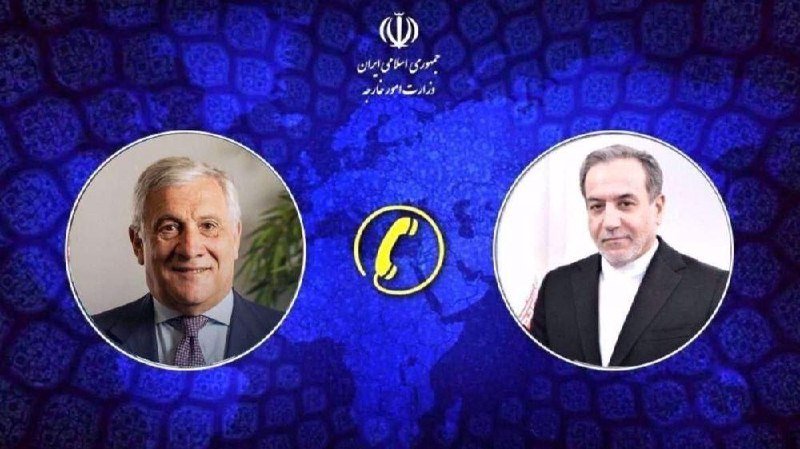
Iranian Foreign Minister Seyed Abbas Araghchi landed in St. Petersburg on the morning of 27 April 2026, Russian state-adjacent and Iranian news channels reported, en route to a meeting with President Vladimir Putin. The visit — choreographed just hours after Araghchi concluded a separate trip to Oman discussing Hormuz Strait navigation — places the Islamic Republic’s top diplomat at the intersection of two simultaneous diplomatic tracks: one aimed at shoring up a strategic partnership with a fellow sanctions-battered great power, the other at advancing indirect nuclear negotiations with the United States. The sequencing is not accidental.
What the St. Petersburg encounter surfaces is a transactional architecture that Tehran and Moscow have been quietly constructing for years, accelerated by the weight of Western financial and military pressure on both governments. The two countries have deepened defence and trade ties since Russia’s 2022 invasion of Ukraine turned it into a Western pariah, and Iran has emerged as one of Moscow’s most consistent diplomatic partners in the Gulf. For Tehran, the relationship is both a political statement and a practical hedge: a source of military and economic support calibrated to resist the architecture of isolation Washington and its allies have built around both states.
A Visit Long in the Making
The Telegram dispatches from Tasnim News English, Jahan Tasnim, Mehr News, and PressTV on 27 April 2026 all place Araghchi’s arrival at St. Petersburg airport in the early morning hours, local time. Tasnim News English described the visit’s purpose as “aiming to meet and talk with Russian President Vladimir Putin.” No joint statement had been issued by the time of filing, and neither side disclosed the formal agenda publicly. PressTV, the English-language arm of Iranian state media, framed the trip within a broader “neighbors-first” diplomatic posture Araghchi has championed since taking office, noting his earlier Oman stop on the same day.
That earlier stop matters. In Muscat, Araghchi and his Omani counterpart discussed safe navigation through the Strait of Hormuz, the narrow maritime chokepoint through which roughly a fifth of global oil trade transits. Oman has long occupied a mediating position between Iran and the West; its facilitation role in the ongoing indirect nuclear talks between Tehran and Washington is well-documented in Western wire reporting. The fact that Araghchi made the Oman visit first — before flying north to Russia — signals a deliberate attempt to project diplomatic balance rather than exclusive alignment with Moscow.
The Nuclear Track Running in Parallel
The St. Petersburg visit occurs against a backdrop of renewed but fragile nuclear diplomacy. The United States and Iran have been engaged in indirect talks mediated by Oman and, according to reporting by Axios’s Barak Ravid, discussions have involved terms for a potential partial sanctions relief arrangement in exchange for constraints on Iran’s enrichment programme. The parameters of any deal remain contested, and the Trump administration’s position has shifted more than once in recent months.
Tehran’s decision to send its top diplomat to Moscow at this moment is read, in part, as a signal to Washington: Iran has partners and is not isolated, despite the maximum-pressure campaign. Russian diplomatic support at the International Atomic Energy Agency, where Moscow has on multiple occasions softened or delayed actions against Iran, is a concrete expression of this alignment. Whether Araghchi is carrying a specific message from Putin to transmit to Washington, or whether the visit is purely about consolidating bilateral ties, the sources do not confirm.
What the Partnership Actually Looks Like
The Iran-Russia relationship is often framed in Western coverage as ideological affinity between two revisionist powers. The reality is more pedestrian and more durable: it is rooted in mutual need. Russia has supplied Iran with air defence systems, Sukhoi fighter components, and satellite imagery intelligence. Iran has supplied Russia with Shahed-class drones deployed in the Ukraine conflict and has facilitated trade corridors that allow Moscow to partially circumvent Western sanctions on energy exports. Banking connections between the two countries have deepened, using non-dollar settlement systems the two nations have jointly developed with China.
This infrastructure does not appear on formal diplomatic communiqués, but its outlines are visible in sanctions listings, Ukrainian battlefield assessments, and the public record of defence procurement announcements. The St. Petersburg meeting gives both sides an opportunity to review ongoing military-technical cooperation and potentially expand economic arrangements, particularly in the energy sector where Iranian gas and Russian pipeline infrastructure have occasionally been discussed as complementary assets rather than competitors.
Stakes and the Overlooked Variable
If the Iran-Russia axis consolidates further, the principal beneficiary in the short term is Tehran: it gains diplomatic cover, a source of technology transfer, and a market for energy exports insulated from dollar-denominated trade. The principal cost falls on the Western coalition that has sought to contain both countries through coordinated sanctions architecture. An Iran that can reliably transact with Russia — and through Russia with China — is harder to pressure into concessions on the nuclear file.
The variable that remains unclear is whether Moscow is prepared to push Tehran toward a nuclear compromise with Washington, or whether its interest lies in keeping the diplomatic uncertainty alive. Russian officials have publicly supported a negotiated outcome to the Iran nuclear question, but the strategic logic of keeping the United States entangled in multiple simultaneous crises is not lost on Western analysts. The St. Petersburg meeting may clarify which calculus is currently dominant; it may equally reveal that both governments prefer the ambiguity.
For Gulf Arab states watching from the other side of the Hormuz conversations, the deepening of the Iran-Russia partnership is a source of direct anxiety. Saudi Arabia and the UAE have each made quiet overtures to Moscow in recent years precisely to prevent the emergence of a unified anti-Western bloc centred on the Gulf. Whether the Araghchi-Putin meeting produces any outcome that reshapes that balance will depend on undisclosed agreements not yet visible in the wire record.
Wire provenance
This editorial synthesis draws on the following public wire/social posts:
- https://t.me/JahanTasnim/89241
- https://t.me/tasnimnews_en/58234
- https://t.me/presstv/81402
- https://t.me/mehrnews/108873
- https://t.me/tasnimnews_en/58231
- https://t.me/JahanTasnim/89239