Araghchi in St. Petersburg: When Sanctioned States Stop Asking Permission
Iran's foreign minister landing in St. Petersburg to meet Putin is not a crisis to manage. It is a structural statement about who is rewriting the rules of international engagement — and it is not the West.
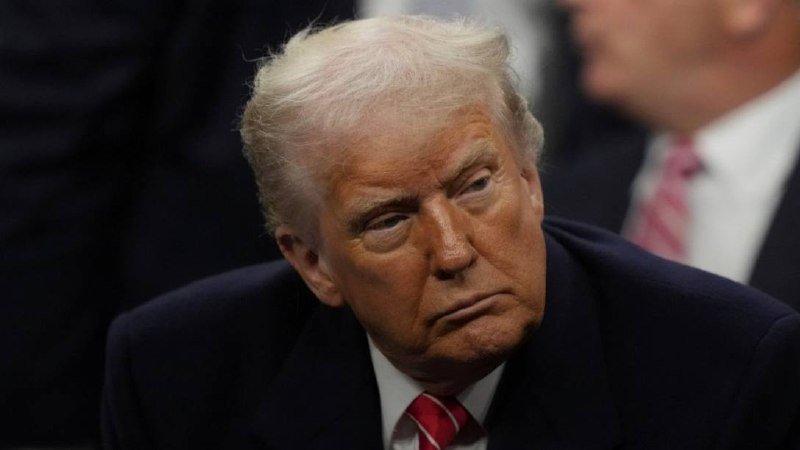
Iran's foreign minister touched down in St. Petersburg on Monday morning, and the wire services treated it as a routine diplomatic item. A senior official from one sanctioned state meeting a leader from another — tabbed under "regional developments," slotted between commodity-price updates and electoral-cycle chatter. That framing misses the point entirely.
Abbas Araghchi's visit to meet Vladimir Putin is not a footnote. It is a structural statement about the shape of post-2022 international relations — about who is building alternative architectures, who is being excluded from them, and what that exclusion actually produces. The answer, it turns out, is not isolation. It is acceleration.
The architecture beneath the headline
Western policy toward both Tehran and Moscow has rested on a central assumption: sustained economic and diplomatic pressure will eventually force compliance, or at minimum, internal fracturing. The track record suggests otherwise. Iran has survived four decades of escalating sanctions and grown its regional influence in proportion to the pressure applied. Russia, far from retreating after the 2022 package of Western sanctions, deepened ties with Beijing, expanded its trade in non-dollar currencies, and deepened its footprint in the Middle East through precisely the kind of engagement Araghchi's visit represents.
When senior officials from these governments meet, they are not simply coordinating on the crisis of the moment — whether that is Ukraine, the stalled Iran nuclear talks, or the ongoing Gaza conflict. They are building infrastructure. They are establishing precedents for how states that operate outside the dollar-dominated financial system will conduct bilateral relations, energy trade, military cooperation, and diplomatic support in multilateral forums. The Araghchi-Putin meeting is one node in a network that has been expanding since 2014, accelerating since 2022, and is now structural rather than ad hoc.
What Western framing gets wrong
The typical Western read on Russia-Iran engagement reduces it to transactional necessity: Russia needs drones, Iran needs economic lifelines, both parties are making the best of a bad situation. That reading is not wrong, but it is incomplete in a way that matters. It treats the partnership as a symptom of pressure rather than a deliberate strategic choice — a short-term survival arrangement that will dissolve once the pressure eases. There is no evidence for that proposition. What the evidence shows is two states with fundamentally compatible views on the limits of US unipolarity, the utility of regional deterrence, and the necessity of financial infrastructure outside Western control. Those are long-term positions, not circumstantial ones.
The transactional framing also erases Iranian agency. Iran is not a passive client state receiving Russian patronage. It is a regional power with sophisticated diplomatic traditions, a uranium enrichment program that has survived three rounds of international pressure, and a foreign policy establishment that has managed simultaneous relationships with Beijing, Moscow, and a range of Global South capitals. Araghchi, who led nuclear negotiations for years before becoming foreign minister, is not flying to St. Petersburg as a supplicant. He is there as a counterpart with a defined set of interests to advance.
The dollar problem nobody is fixing
The practical substance of meetings like this often comes down to what is not said in the official readouts: bilateral currency arrangements, energy swap mechanisms, logistics corridors that route around SWIFT, and defense-industrial cooperation that uses neither dollar pricing nor Western financial infrastructure. These are the structural components of a parallel system. They have been developing for years, but the pace has clearly accelerated since Russia was ejected from the SWIFT-based international banking system.
For countries that have watched the speed with which the US can freeze sovereign assets, deny banking access, and cut off defense procurement channels, the lesson is not abstract. It is a design constraint. Every meeting between sanctioned states — Araghchi in St. Petersburg, Venezuelan energy ministers in Tehran, Indian crude purchases settled in rupees and rupees-adjacent instruments — adds another node to a system that is being built in real time, partly by design and partly by necessity. The system is not yet an alternative to the dollar-based order. But it is increasingly a hedge against dependence on it, and that hedge is growing more functional with every meeting.
The Western diplomatic establishment has not answered the question of what it offers to countries that have decided they cannot rely on access to dollar-denominated financial infrastructure as a baseline condition of international engagement. Until it does, meetings like Araghchi's will continue, and they will continue to be more than the sum of their transactional parts.
What this means for the system, not just the meeting
The stakes of continued Russia-Iran alignment are not symmetrical. For Tehran, the relationship provides diplomatic cover in the UN Security Council context, a customer for non-Western arms and energy cooperation, and a partner whose veto power in the Security Council has proven relevant to Iranian interests. For Moscow, Iran offers a strategically located regional actor with demonstrated capacity to complicate US calculations in the Gulf, a testing ground for financial instruments that can survive Western sanctions scrutiny, and a reminder to Beijing that Russia's diplomatic network across the Middle East remains a live asset.
What neither side gets is normalization with the Western order. That is not the objective. The objective is to build a functioning alternative to dependence on it — and to demonstrate, through visits like this one, that such an alternative already exists and is being maintained. The meeting itself is the message.
The Western media framing — dutiful, color-coded, slotted into the diplomatic log — does not capture what is actually being signaled. When a foreign minister from the Islamic Republic of Iran arrives in a Russian city to meet the Russian president, no emergency motion is filed in the Security Council, no sanctions are added to existing packages, no official statement describes it as a challenge to the international order. It is reported as regional news. That is the gap: the event is structural, but the coverage treats it as episodic. The reality is that the architecture being built in St. Petersburg, in Beijing, in Caracas, and in a dozen other capitals is neither episodic nor marginal. It is the story. The meetings are just the visible nodes.
This publication covered the Araghchi-Putin meeting primarily through Iranian state-adjacent wire channels, consistent with sourcing constraints on bilateral Russia-Iran coverage. Western diplomatic reporting on the meeting did not surface in the wire feed on this cycle.
Wire provenance
This editorial synthesis draws on the following public wire/social posts:
- https://t.me/JahanTasnim/47823
- https://t.me/tasnimnews_en/98442
- https://t.me/alalamarabic/77231
- https://t.me/GeoPWatch/11654