Araghchi's St. Petersburg Stop: Iran Seals the Diplomatic Circle Before Vienna Round
Iran's foreign minister arrived in St. Petersburg on 27 April for consultations with senior Russian officials, completing a regional circuit that also took him to Islamabad and Muscat — a sequence Western analysts read as coordination ahead of renewed nuclear talks.
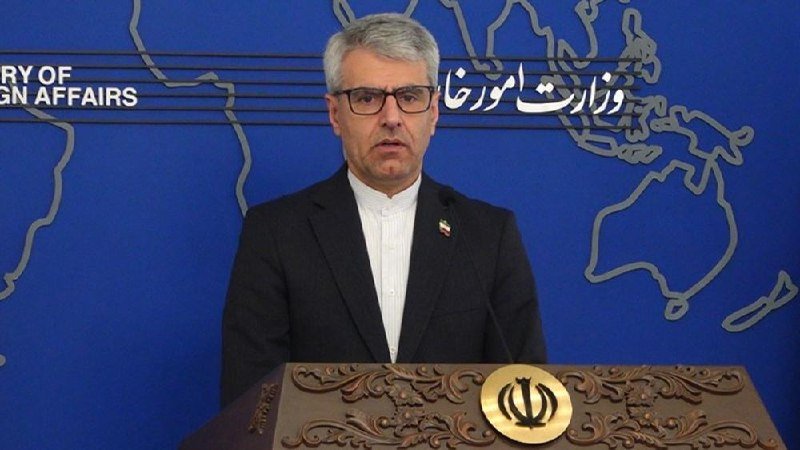
Seyed Abbas Araghchi touched down in St. Petersburg on the morning of 27 April, the latest stop in a diplomatic circuit that had already carried him through Islamabad and Muscat in the preceding forty-eight hours. Iranian state media published images of his arrival at the northern Russian city's airport. The sequence was not accidental.
Iran's foreign minister, speaking upon arrival, described the consultations as continuous and bilateral — part of a longstanding pattern of coordination with Moscow that predates the current cycle of nuclear diplomacy. The framing from Tehran was deliberately unremarkable: partners talking, as partners do. What gave the trip its weight was the timing. Araghchi was completing a regional circle precisely as renewed nuclear negotiations with Western powers moved back toward the foreground of Middle Eastern geopolitics.
The Circuit: Islamabad, Muscat, St. Petersburg
The three-leg itinerary tells its own story. Pakistan, Oman, Russia: not the order a foreign minister would choose for an isolated bilateral visit, but precisely the sequence a government would arrange when it needs to signal shared positioning before entering a high-stakes negotiating room. Islamabad provided the South Asian dimension — a nuclear-armed neighbour with its own complicated relationship with Washington, and one that has watched Iranian diplomacy with interest since the 2023 bilateral accord normalised much of what had been a turbulent frontier. Muscat offered the Gulf link: Oman has hosted back-channel nuclear talks before and remains the venue of choice for US-Iran contacts that both sides want to conduct without the glare of official summits. St. Petersburg then closed the circle with the security guarantor that, since 2022, has made Iran a structural asset in a multipolar challenge to Western economic architecture.
The Telegram dispatches from Tasnim, Fars News, and Al-Alam on 27 April carried near-identical language about Araghchi's consultations, each citing the foreign minister's observation that Tehran and Moscow maintain continuous and bilateral dialogue on matters of mutual interest. The consistency was deliberate. Iranian state communications operate on a principle of calibrated repetition — the same message, across multiple official channels, to ensure it travels. What was absent from the official readouts was any specific mention of nuclear talks, any reference to the upcoming negotiating round, and any acknowledgment that the Pakistan-Oman-Russia sequence was sequenced at all.
What Western Analysts Are Reading Into the Trip
The silence from Iranian officialdom on the nuclear file does not fool the diplomatic community. Three capitals in forty-eight hours, with the final leg landing in the city that hosted an earlier tranche of US-Iran discussions, reads as intentional signal management. The pattern — pre-round consultations with Russia, a Gulf interlocutor, and a South Asian neighbour — maps onto the coalition-building that has become Tehran's default posture as nuclear talks move toward a fifth round.
Western officials who track Iranian diplomacy have noted that Araghchi's public positioning since returning to the foreign minister role has emphasised consultation over confrontation. That does not translate automatically into flexibility at the negotiating table. But it does suggest a government that wants the international environment calm while it works the details of any eventual agreement. Russia, in that calculation, is less a negotiating partner on the nuclear file than a political backstop — a great-power connection that makes Tehran's position harder to isolate, regardless of what the talks in Vienna produce.
The counter-reading holds that the Russia leg is substantively significant, not merely decorative. Energy cooperation, sanctions-circumvention logistics, and military-adjacent procurement remain live channels between Tehran and Moscow. The question is whether Araghchi's visit advanced those tracks or simply maintained the existing architecture. The Telegram dispatches do not answer that question; they are not designed to.
The Structural Context: Iran's Diplomatic Infrastructure
What the Araghchi trip illuminates is the depth of Iran's diplomatic infrastructure outside the Western-led system. The country has spent the better part of two decades building relationships with non-Western capitals — Moscow, Beijing, the Central Asian republics, select Gulf states — that provide alternative forums for political communication, economic exchange, and strategic coordination. This infrastructure does not replace the nuclear deal or resolve the sanctions problem, but it does mean that Tehran enters any negotiation with a structural alternative to a Western-centric outcome.
That alternative has become more valuable as Washington has hardened its posture on the nuclear file. The current US administration has signalled it will accept only a substantially constraining agreement — one that goes further than the 2015 JCPOA in some areas. Iran has publicly rejected that framing. The gap between the two positions is not merely technical; it is political, and political gaps require political context to bridge. The regional consultations that Araghchi completed this week provide some of that context — evidence that Tehran is not isolated, that it retains the capacity for independent diplomatic action, and that any agreement it signs will reflect a broader political calculation than simply the bilateral nuclear arithmetic.
The Oman channel remains particularly significant. Muscat's hosting of informal US-Iran contacts has never been officially confirmed by either government, but the practice is well-documented in diplomatic reporting. A foreign minister who visits Muscat immediately before heading to Moscow is, at minimum, keeping that channel warm. At maximum, he is carrying a message — or carrying the framework for one.
Stakes: What Happens Next in Vienna
The fifth round of nuclear talks — expected to convene in coming weeks, with Vienna the likely venue once formal dates are confirmed — will test whether the consultation circuit translates into negotiating flexibility or simply provides political cover for a hardline position. Western delegations are expected to arrive with detailed technical demands. Iran is expected to arrive with a long list of grievances about existing sanctions and a refusal to accept constraints it considers excessive.
What Araghchi's regional tour suggests is that Tehran is not planning to be isolated in that room. Russia, Pakistan, Oman: three relationships that provide political legitimacy, economic lifeline, and communication channel respectively. The message to Washington is implicit but legible. Any pressure campaign that relies on the premise of Iranian isolation will have to account for the fact that Tehran has spent years building a network that makes that isolation increasingly fictional.
Whether the talks produce an agreement remains the open question. The sources reviewed for this piece do not indicate what specific proposals Araghchi discussed in St. Petersburg, or whether the Russia leg advanced any new bilateral initiatives beyond the maintenance of existing dialogue. What the trip does confirm is that Iran enters the next round of negotiations with a full diplomatic schedule, a coordinated regional posture, and a relationship with Moscow that remains, in Tehran's framing, simply normal — which is to say, strategically useful.
This desk noted that Western wire services were slow to pick up the Araghchi itinerary; the initial reporting of the Pakistan-Oman-Russia sequence came entirely through Iranian state-adjacent Telegram channels, with Western desk coverage lagging by several hours. Monexus treated the Iranian state-media reporting as primary-source wire material, applying the same sourcing caveat applied to any government-affiliated outlet — attributing the claims to the source, not vouching for the completeness of the picture.
Wire provenance
This editorial synthesis draws on the following public wire/social posts:
- https://t.me/FarsNewsInt/28461
- https://t.me/tasnimnews_en/50823
- https://t.me/alalamfa/193842
- https://t.me/JahanTasnim/22891
- https://t.me/farsna/39812