The Diplomacy That Wasn't: Oil Markets and the Anatomy of a Stalled Iran Deal
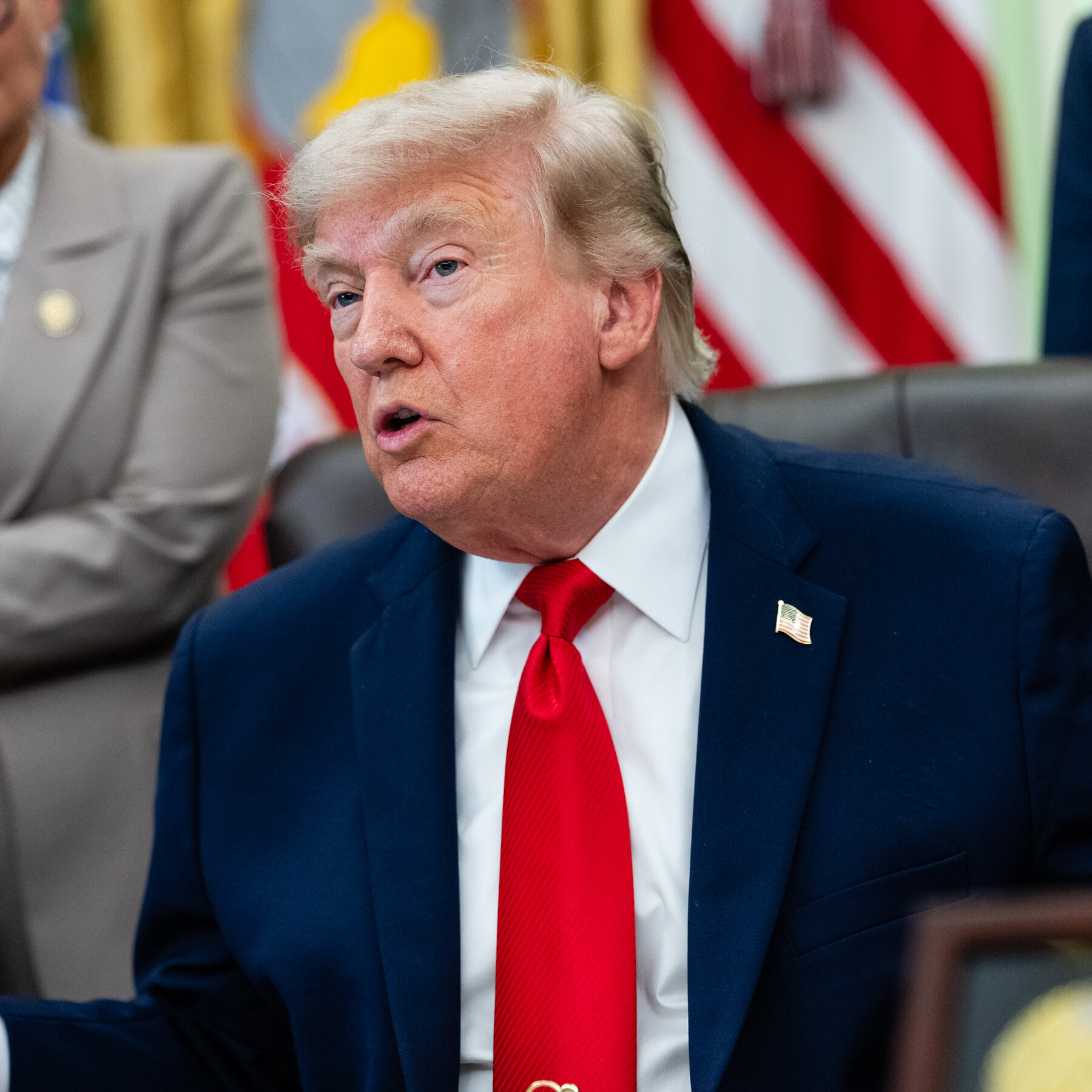
At 11:59 UTC on 27 April 2026, CGTN's live broadcast noted that President Trump had canceled a planned trip to Pakistan that would have included talks with Iranian interlocutors — the latest in a series of diplomatic half-measures that have defined Washington's approach to Tehran since the administration took office. The cancellation arrived without formal explanation, though analysts tracking the corridor had flagged deteriorating conditions in the days prior. Reuters, reporting the same morning, confirmed that oil had climbed in response to the stalled talks, adding a further layer of uncertainty to an already volatile energy picture. The episode encapsulates a broader pattern: an administration that signals appetite for deal-making, then retreats when the mechanics of negotiation prove more complex than the rhetoric.
The cancellation matters not because a single trip to Islamabad would have resolved years of adversarial positioning, but because it exposes the gap between the transactional framing the White House brings to regional diplomacy and the structural constraints that actually govern Iran policy. Trump, in remarks captured via Unusual Whales from a public appearance, offered a characteristically blunt warning: destabilization in the Middle East would reverberate into European markets, and from there back to the United States. The implicit threat was deterrence — a reminder that the administration understands the financial stakes of regional conflict. But deterrence requires a coherent strategy to deliver it. What the canceled Pakistan trip reveals is that the administration has not developed the diplomatic infrastructure to back the warning with meaningful leverage over the actors most likely to generate the destabilization it fears.
The Deal That Wasn't There
To understand what the Trump administration thought it was doing in Islamabad, it helps to examine the architecture of US-Iran talks as they have existed under successive administrations. The Obama-era JCPOA demonstrated that direct US-Iran engagement, when paired with sanctions relief and a defined verification mechanism, could produce a verifiable freeze on Iran's nuclear program. The Trump administration's first term unwound that architecture. Its second term, by most accounts, inherited both the Iranian enrichment advances that resulted from that withdrawal and a set of internal debates about whether to restore the deal, pursue a different arrangement, or maintain maximum pressure indefinitely.
The Pakistan-mediated channel, as it was being described in the weeks before the April 27 cancellation, appeared designed to create a back-channel alternative to the formal Vienna process that had limped along intermittently since 2021. Islamabad, with its longstanding relationship with Tehran and its own complicated posture toward Washington, was positioned as a neutral venue — a place where signals could be exchanged without the formal commitments that make diplomacy politically expensive. The logic was not unreasonable. The problem was execution. Sources tracking the corridor noted that the signals emerging from the planned talks were vague on substance — what precisely Washington was prepared to offer, and what Tehran was prepared to concede — and that ambiguity in diplomatic settings tends to benefit the party with fewer places to move.
Oil markets read the situation differently than the diplomats. Brent crude climbed as the Reuters reporting confirmed on 27 April, reflecting a market assessment that the resumption of nuclear restrictions — or, more precisely, the risk that sanctions relief would not materialize — had been priced out of recent forecasts. The connection between diplomatic uncertainty and energy prices is not automatic; markets had largely absorbed the Trump administration's maximalist rhetoric and moved on. But the specific combination of a canceled engagement and a direct presidential warning introduced a new variable: the possibility that diplomatic failure might not be followed by a managed fallback, but by escalation.
The Leverage Problem
The fundamental issue facing any US administration seeking to constrain Iran's nuclear program through economic pressure is that the leverage calculus does not translate cleanly into diplomatic outcomes. Sanctions bite. They constrict Iranian oil exports, restrict access to international financial infrastructure, and impose real costs on the civilian population. They do not, historically, produce capitulation. The Islamic Republic has survived four decades of US sanctions through a combination of resilience, adaptation, and the willingness to absorb costs that more liberal societies would find politically intolerable.
This does not mean sanctions are ineffective as a pressure tool. It means they are effective at imposing costs, not at producing concessions. The distinction matters enormously for anyone attempting to use diplomatic engagement as a continuation of economic warfare by other means. When Washington sits across from Tehran and demands freezes, dismantlements, and inspections, it is asking the Iranian side to give up capabilities it has spent years developing and that its security establishment considers non-negotiable. The economic pain that makes Iran a more willing interlocutor also makes its leadership more dependent on the domestic legitimacy derived from not surrendering to foreign pressure. The two effects run in opposite directions.
The Trump administration's answer to this dilemma has been to combine maximum pressure with periodic outreach — a strategy that its proponents describe as simultaneously raising costs and creating openings. The critics, including several former senior officials who have spoken publicly in recent months, describe it as a pattern of creating expectations, then retreating when the expectations meet reality. The canceled Pakistan trip fits that pattern. Whether it represents a tactical pause or a more fundamental reevaluation of the engagement approach remains unclear, but the market signal — oil higher, uncertainty higher — suggests that participants in the energy sector are not treating it as a temporary adjustment.
A Wider Pattern: Energy, Finance, and the Middle East Discount
The April 27 oil move needs to be placed in a broader context that goes beyond the immediate US-Iran dynamic. Global energy markets have been absorbing multiple pressure points simultaneously: continued Russian flows disrupted by secondary sanctions enforcement, OPEC+ discipline that has kept a floor under prices, and growing demand from Asia driven by industrial expansion in India and Southeast Asia. Into that environment, any development that raises the risk of supply disruption in a region that remains central to global oil logistics carries disproportionate weight.
The Persian Gulf, the Strait of Hormuz, and the transit corridors that connect Gulf producers to global markets represent a chokepoint that has no real substitute in the short term. A 5% increase in the probability of significant disruption in those corridors does not produce a 5% price move — it produces something closer to a risk premium that compounds over time as hedgers and traders reprice the tail scenario. This is the mechanism behind the oil climb Reuters reported on 27 April, and it is why the diplomatic language coming out of Washington carries financial weight that would not be attached to analogous statements from a smaller economy.
The financial framing Trump offered — linking Middle East instability to a bad stock market, then to European exposure, then to US exposure — is in this sense not merely rhetorical. It is a description of how the global financial architecture routes risk. American pension funds, sovereign wealth funds, and institutional investors hold European equities. European banks hold exposure to the sovereign debt of member states with energy-intensive economies. A disruption that raises input costs for European manufacturers and slows growth in the European Union automatically transmits losses back to US investors through the cross-holdings that define modern portfolio construction. This is not a novel observation — traders and analysts have mapped these transmission channels for years — but it is notable that the president of the United States was articulating them in public remarks as part of what appeared to be a deterrence signal.
The Road Ahead
What happens next depends on which side of the diplomatic ledger one examines. On one reading, the canceled trip is a setback but not a terminus. Islamabad remains available as a back-channel venue; the Omanis have maintained their traditional mediating role; the Europeans, despite their own frustrations with the pace of engagement, have not closed their diplomatic windows. The Vienna format, dormant but not defunct, could be reactivated if political conditions in both capitals align. On this reading, the oil move reflects market sensitivity to headline risk, not a fundamental repricing of the supply-demand balance.
On a darker reading, the cancellation is symptomatic of an approach that has run out of runway. The administration has signaled willingness to engage and has twice now retreated from engagements that did not produce quick results. Tehran, watching this pattern, has little incentive to move significantly in a negotiation where the other side may not follow through on commitments it makes. Domestic constituencies in both countries — hardliners in Tehran who view any engagement with the historical enemy as suspect, and in Washington a political environment where any deal with Iran risks being characterized as appeasement — constrain the space for the kind of creative diplomacy that might produce a breakthrough. The result is an equilibrium of mutual distrust punctuated by bouts of manufactured optimism.
Oil markets, whatever their limitations as predictors of geopolitical outcomes, are telling a story. The story is not that conflict is imminent. It is that the discount applied to Middle East risk in energy pricing — a discount that had narrowed as markets bet on managed engagement — is widening again. That widening has real costs. It raises input prices for manufacturers across Asia and Europe. It complicates the inflation calculus for central banks that have just begun to ease. It increases the vulnerability of governments in import-dependent economies to supply shocks they cannot control. The canceled Pakistan trip may be a footnote in the history of US-Iran relations. The price move it produced is a line item in the ledgers of every energy consumer on the planet.
Monexus covered the stalled engagement and oil market reaction using wire and broadcast sources, foregrounding the Reuters market reporting alongside the CGTN diplomatic context. The publication's framing emphasizes the structural gap between transactional diplomatic rhetoric and the leverage mechanisms available to sustain it — a gap that has characterized multiple administrations' approaches to Tehran and that the April 27 episode brought into sharp relief.
Wire provenance
This editorial synthesis draws on the following public wire/social posts:
- https://x.com/reuters/status/1917738195781824921
- https://x.com/unusual_whales/status/1917708305361949184