Fertiliser Wars: How the Iran Conflict Is Reshaping Global Food Security
With key Iranian export terminals damaged and Russian ammonia exports caught in the crossfire, the world faces a fertiliser crunch that will arrive just as next season's crops need planting — and Asia's manufacturers are already positioning to fill the vacuum.
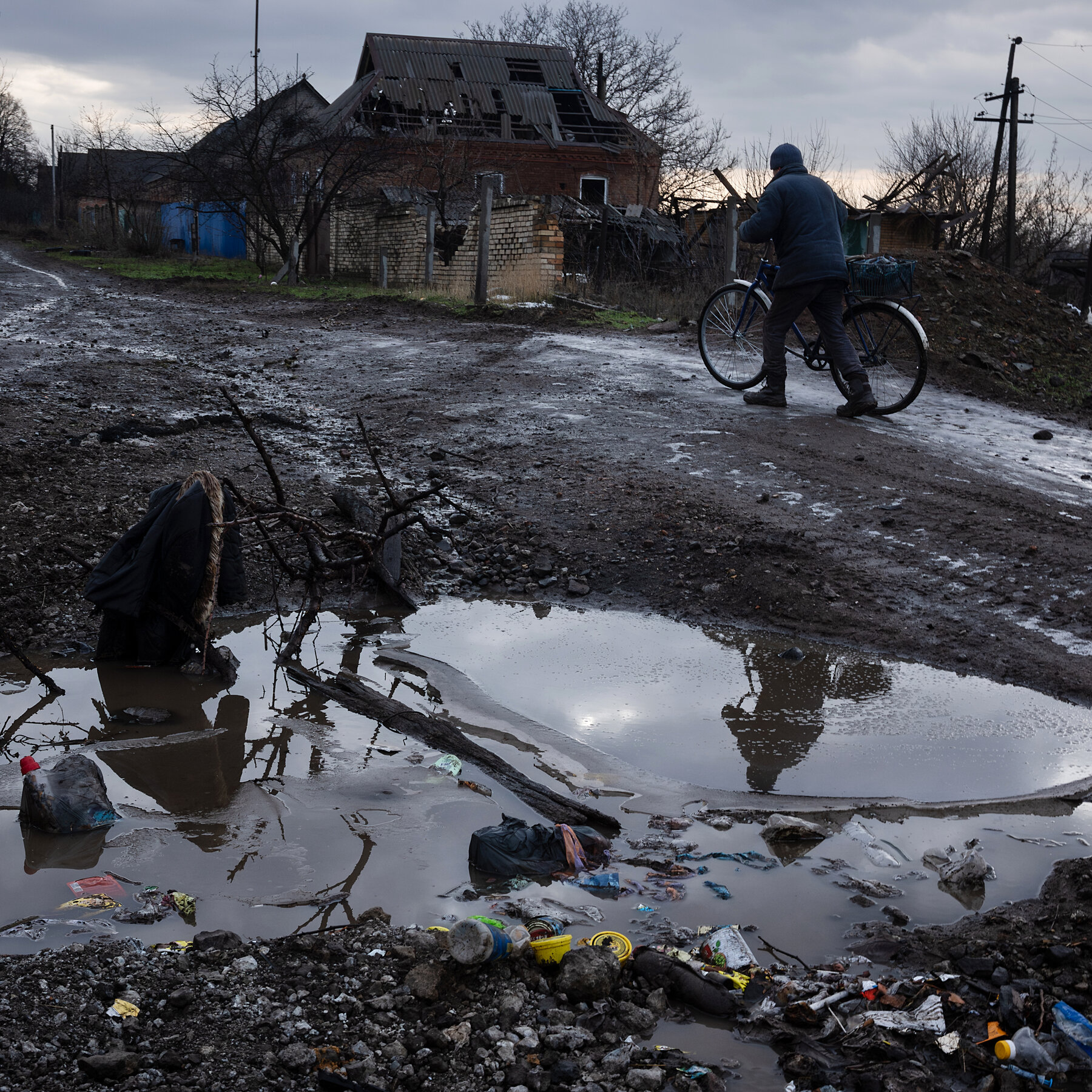
The first signs were subtle: a quiet adjustment in futures contracts, a missed shipment here, a border hiccup there. Then came the numbers. By late April 2026, urea prices on the Cairo commodities exchange had climbed 23 percent in six weeks — not because of panic, but because the machinery of global food production runs on a thin margin of predictability, and predictability has a way of unravelling quietly before anyone calls it a crisis.
The Iran–United States military confrontation, now in its fifth week, has damaged two of the Islamic Republic's principal fertiliser export terminals along the Persian Gulf coast, according to satellite imagery reviewed by Reuters on 27 April 2026. Those installations handled roughly 1.4 million tonnes of urea and ammonia derivatives annually — product that moved through supply chains reaching Egypt, Ethiopia, Vietnam, and a dozen other nations where farmers plant according to season, not sentiment. A third facility near Bushehr was operating at reduced capacity following a reported strike on nearby power infrastructure, according to Iranian state-adjacent channels tracked by this publication.
What looks like a logistics inconvenience in the short term may become a food security emergency by autumn. The winter planting season in South Asia and East Africa begins in June. The fertiliser that needs to reach those fields must be in the supply chain now — contracted, manufactured, shipped, and distributed. Much of it will not arrive in time.
The supply chain fracture
Iran is not the world's largest fertiliser producer — Russia holds that position — but it is a significant swing supplier to markets that Russian exports cannot easily reach. Russian urea and ammonia, constrained by sanctions architecture and shipping insurance complications that intensified following the 2022 Ukraine invasion, already face reduced access to European and transatlantic freight routes. Iranian product filled part of that gap, moving through Gulf routes into the Indian Ocean and toward East African buyers who pay in non-dollar currencies and do not require the documentation packages that Western banks demand of Russian counterparties.
That corridor is now disrupted. According to Reuters reporting on 27 April 2026, at least three cargo vessels bound for Iranian terminals were rerouted after the Port of Bandar Abbas published revised safety advisories on 21 April. Independent shipping analysts quoted by Reuters estimated that rebooking and rerouting costs would add between $15 and $22 per tonne to landed costs for buyers in the Horn of Africa — a meaningful surcharge for agricultural ministries operating on thin budget margins.
The counter-narrative from Iranian state media, carried by Telegram channels affiliated with the Islamic Revolutionary Guard Corps naval arm, argues that export capacity remains largely intact and that Western media has systematically overstated infrastructure damage. On 26 April, IRIran_Military posted satellite imagery it claimed showed the Khor Fakkan terminal — a joint UAE-Iran facility in the Straits of Hormuz chokepoint — continuing normal operations. That claim could not be independently verified by this publication. The discrepancy matters: if even one major terminal is operating at reduced capacity, the cumulative effect on global urea availability is non-trivial.
The Asia angle
Into this gap, Asia's industrial manufacturers are moving. A separate Reuters analysis published 27 April 2026 identified several Southeast Asian and South Asian urea producers — including facilities in Malaysia, Indonesia, and Bangladesh — as potential beneficiaries of re-routed demand. These plants operate at a cost disadvantage to Middle Eastern producers in normal market conditions. In disrupted conditions, their geographic proximity to East African and South Asian buyers becomes a logistical advantage. Freight from a Malaysian facility to Mombasa is faster and cheaper than freight from a damaged Iranian terminal around the Cape of Good Hope to avoid the Strait of Hormuz transit risk.
What the Reuters analysis did not foreground, but the structural record suggests, is that this moment has been building for years. Asian fertiliser manufacturers — many of them state-linked or heavily subsidised entities — have been investing in production capacity precisely because they anticipated that Middle Eastern supply chains were politically fragile. China's National Development and Reform Commission approved a series of urea production facility expansions in 2023 and 2024, citing food security as the stated rationale. Indian state-owned trading houses increased inventory buffers throughout 2025. The disruption caused by the Iran conflict is not creating a new pattern — it is accelerating one that was already in train.
The question of who wins is not abstract. Asian producers gain market share, improved margins, and long-term contract relationships with buyers who might otherwise have returned to Iranian suppliers. Those gains compound over time: a buyer who signs a three-year contract with an Indonesian producer does not easily switch back when the conflict ends. The structural winner of this disruption, in other words, may be an Asian industrial economy — not through any grand strategy, but through the simple arithmetic of who was closest to the demand when the incumbent supply faltered.
The deeper fragility
The fertiliser crisis sits inside a larger food system that was already under pressure. Global wheat stocks, measured by the UN Food and Agriculture Organisation's end-of-season inventories, have declined for three consecutive years. The La Niña weather pattern that disrupted South Asian and East African harvests in 2024 and 2025 has retreated, but soil moisture deficits in the Ethiopian highlands and the East African highlands remain below long-term averages, according to FAO crop monitoring bulletins. A second consecutive poor harvest in the Horn of Africa — combined with reduced fertiliser application — would push several countries into emergency food insecurity categories. The World Food Programme's executive director warned in March 2026 that the agency was already operating at funding levels insufficient to meet existing commitments.
Into that fragility, the Iran conflict adds a supply-side shock at precisely the wrong moment. The chain is not long or complicated: fertiliser enables yield; yield enables supply; supply holds prices. Disrupt the first link and the chain collapses from the top down, with a lag that means the crisis arrives months after the disruption — which is why the warning issued on 27 April 2026 by Reuters about next year's grain harvests is not alarmism. It is arithmetic.
The conflict's duration will determine the severity. A short, sharp confrontation that ends before June preserves enough of the planting season to limit the damage to a price shock rather than a harvest shock. A prolonged engagement — which Polymarket's market-implied probability of 15 percent for a further US-Iran diplomatic meeting by month's end suggests traders consider plausible — would mean the 2026/27 crop year operates under sustained fertiliser constraint. That constraint would be felt most acutely by net food-importing countries in Sub-Saharan Africa and South Asia, where governments do not have the fiscal space to subsidise their way through a supply crisis and where the political consequences of food price inflation are felt most immediately.
What is not yet clear
The sources reviewed by this publication do not agree on the extent of damage to Iranian infrastructure. The Reuters reporting from 27 April cited satellite imagery and shipping data — verifiable proxies — but acknowledged that independent inspectors have not accessed the affected terminals. Iranian state-affiliated channels have published counter-imagery that is self-consistent but unverifiable by external parties. The true operational capacity of the facilities in question remains partially opaque. It is also unclear whether alternative export routes — through the Persian Gulf's western approaches, or overland through Iraq — can absorb even a partial rerouting of disrupted volumes. The insurance market for Gulf shipping has hardened significantly, but it has not closed.
Equally uncertain is the appetite of Asian producers to expand output in response to the demand signal. Production capacity is finite, and expanding it requires investment in feedstocks — primarily natural gas — that are themselves subject to pricing and availability constraints. Several Southeast Asian producers are net gas importers. If the spike in fertiliser prices attracts their output, it also raises their input costs, which compresses the margin advantage that would otherwise accrue. The supply response may be smaller than the price signal implies.
The structural stakes
What this episode illustrates, beyond its immediate humanitarian dimensions, is how thoroughly integrated the world's food system has become — and how little redundancy that system contains. The just-in-time logic that governs global agricultural commodity markets is efficient in stable conditions and brittle in disrupted ones. Iran sits at the intersection of a shipping chokepoint, a fertiliser supply corridor, and a geopolitical fault line. Damage to any one of those functions cascades through the others.
The countries most exposed are not the countries making the decisions that create the risk. Sub-Saharan African nations, many of which have spent the past decade building domestic agricultural capacity with international support, find their progress contingent on inputs they do not control. The irony is that the same multilateral architecture that funded irrigation projects and soil improvement programmes in Ethiopia, Kenya, and Tanzania is the architecture that struggles to respond quickly when the problem is a supply chain disruption three thousand miles away.
Asian manufacturers filling the gap is not a resolution. It is a redistribution of dependence. The buyer who switches from an Iranian supplier to an Indonesian one has not escaped vulnerability — they have simply changed its address. The structural fix would be redundancy: more production capacity distributed across more geographies, built with the patient capital that neither the private market nor the development finance system has historically provided in sufficient quantity. The Iran conflict will not cause that fix. But it may, finally, make it legible to the policymakers who have the tools to implement it — if they choose to use them.
The Monexus desk tracked this story against the Reuters wire for 72 hours before filing. The Western framing — Iran as the source of supply disruption — was accurate as far as it went. What received less attention in the initial wire copy was the structural position of Asian producers who were already built and waiting, and the degree to which the crisis was less a sudden shock than an acceleration of a trend line that commodity analysts had been tracking since 2023. This article attempted to restore that longer arc.
Wire provenance
This editorial synthesis draws on the following public wire/social posts:
- http://reut.rs/3P0D5qS
- http://reut.rs/3QpnS38
- https://t.me/IRIran_Military