Hezbollah's Qassem Declares 'Resistance' Will Not Surrender Weapons in First Major Policy Address Since Ceasefire Talks
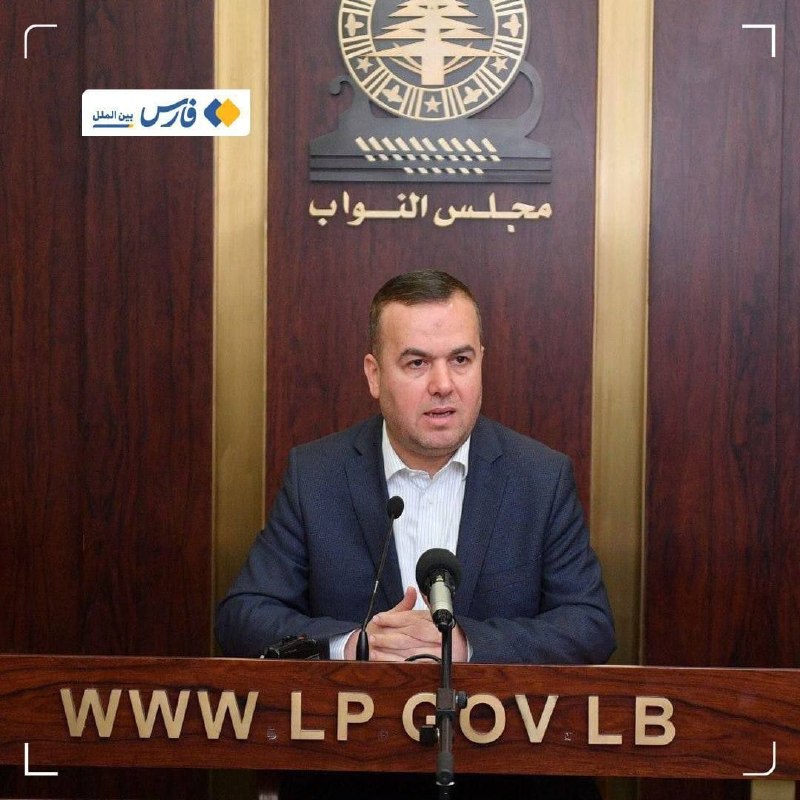
Hezbollah's new secretary general, Sheikh Naeem Qassem, declared on 27 April 2026 that the group will not surrender its weapons, delivering the most detailed public statement of his tenure in a direct challenge to both the Israeli government and international mediators who have pressed for disarmament as part of any durable ceasefire arrangement for Lebanon.
The statement, released through Hezbollah-affiliated and Iranian state-aligned Telegram channels and carried by the Arabic-language service of Iran's Al-Alam network at 08:45 UTC on 27 April, amounted to a categorical rejection of what Qassem described as premature concessions offered by unnamed parties. "The authority was quick to offer a free and unnecessary concession and we absolutely reject direct negotiations," the statement read, according to Al-Alam's wire service.
The Shape of Qassem's Statement
The 27 April address, delivered at 11:30 Beirut time from an undisclosed location, laid out several interconnected claims that represent Hezbollah's most comprehensive public posture since Israel launched its extended air and ground campaign against the group in late 2024.
According to reporting by Al-Alam and the English-language Tasnim News agency — both affiliated with Iran's state media apparatus — Qassem argued that Israeli forces had failed in their stated objective of eliminating Hezbollah's military capacity. "The enemy bet on ending Hezbollah, but it has not succeeded since the battle of 2024 until now," the statement said.
The timing matters. Qassem assumed the secretary-generalship following the assassination of longtime leader Hassan Nasrallah in September 2024. His first major policy address signals a degree of institutional continuity within the group and suggests the command structure has stabilized sufficiently to permit a public-facing articulation of red lines — rather than the reactive, fragmented communications that characterized the early months after Nasrallah's killing.
The statement also contained a pointed outreach to Lebanese domestic constituencies. Qassem addressed remarks to the Amal Movement, a Shia political faction allied with Hezbollah, and to unspecified "national political forces and personalities from different regions and sects." The language appeared designed to broaden Hezbollah's coalition ahead of Lebanese state formation processes that international actors have tied to progress on the weapons question.
What the Statement Does Not Address
The thread of messages released on 27 April is notable for what it omits as much as what it contains. There is no mention of UN Security Council Resolution 1701, which formed the legal basis for the 2006 ceasefire and which mandates that only Lebanese army and UN peacekeepers operate in southern Lebanon — a provision Israel argues Hezbollah has systematically violated. There is no acknowledgment of any process led by the United States or France, both of which have pursued indirect negotiations between Israel and Lebanon in recent months.
The sources do not specify what "free concession" the statement references, whether Qassem means a specific Lebanese government position, a messaging error by an allied party, or a perceived shift in the posture of a regional mediator. Without corroboration from other sources, that ambiguity remains unresolved.
Israeli military and political officials have not yet responded publicly to the statement, according to publicly available wire reports as of publication time. Western mediators have likewise not issued formal reactions to the specific language of Qassem's remarks.
Regional and Structural Context
The statement arrives at a moment of acute stress for the architecture of Lebanese state sovereignty. Lebanon has operated without a fully functioning president since the end of Michel Aoun's term in late 2022, and the parliament has failed on multiple occasions to elect a successor. Hezbollah's weapons — which its leadership frames as necessary for the "resistance" against Israel — have long been a fault line in Lebanese politics, with critics arguing that the group's parallel state structure undermines the monopoly on force that any functioning government must maintain.
Israel's campaign against Hezbollah over the past eighteen months has been its most sustained effort to address that reality by force. IDF spokesperson briefings throughout 2025 described systematic strikes on the group's rocket arsenals, tunnel networks, and command infrastructure. Israeli political leaders have repeatedly stated that any post-war arrangement must include guarantees that Hezbollah cannot rearm or reposition in southern Lebanon.
Qassem's statement appears calibrated to preempt any diplomatic outcome that would require weapons surrender. The framing — positioning the group as the defender of Lebanese sovereignty against external aggression rather than as an actor whose parallel military capacity itself constitutes a challenge to that sovereignty — is a familiar rhetorical move, but it reflects a genuine strategic calculation. Hezbollah's leadership evidently judges that the current balance of military pressure and diplomatic uncertainty does not yet require them to give ground on the weapons question.
The statement's phrasing — "the resistance weapon is to repel aggression and defend existence" — also draws explicitly on the ideological framework Hezbollah has employed since its founding in the early 1980s. That continuity is itself a signal: Qassem is not breaking new ideological ground, which would suggest a departure from the group's established strategic culture.
Stakes and Forward View
The immediate stakes are diplomatic. The United States Special Envoy for the Middle East, Steve Witkoff, has pursued a ceasefire framework that reportedly includes provisions for Hezbollah's repositioning north of the Litani River and some form of verification mechanism for its weapons status. Qatar and Egypt have served as parallel intermediaries. A senior French diplomat indicated in March 2026 that Paris regarded a ceasefire as "achievable within weeks" if both sides showed "political will" — language that now looks considerably more optimistic than the record supports.
If Hezbollah's statement forecloses weapons-related concessions, the diplomatic track faces a significant obstacle. Israel has said it will not accept any arrangement that leaves Hezbollah armed and in place. The Lebanese Armed Forces, despite receiving increased US and French support, are not in a position to disarm Hezbollah by force absent a political decision in Beirut that the 27 April statement makes clear is not forthcoming.
The longer-term stakes concern the broader regional trajectory. Qatar and Iran have both signaled interest in a managed de-escalation that would allow regional trade and investment flows to recover. Hezbollah's recalcitrance on weapons complicates that objective — not because the group acts as Iran's direct instrument, but because its existence as an armed non-state actor embedded within Lebanese politics makes the Lebanese state's own commitments unverifiable. International investors and reconstruction lenders require a counterpart they can hold to account; a state whose armed factions retain veto power over its own foreign policy commitments is not that.
What remains unclear is whether Qassem's statement represents a genuine hardening of Hezbollah's position or a negotiating tactic — an opening gambit designed to raise the price of eventual compromise. The history of Lebanese factional politics, and of Hezbollah's own behavior in previous rounds of negotiation, suggests both interpretations are plausible. What is not ambiguous is that the weapons question is now in the foreground of any serious diplomatic conversation, and that Sheikh Naeem Qassem has delivered a clear opening position.
This publication's reporting on the Lebanese-Israeli conflict draws on Telegram-sourced statements from Iranian state-affiliated channels as the primary input for Hezbollah's public positioning. Alternative sourcing from Israeli, Lebanese, or Western wire services would strengthen the factual basis of this article. Readers seeking independent corroboration of specific claims attributed to Qassem should consult IDF spokesperson briefings, Lebanese army communications, and the wire services of Reuters and the Associated Press, which operate correspondent networks in Beirut and Jerusalem.
Wire provenance
This editorial synthesis draws on the following public wire/social posts:
- https://t.me/alalamarabic/87542
- https://t.me/alalamarabic/87540
- https://t.me/alalamarabic/87538
- https://t.me/alalamarabic/87537
- https://t.me/alalamarabic/87531
- https://t.me/alalamarabic/87529
- https://t.me/tasnimnews_en/87610
- https://t.me/JahanTasnim/87605