Iran's Araghchi in Oman: Gulf Diplomacy Reshapes Around the Strait of Hormuz
Iran's foreign minister held talks in Muscat on 27 April as Tehran signals willingness to negotiate Strait of Hormuz transit arrangements, a development that could recalibrate Gulf security architecture if Washington engages.
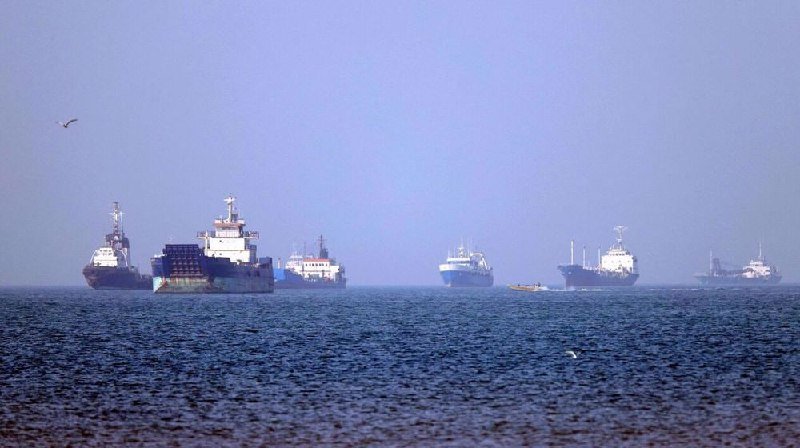
Iran's foreign minister Abbas Araghchi arrived in Muscat on 27 April for consultations with Omani officials, a diplomatic engagement that comes as Tehran reportedly transmitted a new proposal to Washington seeking to reopen the Strait of Hormuz and reduce hostilities, according to reporting by The Indian Express.
The dual-track signal—simultaneous outreach to a regional interlocutor and what appears to be a back-channel offer to the United States—marks a conspicuous recalibration of Iranian diplomatic posture. Araghchi, speaking from Oman, framed the consultations in terms of shared regional responsibility. "Iran and the Sultanate of Oman are coastal countries on the Strait of Hormuz, and it is necessary to consult, especially since safe transit in the Strait has become a global issue," he said, according to Iran's Arabic-language state broadcaster Al Alam.
The timing matters. The Hormuz waterway carries roughly one-fifth of the world's oil trade and a comparable share of global liquefied natural gas shipments. Any credible threat to that flow—real or perceived— reverberates immediately through energy markets from Singapore to Rotterdam. That Tehran is now making the waterway's security a talking point in bilateral diplomacy, rather than a bargaining chip wielded in public, suggests a different calculation in the corridors of power in Tehran.
Oman's Geometry
Oman has occupied a distinctive position in Gulf diplomacy for decades. Muscat maintains working relationships with both Western capitals and Tehran—a legacy of the late Sultan Qaboos's patient neutrality and one his successor has shown no appetite to abandon. Oman hosted the secret Swiss-mediated channel through which the United States and Iran conducted nuclear talks in the years before the 2018 withdrawal from the Joint Comprehensive Plan of Action. That institutional memory runs deep in Omani foreign policy.
Araghchi's statement that "there is a lot of like-mindedness between Iran and Oman" and that consultations would continue at the expert level tracks with a pattern of quiet Omani facilitation rather than loud public mediation. The language of shared coastal stewardship—rather than mediation—preserves room for all parties to claim they are not making concessions.
Regional analysts have long noted that Gulf Arab states have their own interests in keeping the Hormuz corridor functional. Saudi Arabia and the United Arab Emirates have invested heavily in alternative pipeline infrastructure, but none of those projects can absorb the full volume of Gulf energy exports in the event of a prolonged closure. That structural dependency gives every Hormuz-adjacent diplomacy a secondary audience: the Gulf states themselves.
The Washington Channel
The Indian Express report—that Iran has sent the United States a substantive proposal covering both Strait transit and a broader end to hostilities—adds a dimension that bilateral Oman consultations alone cannot explain. If accurate, the proposal represents a departure from the transactional posture Tehran has maintained since the collapse of JCPOA talks.
The sources do not specify the content of the proposal beyond those broad parameters, nor is it clear whether the administration in Washington has formally responded. What is knowable is the context: Iranian oil exports have faced tightening secondary sanctions; the nuclear programme continues its advance under International Atomic Energy Agency monitoring that Iran restricts; and the broader Middle East remains volatile across multiple theatres where Iran maintains regional partner forces.
Any offer to "end war" carries different weight depending on which conflicts Iran is prepared to discuss. The phrasing leaves open whether this encompasses support for Houthi operations in the Red Sea, Lebanese Hezbollah activity along Israel's northern border, or militia positioning in Iraq and Syria. Those are separate dossiers with separate stakeholders—and separate sets of conversations, some of them already underway through Omani and Iraqi intermediaries.
Energy Architecture and Leverage
The Strait of Hormuz is, at its core, a chokepoint geography. Roughly 21 million barrels of oil per day transited the waterway in recent years, according to shipping data compiled by industry analytics firms. No alternative route can replicate that capacity at anything close to comparable cost within any near-term planning horizon. The Bab-el-Mandeb, the other major Red Sea chokepoint, offers a partial alternative for some cargo but serves different trade lanes.
This structural reality is why Western military planners have long treated Hormuz as a Tier One security priority, and why the US Fifth Fleet maintains a persistent presence in the Gulf of Oman. It is also why Iran has historically treated the waterway's vulnerability as a strategic asset—understood, rarely named aloud, and deployed through proxies and irregular naval operations rather than direct threats that would invite retaliation.
What has changed is the public framing. When a foreign minister discusses safe transit as a "global issue" requiring "consultation," he is implicitly conceding that Iran bears responsibility for that safety—something the Islamic Republic has not always acknowledged in its prior posture. Whether that concession is tactical or strategic, and whether it signals a genuine willingness to negotiate terms rather than simply manage perceptions, remains to be tested.
Forward View
The immediate question is whether Washington responds to the reported proposal in a manner that keeps the channel open. US-Iranian contact has occurred sporadically through intermediaries since 2022, but direct talks with substantive preconditions on both sides have proved elusive.
Gulf states will be watching closely. Saudi Arabia and the UAE have each pursued their own diplomatic tracks with Tehran over the past three years—driven by economic logic as much as security calculation—and have an interest in a stable corridor. They also have relationships with Washington that give them standing to shape how any bilateral US-Iranian understanding might unfold.
For Iran, the economic logic is straightforward: sanctions relief remains the central ask, and any credible Hormuz arrangement that reduces tensions opens the door to partial sanctions easing that could allow oil export growth. Whether Tehran's leadership is prepared to pay the regional price—curtailing support for proxies that give it leverage across multiple theatres—is the unresolved question this outreach appears designed to force.
What is certain is that the Strait of Hormuz has become the centrepiece of a diplomatic gambit whose outcome will affect energy markets, Gulf security architecture, and the broader architecture of US presence in the Middle East.
Monexus initially framed this as an Oman-brokered regional consultation before the Indian Express report surfaced the US-channel dimension, which the Telegram wire posts did not include. Coverage across the wire services has since converged on the bilateral-outreach reading.
Wire provenance
This editorial synthesis draws on the following public wire/social posts:
- https://t.me/alalamfa/28456
- https://t.me/alalamfa/28454
- https://t.me/alalamarabic/44712