Iran's Top Diplomat Arrives in Moscow as Sanctions Axis Deepens
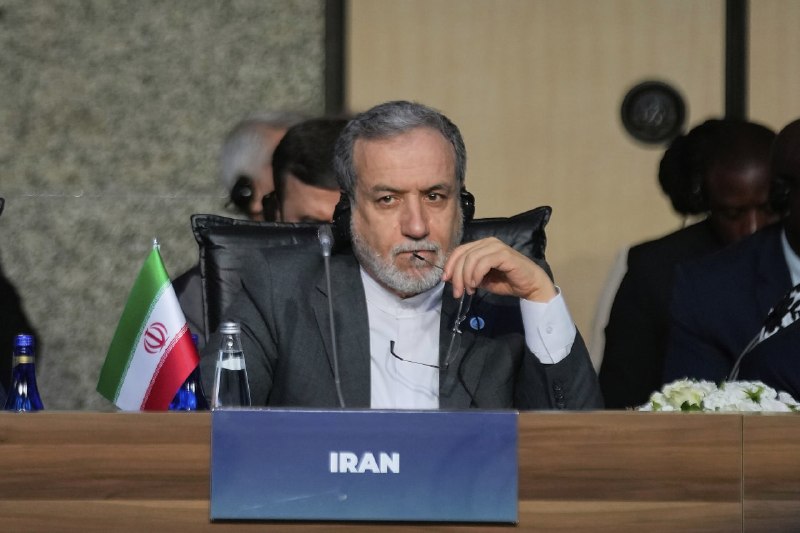
Iranian Foreign Minister Abbas Araghchi landed in Moscow on 27 April 2026 after completing a visit to Pakistan, according to reports filed from Islamabad and confirmed via diplomatic tracking feeds. He is expected to meet with President Vladimir Putin and senior Russian Foreign Ministry officials — a trip conducted with minimal prior public announcement, a pattern that has become standard for the more sensitive dimensions of Tehran-Moscow engagement.
The visit follows an 18-month acceleration in Russian-Iranian coordination across trade, transit, and military-technical domains. It also arrives at a moment of acute pressure on both governments: the United States and European Union have sharpened sanctions targeting Russia's energy revenues and Iran's missile and drone programmes, while negotiations over Iran's nuclear file have reached an impasse that neither Washington nor Tehran has publicly acknowledged resolving.
Immediate Context: A Relationship Built on Pressure
Russia and Iran have been drawing closer since at least 2022, when Western sanctions over the Ukraine invasion accelerated Moscow's pivot toward non-Western trade partners. But the relationship predates that inflection point. Russian officials have participated in nuclear talks hosted by Tehran; Russian energy firms have invested in Iranian upstream projects that Western companies cannot touch; and Russian diplomatic support has been a regular feature of Iran's engagement with international bodies where Washington holds substantial influence.
What has changed in 2025 and 2026 is the operational texture of the partnership. Russian vessels have transited Iranian ports under new logistics arrangements that sidestep the Dollar Swift system. Bilateral trade frameworks denominated in rubles and rials have been expanded. And officials on both sides have spoken publicly — in channels accessible to researchers — about a strategic alignment that is structural rather than tactical.
Araghchi's trip is notable partly because of its timing. He had been in Islamabad meeting Pakistani counterpart Ishaq Dar on 26 April, discussing connectivity infrastructure and regional trade — a separate diplomatic lane that has its own logic but which, in this instance, feeds directly into the Moscow itinerary. Iran has been actively working its southern borders, cultivating relationships with neighbours to its east and west simultaneously.
The Counterpoint: Limits of the Partnership
It would be incomplete to frame this solely as a story of two pariah states banding together. The Russian-Iranian relationship has genuine tensions underneath the surface alignment. Russia has at various points coordinated with Gulf states on energy pricing that indirectly affects Iranian revenues; Russian officials have at times signalled flexibility on nuclear negotiations that Iran finds premature; and there are documented differences over the status of Central Asian transit routes, where Russia's historical dominance conflicts with Iran's interest in alternative export corridors.
Iran's own foreign policy establishment — Araghchi himself — has been careful in public statements to position the relationship as one of "strategic convergence," not formal alliance. That distinction matters. Tehran wants Russian cooperation and Russian investment, but it has not committed to a binding security architecture that would constrain its own diplomatic options, particularly with regard to the nuclear negotiations that remain Tehran's primary leverage with the West.
Structural Frame: Sanctions Architecture Under Strain
The meeting in Moscow is taking place inside a sanctions architecture that was designed, in its current form, to create sufficient economic pressure to alter the behaviour of both governments. What the evidence shows, four years into the intensified campaign against Russia and three years into secondary sanctions targeting Iran's downstream customers, is a different outcome: each government has deepened its engagement with the other, partially offsetting the isolation each would otherwise face.
This is not a new pattern — smaller states under sanctions have always found each other — but the scale of the two economies involved makes the current arrangement qualitatively different. Russia is the world's eleventh-largest economy by nominal GDP; Iran is the nineteenth by some estimates. Their combined trade networks, once discounted as marginal, now represent a non-trivial portion of global commercial activity that occurs outside the Dollar-based settlement system.
The structural consequence is that the sanctions regime's credibility as a deterrent mechanism depends on its universality. When two major economies opt out simultaneously, the regime does not collapse — but it frays at the edges in ways that create space for third parties to explore their own accommodation. That is the more destabilising prospect that Western officials are navigating, even as they impose additional designations and expand export controls.
Stakes: Who Gains and Who Is Left Out
If the Araghchi-Putin meeting produces new trade or logistics agreements — which at time of publication had not been confirmed — the clearest beneficiaries are the two governments' treasury ministries and the state enterprises that handle their respective commodity exports. Russia gains an additional outlet for energy revenues that are squeezed by the G7 price-cap mechanism; Iran gains access to industrial goods and dual-use technology that its domestic sector cannot produce in sufficient quantity.
The clearest loser, in structural terms, is the coherence of the Western sanctions coalition. Every agreement between two sanctioned major economies that sidesteps Dollar-based settlement is a data point that third countries — especially in the Global South — use to recalculate their own exposure. The question is not whether the sanctions regime collapses; it is whether its effectiveness as a foreign policy instrument erodes incrementally or in a sharp discontinuity. The meeting in Moscow is one increment of that erosion.
What remains uncertain, and what the available sources do not fully illuminate, is the substance of any specific agreements reached. Press releases from both governments are likely to be generic; actual deals, if struck, will take weeks to surface in commercial registration data and customs filings. Readers should treat confirmation of any economic accord as pending rather than established.
Desk Note
Monexus covered the Araghchi visit as a sanctions-axis story rather than a diplomatic-courtesy angle. The wire services framed it as a routine bilateral exchange; the structural frame — two isolated major economies testing the limits of the Western architecture — required foregrounding the economic dimension that makes the meeting consequential rather than ceremonial.
Wire provenance
This editorial synthesis draws on the following public wire/social posts:
- https://x.com/polymarket/status/1916928451038761005
- https://x.com/polymarket/status/1916538945577746585
- https://t.me/TSN_ua/78942
- https://en.wikipedia.org/wiki/Russia%E2%80%93Iran_relations