Iran's Hormuz Gambit Reveals the Deal Behind the Deal
Iran's offer to reopen the Strait of Hormuz while sidelining the nuclear question exposes a familiar negotiating pattern — and raises hard questions about whether Washington is being drawn into a trap disguised as progress.
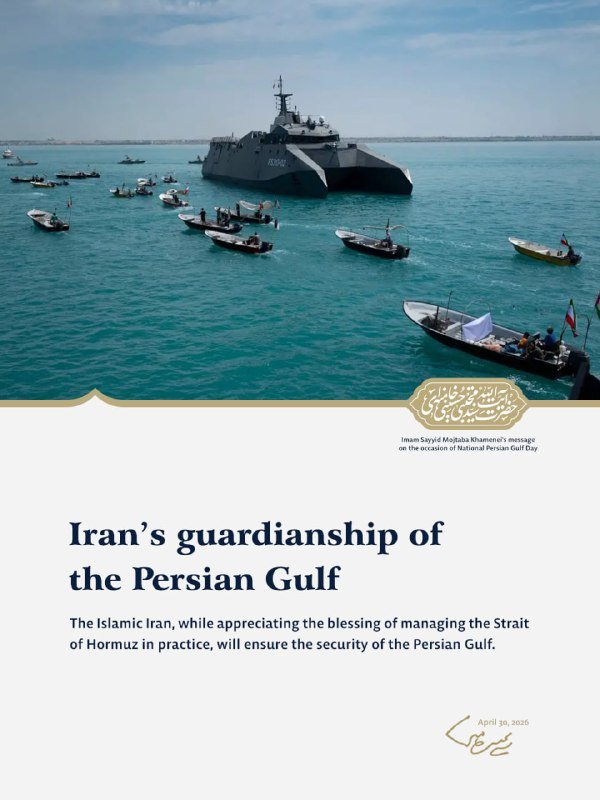
The briefing from Tehran arrived on Sunday night. Iran, according to multiple reports citing Axios, had submitted a new proposal to the United States — one that offered a permanent end to hostilities and the reopening of the Strait of Hormuz, while studiously avoiding the nuclear file entirely. The nuclear issue, the proposal implies, can wait. The Hormuz question cannot. Within twenty-four hours, President Trump was expected to convene top security officials and generals in the situation room to assess where things stand.
That asymmetry is not accidental.
What's Actually Being Offered
Let's be precise about what the sources say Iran put on the table. The proposal, as reported by Axios and picked up across intelligence-adjacent channels on 27 April 2026, envisions a two-part arrangement: the Strait of Hormuz returns to normal commercial transit, and the kinetic dimension of the U.S.-Iran conflict ends. In exchange, nuclear negotiations — the framework that has defined Western leverage over Tehran for the better part of two decades — are deferred to a later, unspecified stage. The weapons programme, such as it is, stays frozen. Not eliminated. Frozen. And deferred negotiations have a way of deferring indefinitely.
This is not a new playbook. It is the same architecture Tehran has pursued through back-channels and regional proxies for years: offer the Americans something immediate and verifiable — tanker traffic, de-escalation in the Gulf — in exchange for the thing that actually matters to the regime's survival: time on the nuclear clock. Every year of negotiation is a year of enrichment capacity accumulating under a patina of diplomatic process. The pattern has been consistent enough that Western negotiators have developed a shorthand for it. The sources do not give us the exact framing inside the situation room, but the structural logic is clear enough from the outside.
The American Problem
The Trump administration faces a genuine dilemma here, and it is worth stating it plainly rather than treating this as a simple test of presidential toughness. Reopening Hormuz would deliver immediate economic relief — oil markets would calm, shipping insurance rates would drop, allies in the Gulf would breathe easier — and it would do so before any enrichment breakthrough materialises. That is a tangible, measurable win in a week when the administration needs tangible, measurable wins.
The cost is subtler. Accepting the deferral means accepting that the nuclear issue has moved from the centre of the negotiating table to the waiting room. It means the timeline for any future deal resets, and resets in a direction that favours Tehran's technical progress, not Washington's diplomatic cadence. Intelligence assessments that once gave Israel eighteen months of warning before a weapons-capable threshold may need to be revised downward with each passing month of suspended talks. That is a strategic consequence wearing the costume of a tactical concession.
The sources do not tell us what the administration will decide. They tell us the meeting is scheduled, the generals will be in the room, and the proposal is on the table. That is the extent of what is confirmed.
The Israel Angle
Here the editorial framing matters. Israeli security concerns in this context are not manufactured anxieties — they are grounded in an intelligence picture that has, over decades, proved more accurate than not about Iranian technical progress. Jerusalem has watched this cycle play out before: negotiation begins, enrichment continues, redlines migrate, and the military option becomes simultaneously more necessary and more costly. Israel's position is that the nuclear file cannot be deferred because deferral is, in practice, permission.
The sources here do not give us Israeli government statements on the current proposal. But the structural pattern is well documented across previous administrations. Jerusalem's concerns will intensify if negotiations are formally suspended, regardless of what face-saving language accompanies the suspension. That pressure will eventually reach Washington. The question is whether it arrives before or after the Hormuz deal is characterised as a diplomatic success.
What Stays Unknown
Several elements of this story remain genuinely unclear from the source material. We do not have the text of the proposal. We do not know whether Iran has attached conditions to the Hormuz reopening — whether sanctions relief, asset解凍, or regional de-escalation steps are bundled into the offer or held in reserve as follow-on demands. The sources indicate the nuclear file is absent from the current document, but they do not specify whether that absence reflects a strategic decision by Tehran to separate the tracks or an opening gambit designed to be revised in subsequent rounds. There is also no confirmed response from Washington — no public statement, no senior official comment, no leak from the situation room meeting that had not yet occurred at the time of these reports. The sources describe a moment of diplomatic tension; they do not describe an outcome.
What the sources do establish is the shape of the proposition and the timeline on which it is arriving. The rest is for the situation room — and the weeks that follow — to resolve.
Iran has made its offer. The generals are being consulted. The Hormuz question is being treated as separable from the nuclear one. Whether that separation holds, or collapses under the weight of its own internal contradictions, will tell us a great deal about where this cycle of escalation ends — and who gets to define the terms of its conclusion.
This publication covered the Iran proposal against the backdrop of U.S.-Gulf alliance pressure for immediate de-escalation signals, a framing that sometimes obscures the long-run trajectory of enrichment capacity. The wire moved fast; the nuclear clock, as ever, moves slower — and differently.
Wire provenance
This editorial synthesis draws on the following public wire/social posts:
- https://t.me/Middle_East_Spectator/4821
- https://t.me/Middle_East_Spectator/4820
- https://t.me/cointelegraph/3104
- https://t.me/osintlive/8912
- https://x.com/polymarket/status/1915324567899824128