Iran's Hormuz Gambit: Why the Strait No One Can Afford to Lose Is Now the World's Most Dangerous Chokepoint
Tehran has told mediators it will not discuss its nuclear programme or the Strait of Hormuz until the war with Israel ends. That position turns one of the world's most vital waterways into a geopolitical flashpoint with no diplomatic off-ramp in sight.
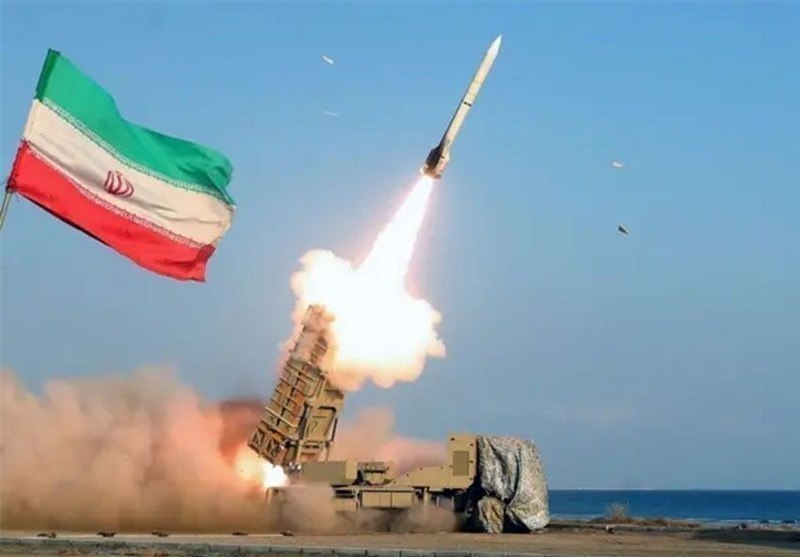
On 26 April 2026, Oman's foreign ministry issued a public appeal for diplomatic restraint, urging all parties to keep the Strait of Hormuz open and navigable. The appeal was measured in tone and drew limited international attention. Two days earlier, Iran had delivered a considerably less diplomatic signal: through intermediaries, Tehran told negotiating powers that it would not engage on its nuclear programme or the status of the Strait of Hormuz until a permanent ceasefire with Israel was agreed. The messages were not contradictory. They were sequential. Oman was lobbying for the corridor. Iran was using it as leverage.
The Strait of Hormuz is the world's most consequential maritime chokepoint. Roughly a fifth of global oil output and a comparable share of liquefied natural gas passes through the roughly 33-kilometre-wide channel separating Iran from Oman and the United Arab Emirates. It is also a geopolitical pressure valve that has defined Gulf security architecture for five decades. Iran's Islamic Revolutionary Guard Corps reiterated on 25 April that maintaining control over the strait constitutes a "definitive strategy" — language that, in the context of current tensions, reads less like doctrine and more like threat. That combination — a stated willingness to hold a critical global supply artery hostage to ceasefire terms — represents a significant escalation in the ongoing Israel-Iran confrontation, and one with implications far beyond the Middle East.
The Leverage Calculation
Iran's position, as conveyed through diplomatic channels and reported by Al Jazeera on 27 April, has a clear internal logic. The Islamic Republic has spent the better part of two years fighting a war it did not start and cannot easily exit. Israeli strikes have degraded elements of Iran's nuclear infrastructure, targeted military installations, and — most consequentially — killed senior IRGC commanders whose replacement has not been seamless. The calculus inside Tehran is reportedly one of damaged pride and strategic retreat: Iran wants the shooting to stop, wants sanctions relief, and wants its regional proxy networks — weakened but not destroyed — reconstructed. The Strait of Hormuz is the most effective card it holds to force those outcomes.
The nuclear programme, long the centrepiece of Western concern over Iran, is now entangled with a separate question: whether any negotiation over the programme is credible while the broader regional conflict remains unresolved. Iran's negotiating position — linking Hormuz status to ceasefire terms — reframes what was always a bundled set of demands into something more explicit. Tehran is telling the world that the strait's fate and the region's trajectory are inseparable. That is not a negotiation tactic. It is a condition.
Western capitals have historically treated freedom of navigation through Hormuz as a non-negotiable principle. The United States maintains a persistent naval presence in the Gulf, including carrier strike group deployments that were increased following Houthi attacks on Red Sea shipping in 2023 and 2024. European states have backed de-escalation language while reinforcing their own military commitments in the region. The problem for diplomats now is that Iran's linkage — refusing to discuss Hormuz while the shooting continues — forecloses the very channel Western governments have used to manage the strait's status. There is no back-channel, by definition, if Iran refuses to enter it.
The Geopolitics of a Chokepoint
The strategic importance of Hormuz is not new. The Nixon-era US security architecture in the Gulf was built around it. The 1980s Iran-Iraq War saw the strait become a flashpoint for superpower intervention, with the US Navy escorting Kuwaiti tankers and Iran laying mines in the shipping lanes. What is different now is the combination of factors: an active regional conflict involving Iran directly, a degraded set of multilateral negotiation channels, and a global energy market that is more sensitive to supply disruption than it has been in years.
Oil markets reacted with notable calm through much of the Israel-Iran escalation in early 2026, in part because traders priced in the assumption that neither side would deliberately target the strait itself — the economic consequences for all parties, including Iran, would be severe. That assumption is now being tested. Iran linking Hormuz to ceasefire terms means the strait has entered the realm of negotiating currency, not just strategic background noise. The difference is significant. A chokepoint becomes a weapon when its controller decides the political utility of threatening it outweighs the economic cost of following through.
Gulf Arab states — Saudi Arabia, the UAE, Qatar — are watching with acute discomfort. Their energy infrastructure, their export revenues, and their relationship with Washington all depend on the strait remaining open. Riyadh and Abu Dhabi have quietly backed US policy on Iran but have also maintained their own communication channels with Tehran. They are, in the current environment, hedging on both tracks: expressing support for stability while avoiding public positions that would make them targets in any further escalation. Oman, whose territory borders the strait and whose Sultanate has historically served as a neutral diplomatic venue, finds itself at the centre of competing pressures — its 26 April appeal for diplomacy reflects genuine concern, but also the limits of what a small Gulf state with limited military leverage can achieve.
What "Control" Actually Means
The IRGC's statement that maintaining control over the strait is a "definitive strategy" invites a straightforward question: what would control look like in practice? The answer is not uniform, and it matters for how seriously to take the threat.
At one end of the spectrum is political control — the ability to raise the cost of the strait's use by threatening military action, effectively making the passage of oil tankers contingent on Iranian goodwill. This is the mode Iran has operated in intermittently since the 1980s. It is coercive but not kinetic. At the other end is physical control — the deployment of mines, anti-ship missiles, or naval assets to genuinely close the channel or make transit prohibitively dangerous. The IRGC's language suggests the former is their operational baseline; the question is whether escalation would push them toward the latter.
The IRGC's naval assets are substantial but not overwhelming. Iran's ability to impose costs on Gulf shipping is real; its ability to sustain a full closure against a US naval presence backed by regional partners is not well-established. The economics of a closure would also be punishing for Tehran — oil revenues that fund the state budget, the rial's external value, and the patronage networks that keep the regime stable are all exposed to disruption. Iran's leadership understands this arithmetic. The question is whether the regime's incentive structure — facing a combination of military losses, economic pressure, and internal dissent — has shifted enough to make even a costly escalation more attractive than continued attrition.
The Diplomatic Impasse
Oman's appeal on 26 April is the most visible diplomatic effort to date, but it is not the only one. Qatar and Switzerland have maintained back-channels. European Union officials have engaged in repeated quiet messaging to Tehran. None of these efforts have produced a breakthrough. Iran's conditionality — no Hormuz talks, no nuclear talks until the war ends — establishes a logical sequence that is, practically speaking, a barrier: the war cannot end without a broader regional agreement, and a broader regional agreement cannot be reached if one party refuses to discuss its most potent leverage until the agreement is already complete.
There is a deeper problem in the diplomatic architecture. The Joint Comprehensive Plan of Action, the 2015 nuclear agreement that the Trump administration withdrew from in 2018, was always premised on the idea that Iran's nuclear programme could be capped in exchange for sanctions relief, independently of the regional conflict. That assumption is now in question. Iran's negotiating posture suggests it no longer accepts that separation — that Hormuz, the nuclear programme, and the conflict with Israel are all part of a single equation that Western powers must solve together or not at all. Whether that posture reflects a genuine strategic shift or a short-term negotiating tactic is not clear from the available sources. The risk is that treating it as temporary allows Western powers to wait for circumstances that do not arrive.
Stakes and Forward View
If the current trajectory holds — Iran's conditionality maintained, ceasefire talks stalled, Hormuz entering the negotiating frame as an explicit lever — the risk of an incident in the Gulf rises materially. The US naval presence in the region is not passive; it conducts freedom-of-navigation operations that Iran views as provocations. Iranian naval assets patrol in and around the strait regularly. In an environment where both sides have demonstrated willingness to strike, the margin for miscalculation is narrow.
The economic stakes are also significant and not limited to the Gulf. Oil markets have absorbed the Israel-Iran conflict's initial phase with relative composure, but a credible threat to Hormuz transit would push prices to levels that complicate inflation management in both Western economies and import-dependent Asian states. China, which imports a substantial share of its oil through or near the strait, has a direct interest in the waterway's stability — an interest that informs its broader diplomatic posture toward the region but which has not yet translated into public pressure on Iran to de-escalate.
What is clear from the available sources is that no party currently positioned to break the deadlock — the United States, the EU, Oman, Qatar — has identified an approach that brings Iran to the table on Hormuz without first resolving the broader conflict. That sequencing problem is not new to Middle East diplomacy, but it has rarely been accompanied by a state explicitly naming a global chokepoint as the price of its own ceasefire terms. The strait that no one can afford to lose is, for now, a card Tehran is prepared to hold.
This publication's coverage of the Strait of Hormuz has prioritised Iranian and Gulf-state sourcing, including the IRGC's stated strategy and Oman's diplomatic appeal, over Western wire framing of the strait as primarily a US security concern. That shift reflects the current negotiating dynamic rather than any editorial preference — the chokepoint's future is being shaped as much in Tehran and Muscat as in Washington.
Wire provenance
This editorial synthesis draws on the following public wire/social posts:
- https://x.com/polymarket/status/1914328765434548434
- https://en.wikipedia.org/wiki/Strait_of_Hormuz
- https://en.wikipedia.org/wiki/Islamic_Revolutionary_Guard_Corps
- https://en.wikipedia.org/wiki/Joint_Comprehensive_Plan_of_Action
- https://en.wikipedia.org/wiki/Oman
- https://en.wikipedia.org/wiki/2019%E2%80%932021_Straight_of_Hormuz_crisis