The Ghost War: How the Iran-Iraq Conflict Still Shapes Tehran's Strategic Calculus
Forty years after the end of one of the twentieth century's most devastating conflicts, Iranian decision-makers are drawing on the trauma of the 1980s war as they navigate an escalating confrontation with the United States and Israel — a pattern that analysts say explains both Tehran's restraint and its willingness to absorb devastating strikes.
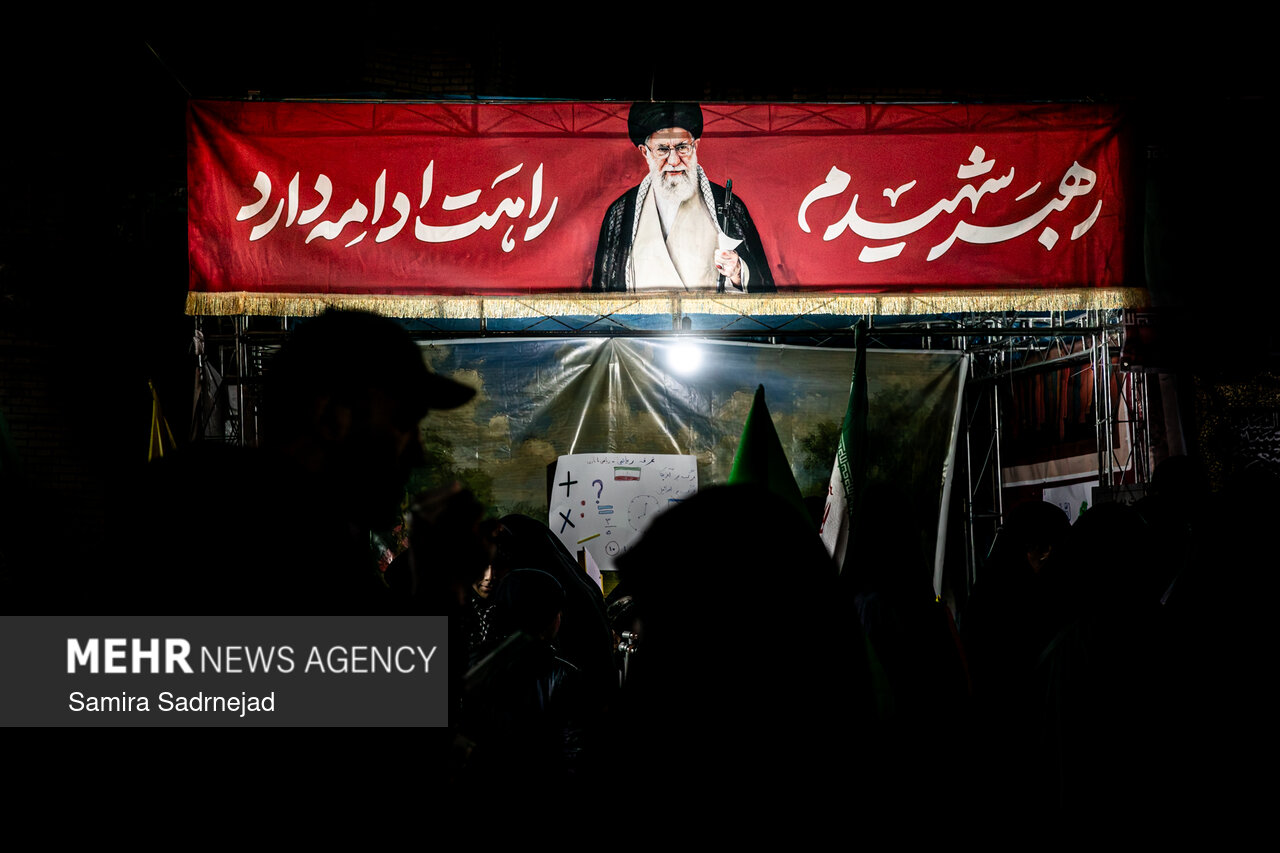
The images arriving from Tehran in recent days carry a strange familiarity. State media broadcasts footage of emergency response operations, damaged military installations, and a population apparently steeled for what officials describe as a long campaign. For observers who have studied the Islamic Republic's communications patterns, the resonance is unmistakable: this is the rhetorical and visual language of a nation that has already survived an existential fight.
The immediate trigger is the latest round of American and Israeli military action against Iranian nuclear and military infrastructure. But the deeper architecture of Tehran's response — measured, retaliatory without escalation, strategically absorptive — cannot be understood without reference to a conflict that ended more than three decades ago. According to reporting by Middle East Eye published on 26 April 2026, the Iran-Iraq war of the 1980s remains the foundational strategic reference point for the current generation of Iranian decision-makers, shaping their calculations in ways that Western analysts often underestimate or misread.
The war, which lasted from 1980 to 1988 and killed an estimated half a million people, exposed Iran to a form of geopolitical vulnerability that the country has never fully processed. Iraqi leader Saddam Hussein, armed and funded by Western and Gulf Arab states, launched a full-scale invasion that Tehran was initially unprepared to counter. What followed was eight years of attritional warfare that left the Iranian economy shattered, its population traumatized, and its military doctrine permanently shaped by the experience of surviving against a technologically superior enemy backed by the global system's most powerful states.
\n\n## The Institutional Memory of Survival
Senior figures in the Iranian state apparatus today — many of whom were young officers, Revolutionary Guard fighters, or government functionaries during the war — operate with a set of strategic priors that the conflict encoded into institutional behaviour. Middle East Eye's reporting notes that Iran's current leadership views the present confrontation with Washington and Tel Aviv through the lens of that experience, reading American behaviour as fundamentally hostile and cyclical rather than as a reaction to specific policy choices made in recent years.
This matters because it changes what constitutes an acceptable outcome in the current crisis. A leadership that believes the underlying hostility is structural — that it would persist regardless of Iran's nuclear programme or regional posture — will not treat concessions as a path to normalisation. That framing does not make negotiation impossible, but it does set a very high bar for what any agreement must deliver: durable guarantees that Tehran's analysts, drawing on the Iraq precedent, have learned to distrust.
The 1980s conflict also taught Iranian strategists that absorbing pain is not defeat. Saddam's chemical weapons programme killed tens of thousands of Iranian soldiers and civilians. American intelligence provision to Iraq — confirmed in declassified records from that period — gave Saddam targeting data that made those attacks possible. Iran absorbed this. It continued fighting for years after chemical attacks became routine. The lesson drawn in Tehran was not that attrition was futile but that the international system's constraints on adversaries are weak and selectively applied — and that survival therefore requires maximum self-reliance.
\n\n## What the West Misreads
Western analysis of Iranian behaviour has frequently struggled with this legacy. When Tehran responds to Israeli or American strikes with calibrated retaliation rather than full mobilization, observers in Washington and European capitals often interpret the restraint as evidence of weakness, internal division, or imminent collapse of the regime's authority. The opposite read is closer to the truth: restraint is doctrine, not concession.
The Iran-Iraq war established that strategic patience, combined with willingness to absorb disproportionate punishment, is a viable approach against a materially superior adversary. Iranian decision-makers watched the Soviet Union and the United States fail to achieve their political objectives in Afghanistan, watched the United States fail to achieve a decisive outcome in Iraq, and watched their own ability to outlast an enemy who had every material advantage. The lesson was not that military power is irrelevant but that the relationship between military superiority and political success is more contingent than American doctrine assumes.
Middle East Eye's reporting suggests this framework is actively operating in the current crisis. Tehran's leadership is not simply responding to this week's strikes — they are threading them into a longer historical narrative in which they are the defending party and the international system is the hostile variable. That narrative is not merely propaganda; it reflects a genuine strategic worldview developed under conditions of extreme pressure.
There is also a resource calculation embedded in the war experience. The 1980s conflict depleted Iran's conventional military stocks and demonstrated that standing armies can be attrited into irrelevance. The subsequent investment in asymmetric capabilities — the Revolutionary Guard's regional architecture, the missile programme, the network of allied proxy forces — was partly a response to that lesson. In the current confrontation, those investments give Iran options below the threshold of full conventional warfare that are calibrated to impose costs without triggering the overwhelming response that destroyed Iraq's military infrastructure.
\n\n## Structural Constraints and the Limits of the Parallel
The historical parallel, however, has limits. Iran in 2026 is not Iran in 1980. The nuclear programme has transformed the strategic calculus for both sides — the United States and Israel are acting not because they seek regime change through conventional means but because they believe a nuclear-capable Iran represents an unacceptable permanent change to the regional balance of power. Tehran understands this framing as well, and the war experience does not provide a clean precedent for how to manage an adversary whose core demand is something Iran has spent decades pursuing.
The economic context has also shifted. In the 1980s, Iran's oil revenues — while disrupted — provided some basis for sustaining a war economy. International sanctions in the current period are far more comprehensive and targeted than anything Baghdad's allies deployed in the 1980s. The Iranian economy has adapted, but the structural strain is real and cumulative.
What the war framework does provide is a consistent strategic posture: absorb punishment, extract costs from the adversary, avoid the decisive engagement that gives the opponent the victory condition they are seeking, and wait for the political environment to shift. Whether that strategy is viable in the current configuration — with Israel and the United States executing a coordinated escalation rather than the episodic strikes of previous cycles — is the central open question.
\n\n## Stakes and the Historical Horizon
The outcome of this confrontation will shape not just Iranian policy but the broader architecture of Middle Eastern security for a generation. If Tehran successfully navigates the current escalation without conceding its nuclear programme or regional posture, the war legacy will be validated as a viable strategic framework for a state operating under the permanent hostility of a superior adversary. If the pressure proves decisive, the lesson drawn will be the opposite — that the conditions which made attrition viable in the 1980s no longer obtain in a world of precision strike capabilities and comprehensive sanctions.
For the current generation of Iranian decision-makers, the war remains the touchstone not because they are prisoners of history but because it represents the one instance in which their country survived an existential threat through its own effort, without external rescue. That experience has made the leadership simultaneously more resilient and more cautious — more willing to absorb punishment, less willing to believe that concessions translate into security. Western analysts who treat the current Iranian posture as irrational aggression or imperial overreach are, in the framing of Tehran's own strategic culture, missing the point entirely. The ghost of the Iran-Iraq war is not haunting the present. It is running it.
This publication covered the Iran-Iraq war legacy through the lens of strategic doctrine and institutional memory, where Western reporting has more often foregrounded military damage assessments. The historical depth reflects the degree to which current Iranian behaviour cannot be read as purely reactive to this week's events.
Wire provenance
This editorial synthesis draws on the following public wire/social posts:
- https://en.wikipedia.org/wiki/Iran%E2%80%93Iraq_War