Iran's St. Petersburg Gambit Is Not What It Looks Like
Tehran's parallel talks with Moscow and Washington reveal something more calculated than desperation: a deliberate strategy of transactional multipolarity that the West's sanctions architecture was never built to counter.
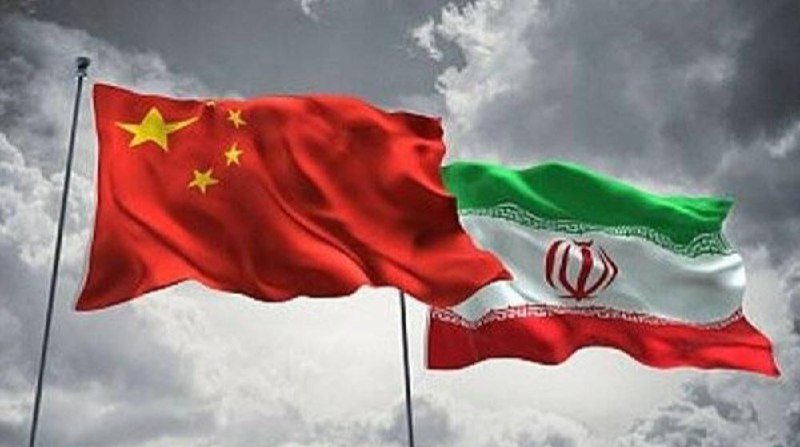
As Iran's foreign minister arrived in St. Petersburg on April 27, 2026, the official framing could not have been more straightforward: Tehran deepening its strategic partnership with Moscow. Hours earlier, per Axios reporting, Iran had reportedly approached Washington with a different proposition—partial de-escalation over the Strait of Hormuz in exchange for sanctions relief, with the nuclear question deliberately deferred. The wires wrote the story as a two-track crisis. The reality is more uncomfortable for Western capitals: this is not a regime playing its last card.
What Tehran has actually executed is a strategy of calibrated ambiguity, keeping every diplomatic door open while extracting maximum pressure from the geometry of the moment. The Hormuz offer is not a concession. It is a test—of how desperate Western governments are for regional stability, of whether sanctions actually constrain behaviour when the constrained party sits on infrastructure the entire global economy depends upon. That Iran can simultaneously court Russia and dangle Hormuz at the United States tells you everything about how the multilateral sanctions regime has failed to produce the isolation it promised.
The Axios reporting—which described Tehran offering to open the Strait of Hormuz and end the war posture in exchange for sanctions relief while shelving nuclear negotiations indefinitely—presents a picture that Western capitals will read as Iranian weakness. That reading is wrong. What it actually reveals is Iranian sophistication: a negotiating position that gives Washington something it wants badly right now while preserving the nuclear programme as future leverage. Neither side gets what it really wants. Both sides get enough to declare a result. This is not a breakthrough. It is managed ambiguity serving the domestic and international needs of two governments that need a diplomatic headline without a structural resolution.
The deeper pattern is structural, not transactional. Iran is not aligning with Russia in the classical alliance sense. It is positioning itself as indispensable infrastructure in a multipolar world where multiple great powers need Tehran's cooperation simultaneously. The Strait of Hormuz carries roughly a fifth of the world's oil. Every major economy—China's, Europe's, America's—is a stakeholder in its unimpeded operation. Western sanctions were designed to isolate Iran from that system. Instead, they have made Iran's position within it more valuable, because alignment with Tehran is now a scarce resource that multiple powers are competing to secure.
The Araghchi-Putin meeting, confirmed by Iranian state media upon his arrival in St. Petersburg on April 27, is being read in the West as a signal of anti-Western solidarity. It is more accurately read as insurance. Tehran is keeping Moscow close precisely because Moscow's relevance to Washington creates negotiating space. This is not ideological alignment. This is what every sophisticated state does when it finds itself at the intersection of competing great-power interests: it extracts value from the competition, not from the alignment.
What remains genuinely uncertain is whether the Hormuz offer represents a serious negotiating opening or a deliberate pressure tactic timed to coincide with the St. Petersburg talks. The sources do not confirm whether the Axios-reported proposal has received any formal US response, and Iranian state media framing of the Araghchi visit emphasised bilateral Russian consultation without referencing Washington directly. That gap matters. A real diplomatic opening would likely produce more consistent public signalling from both sides. What we have instead is simultaneous, separately-useful narratives—Moscow confirming the visit, Washington digesting the offer, Tehran keeping both tracks warm.
The stakes extend well beyond bilateral negotiations. Any Hormuz arrangement touches ceasefire calculations in both Ukraine and Gaza, where Iranian-aligned proxies remain active variables. Regional Gulf states—Saudi Arabia, the UAE—are watching with their own calculations about whether a Tehran-Washington understanding strengthens or weakens their own positioning. And the nuclear programme, deliberately parked for later discussion, will not stay parked indefinitely. The deal that defers it is not the same as the deal that resolves it—and Tehran knows this as well as anyone in the room.
The question this week's meetings pose is not whether Iran will negotiate. It is whether the international system has learned to accommodate states that are simultaneously inside and outside the order—drawing benefits from integration while retaining the leverage that comes from strategic indispensability. What looks like diplomatic chaos from the Western perspective is, from Tehran's, working exactly as intended. The Strait of Hormuz has not closed. It did not need to. Its continued operation under the shadow of potential closure is itself the leverage. And that leverage, it turns out, requires no agreement to be fully effective.
This publication's wire coverage foregrounded the Araghchi-Putin bilateral; the Axios Hormuz reporting appeared in the same news cycle and both elements inform this analysis.
Wire provenance
This editorial synthesis draws on the following public wire/social posts:
- https://x.com/middleeasteye/status/1915478912345678912
- https://t.me/alalamfa/789123456
- https://t.me/tasnimnews_en/456789012