Israeli Airstrikes Hit Southern Lebanon Amid Fragile Ceasefire
Israeli warplanes struck multiple southern Lebanese villages on 27 April, killing at least 14 people according to BBC reporting, even as a temporary ceasefire arrangement had been in place since early April 2026.
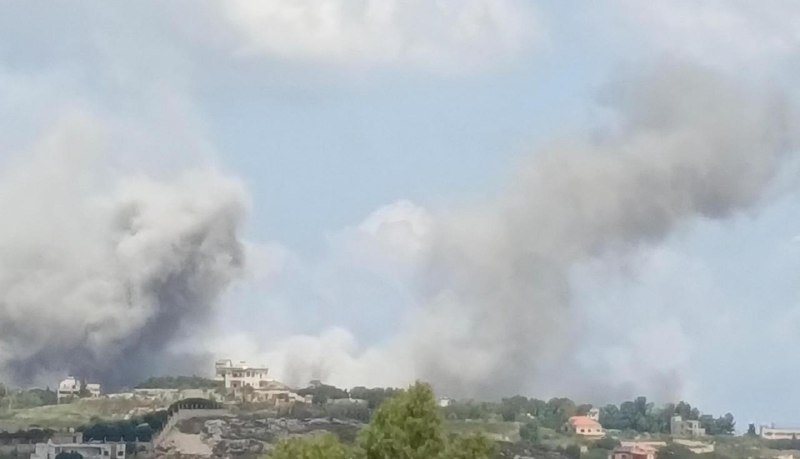
Israeli warplanes launched a wave of airstrikes across southern Lebanon on 27 April 2026, killing at least 14 people, according to BBC reporting cited on social media, despite the existence of a temporary ceasefire arrangement meant to halt hostilities along the Israel–Lebanon border. The strikes targeted the town of Tebnine and an area between Kafra and Sadiqine, both in southern Lebanon, according to Telegram posts from regional monitoring channels. The Israeli Defence Forces (IDF) described the operations as precision strikes against Hezbollah infrastructure; the framing was quickly challenged by Lebanese officials who said the targets included civilian-populated areas outside the terms of any agreed buffer arrangement. The wave of strikes represents the most significant breach of the ceasefire since it was declared in early April, and raises serious questions about whether the arrangement can hold through the coming weeks.
The ceasefire, brokered with US and French diplomatic support, had been holding in broad terms since early April 2026. Its structure was always partial: a stop to major exchanges of fire, with both sides retaining the right to act against what each defined as imminent threats. Israel had maintained it would not tolerate any buildup or repositioning by Hezbollah, and Lebanese authorities had stressed their commitment to the arrangement while acknowledging ongoing Israeli overflights as a persistent point of friction. Neither side had formally withdrawn forces, and no demilitarised zone had been established on the ground. The formal ceasefire architecture was thin — a political arrangement rather than a legally binding agreement — and both governments had been careful to avoid language that would constrain future operational flexibility. That underlying ambiguity is now being tested at scale.
A systematic rather than incidental pattern
What distinguishes this wave of strikes is not any single incident but the breadth and concentration of the operations. According to the sources reviewed, strikes struck Tebnine, the Kafra–Sadiqine area, and multiple other villages across the south within a compressed timeframe on 27 April. The pattern, as described by regional monitoring channels, suggests a coordinated targeting effort rather than isolated responses to discrete threats. The IDF stated that its strikes were calibrated and precision-based, targeted at weapons storage and observation posts associated with Hezbollah. Lebanese officials disputed that characterisation for several of the reported strike locations, arguing that villages like Tebnine and Kafra–Sadiqine have no documented Hezbollah military infrastructure and questioning the evidentiary basis for the IDF's targeting assessments.
Israeli military briefings, reported in Hebrew-language media, indicated that new intelligence assessments had identified renewed smuggling activity and temporary weapons caches in some of the targeted areas. The claim is unverifiable from available open sources; independent verification of specific weapons-storage claims in southern Lebanon is operationally difficult given access restrictions. The IDF has consistently argued that its targeting decisions are based on granular intelligence and that collateral harm estimates are factored into strike authorisations. Lebanese state media reported civilian casualties as a direct result of the strikes and called for international intervention to prevent further escalation. Hezbollah's media outlets, which the Israeli government treats as an arm of the group rather than independent news, described the strikes as a violation of the ceasefire's terms while stopping short of announcing a military response.
The regional diplomatic timing
The strikes arrive at a diplomatically sensitive moment. Israel's military campaign in Gaza is in its second year and subject to sustained international pressure for a permanent ceasefire, though that effort remains stalled on core disagreements between the parties. Washington has indicated that a comprehensive Lebanon–Israel arrangement — one that goes beyond the current temporary ceasefire to a formally structured deal — remains a priority, and has invested diplomatic capital in keeping both sides at the table. Ceasefire talks, at various levels, have been ongoing for several weeks, with French officials playing a facilitative role alongside the Americans.
Israeli officials, speaking to domestic media on background, said the strikes were precautionary — designed to prevent Hezbollah from exploiting the ceasefire talks to reposition forces or consolidate positions in southern villages. The logic, as presented, is that a ceasefire process does not suspend Israel's right to act against emerging threats, and that allowing Hezbollah to use diplomatic cover for military reinforcement would undermine the eventual negotiated outcome. Hezbollah's political representatives have rejected that framing, arguing that the strikes demonstrate Israel's intent to impose its own security terms unilaterally rather than negotiate them. The divergence in how each side interprets the ceasefire's operational scope — Israel emphasising self-defence rights, Hezbollah emphasising territorial sovereignty and the right to resist occupation — reflects the structural incompatibility that has always underpinned the broader conflict.
Stakes for both sides and the broader region
The immediate stakes are plainly high. For Lebanon, which is in the midst of an economic recovery effort with an internationally supported programme and a newly stabilised government, escalation on the southern border is a direct threat to that process. Every significant exchange of fire risks destabilising investor confidence and complicating the relationship between Beirut and international creditors and donors whose support the recovery programme requires. The Lebanese Armed Forces, which the ceasefire arrangement tasked with extending state authority southward, faces an impossible position if Israeli strikes make that extension impossible or if Hezbollah defies state authority and acts independently. Lebanon's sovereignty, such as it exists along the border, depends partly on the credibility of the ceasefire arrangement and the willingness of both external parties to respect it.
For Israel, the strikes reflect a broader strategic calculation that the ceasefire is provisional by design — a pause rather than a peace — and that ongoing intelligence and military pressure is the only reliable instrument for managing Hezbollah's capabilities. That calculation has domestic drivers as well; the Israeli coalition in power has consistently said that any ceasefire arrangement with Hezbollah must include robust mechanisms for detecting and neutralising violations, and that the IDF will not defer to diplomatic process when its intelligence assessments identify a threat. The political cost of absorbing a Hezbollah attack without responding is, in the current government's calculus, higher than the diplomatic cost of striking preemptively.
If the strikes continue at this intensity, the ceasefire arrangement faces a near-term collapse. Hezbollah's leadership, already under pressure from its own base and from Iran to demonstrate resistance credentials, has limited tolerance for what it characterises as Israeli aggression dressed as precautionary action. Iran, which has consistently used Hezbollah as a tool of regional pressure, will be watching whether the group responds or appears to absorb the strikes without retaliation. A Hezbollah response — however measured — risks triggering an Israeli escalation that could rapidly overwhelm the diplomatic channels currently keeping the situation from becoming a full-scale war. Neither side appears to want a full-scale conflict, but both are operating within political environments that make restraint difficult and escalation easy to justify.
Monexus drew on regional monitoring channels and Telegram-sourced imagery for this report. The ceasefire between Israel and Hezbollah is a temporary arrangement with no formally codified buffer zone or withdrawal agreement — a structure that makes mutual accusations of violations inherently difficult to adjudicate without independent on-the-ground access that is currently not available to international monitors.
Wire provenance
This editorial synthesis draws on the following public wire/social posts:
- https://t.me/presstv/98741
- https://t.me/wfwitness/12453
- https://t.me/wfwitness/12451
- https://x.com/unusual_whales/status/1915423349289263104