Kim Jong-un Declares North Korea Will Back Russia's Ukraine Campaign to 'Victory'
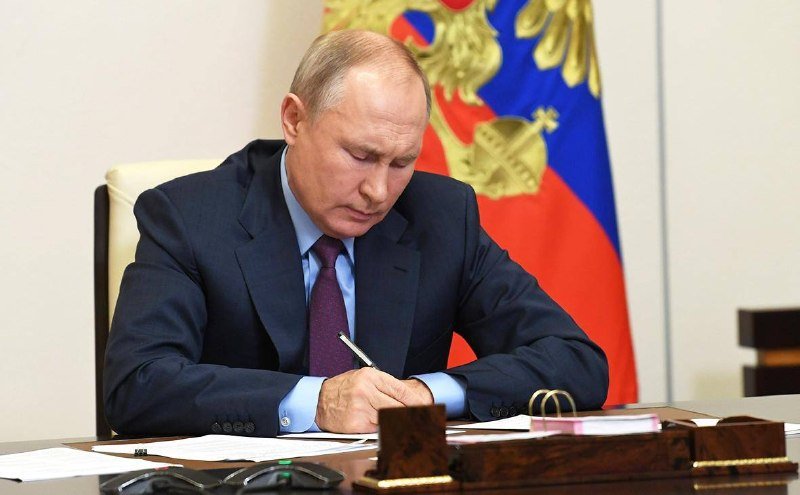
On Monday, North Korean leader Kim Jong-un publicly pledged his country's support for Russia's full-scale invasion of Ukraine, calling it a "sacred war" and committing Pyongyang to helping Moscow achieve victory. The declaration, reported by France24 and corroborated by reporting from FarsNewsInt, came as a response to a congratulatory message from Russian President Vladimir Putin following Kim's formal re-appointment as head of state. North Korean state media also confirmed that Pyongyang and Moscow are actively preparing a comprehensive cooperation framework covering the period 2027 to 2031 — the most concrete evidence yet that the two countries are institutionalising a strategic alignment that has deepened steadily since Russia's 2022 invasion of Ukraine.
The open endorsement marks a new threshold. Previous North Korean statements on the Ukraine conflict had offered diplomatic solidarity with Russia and criticised Western sanctions, but had stopped short of explicitly tying North Korean national interest to a Russian military victory. Monday's framing — "sacred war," and the promise to help Moscow prevail — leaves no such ambiguity. It positions North Korea not merely as a sympathetic bystander but as a co-stakeholder in the conflict's outcome.
A Pact Built on Mutual Need
The alignment between Pyongyang and Moscow has followed a consistent logic since the first months of the invasion: Russia needs materiel and diplomatic cover; North Korea needs hard currency, energy, and the legitimacy that comes from a great-power partnership. Kim Jong-un's statement on Monday signals that this exchange has moved beyond transactional arms deals into something more structurally durable.
The five-year cooperation plan being drafted between the two governments — covering 2027 through 2031 — suggests both sides are planning for a long horizon. A cooperation framework of that length implies mutual confidence that the bilateral relationship will survive whatever changes occur in Ukraine, in Northeast Asian security, or in the broader sanctions architecture governing both countries. North Korean state media, as cited by the Tsaplienko wire, described the plan as a strategic document rather than a standard diplomatic instrument.
Western analysts have long tracked signs of North Korean munitions flowing to Russia — satellite imagery and intelligence assessments from the US and South Korea have documented artillery shells and ballistic missiles crossing into Russian hands. The scale and frequency of those transfers have accelerated. What Monday's statement adds is the political architecture to support that flow: a formalised partnership that makes continued transfers a matter of state policy rather than ad hoc arrangement.
What the West Gets Wrong — And What It Gets Right
Western coverage of North Korea-Russia ties tends to frame the relationship through the lens of isolated pariah states ganging up against a rules-based order. That framing captures something real — both governments operate outside the principal institutions of global governance and have directly defied international sanctions. But it also understates the functional rationality of the arrangement. Moscow and Pyongyang are not allied out of ideological solidarity alone. They are allied because both face an American-led alliance system they regard as existential, and because cooperation delivers material benefits to each side.
The stronger version of the Western critique holds that the Russia-North Korea axis is evidence of a coherent counter-hegemonic bloc forming in Eurasia. That may overstate the coordination: the two countries have different core interests — Moscow seeks to exhaust Ukraine and break Western resolve; Pyongyang seeks economic survival and leverage over Seoul and Tokyo. But the strategic alignment is real, and it is deepening.
The weaker version — that North Korea is simply a Russian client — misreads the power dynamic. Kim Jong-un has extracted significant concessions from Moscow, including energy supplies and diplomatic shielding at the United Nations. Russia's dependence on North Korean materiel in a grinding war of attrition gives Pyongyang more leverage than it would otherwise possess. The relationship is transactional, but it is transactional in North Korea's favour.
The International Order Fragments Further
The North Korea-Russia alignment is one node in a broader restructuring of global diplomatic relationships that has accelerated since 2022. For decades, the international order maintained a rough coherence: sanctions regimes had broad buy-in, military assistance to pariah states carried real costs, and the architecture of non-proliferation constrained the most destabilising transfers. That architecture is now under genuine stress.
Russia's willingness to openly partner with North Korea — a UN-designated proliferator — has hollowed out the norms that once constrained such relationships. North Korea's willingness to commit openly to a Russian victory normalises the relationship further, making it harder for third-party states to maintain sanctions compliance or to justify their own non-engagement with Pyongyang. The precedent matters more than the individual transaction.
The cooperation plan extending to 2031 also signals that both governments are anticipating continued friction with the West for at least the medium term. That is a structural bet — it means that whatever happens on the battlefield in Ukraine over the next twelve to eighteen months, the diplomatic and economic architecture of this alignment is designed to persist.
What Comes Next
The immediate question is whether Monday's statement translates into increased North Korean military transfers to Russia in the coming months. Satellite evidence and Western intelligence assessments have tracked waves of munitions flowing from North Korean ports to Russian facilities; the framework now exists to formalise and expand that pipeline. South Korean and American officials will be watching closely for signs of acceleration.
The longer question is whether the Russia-North Korea axis is an anomaly — a wartime necessity that unwinds once the conflict in Ukraine stabilises — or whether it represents a durable realignment of great-power relationships in Asia. The 2031 cooperation plan suggests the latter. If that framework is implemented with any consistency, it will complicate diplomatic efforts on the Korean Peninsula, on nuclear non-proliferation, and on the broader project of constraining North Korea's weapons programmes for years to come.
Ukraine's allies have spent considerable political capital maintaining sanctions pressure on Russia. The emergence of a formalised North Korean partner — one that can supply munitions, absorb diplomatic isolation, and provide rhetorical cover — weakens that pressure in ways that are difficult to quantify but structurally significant.
The sources for this article draw on reporting from France24's English and French-language wires, FarsNewsInt, and the Tsaplienko Telegram channel. Monexus checked corroboration across multiple Telegram wire sources before publication.
Wire provenance
This editorial synthesis draws on the following public wire/social posts:
- https://t.me/france24_en/12458
- https://t.me/france24_fr/18432
- https://t.me/Tsaplienko/38294
- https://t.me/FarsNewsInt/22103