Leadership Under Fire: What the Trump-Rajiv Contrast Reveals About Political Rhetoric
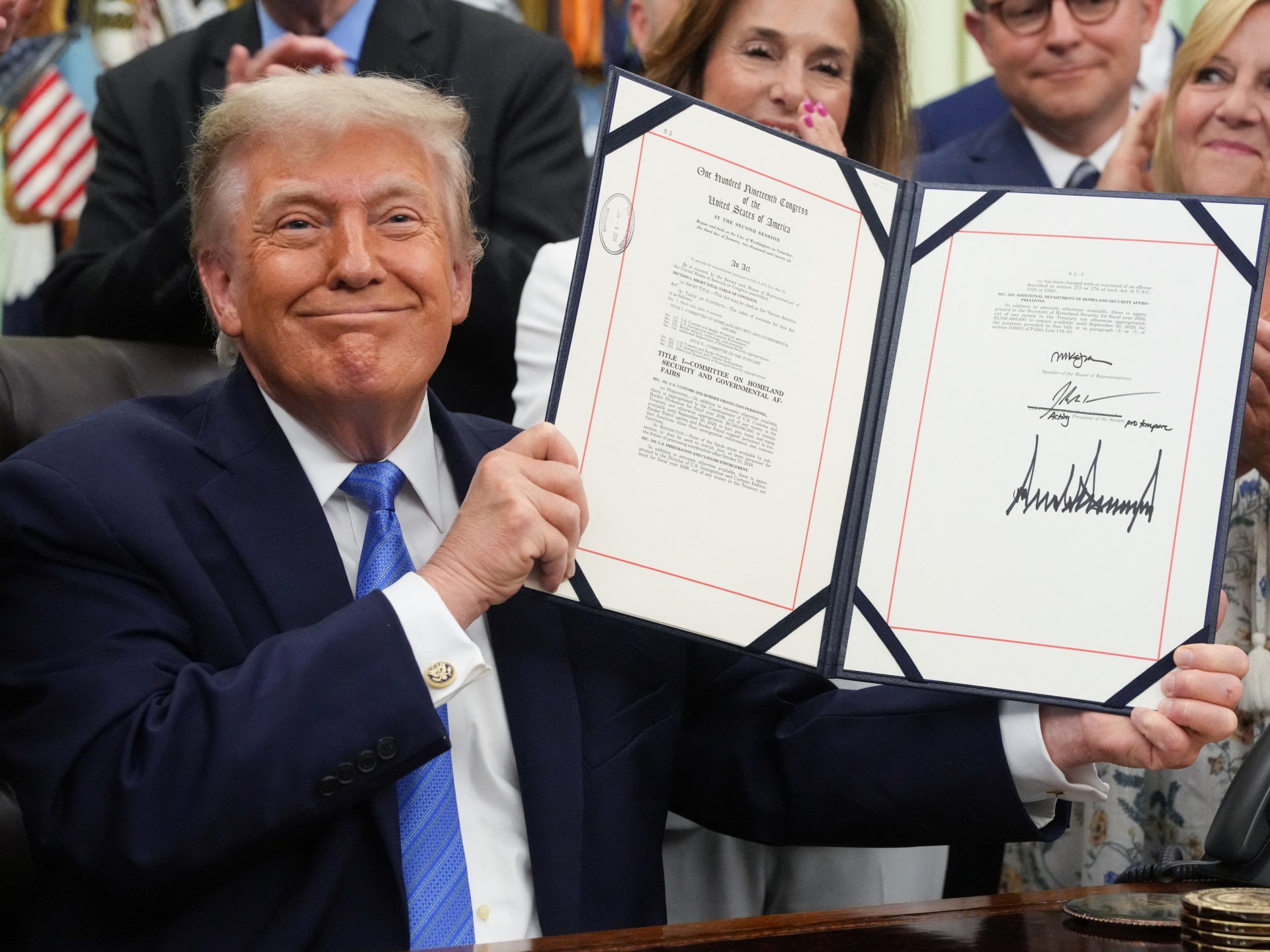
When Donald Trump responded to a question about a shooter’s manifesto by calling a reporter a disgrace, the exchange produced precisely the kind of content that dominates modern political discourse — short, viral, emotionally charged. Whether one views the moment as a leader defending himself or a leader losing composure depends largely on which information ecosystem one inhabits. That interpretive split is the story.
On the other side of the world, a very different kind of political moment is being examined: Rajiv Gandhi’s five-day restraint in April 1990, when he declined to inflame tensions after the广场 massacre even as his political opponents pressed him to attack. The Indian Express, reporting on the contrast, notes that where Trump’s instinct is to confront and name enemies, Rajiv Gandhi’s framework was to wait, absorb, and let the institutional record speak for itself. The observation has aged differently depending on who makes it.
What both moments reveal, when examined together, is something structural about how modern political rhetoric operates. The incentives are not identical — America and India are different constitutional orders with different media ecosystems — but the underlying pressure is similar: respond fast, respond loudly, make your supporters feel defended. The quiet work of statesmanship, which tends to look like restraint until history vindicates it, is poorly served by the platforms that now mediate political communication.
The Velocity Problem
Media has always privileged the immediate over the contextual. But the acceleration of news cycles, combined with platform architectures that reward engagement over accuracy, has compressed the time available for a political figure to construct a response that lasts. A statement made in the first twenty minutes after a crisis is now the permanent record, regardless of what fuller context emerges later.
This creates what might be called the velocity problem: the structural pressure to be first and loud rather than correct and measured. The Trump administration has navigated this pressure differently than most, treating confrontation as a signal of strength rather than a risk to be managed. The Indian Express reporting notes that the current US president has developed a rhetorical style that treats every question as a challenge to be neutralised rather than a problem to be addressed. Whether that style is effective depends entirely on what outcome one measures.
Two Styles, Two Audiences
Rajiv Gandhi’s restraint in 1990 was, by most historical accounts, a calculated political choice — and one that carried real risk. Allowing an adversary to set the terms of a confrontation, in the short term, can look like weakness to audiences hungry for a response. The reporting notes that Rajiv Gandhi faced pressure to attack Beijing in the immediate aftermath of the massacre. He declined. The decision was legible as statesmanship only in retrospect, when the alternative — a military escalation with unclear consequences — became clearer.
Trump’s approach in the current moment operates on a different theory of political communication. Calling a reporter a disgrace is not a communication failure from the perspective of a political operation optimised for base mobilisation. It is a feature. The sources describe a moment in which the president’s rhetoric functions less as a policy instrument and more as a loyalty signal — a demonstration to supporters that he remains under siege and therefore remains relevant.
The comparison is not meant to collapse into false equivalence. Rajiv Gandhi operated within a parliamentary system with a more institutionalised media landscape; Trump operates within a system with weaker press protections and a more fragmented media environment. But the structural incentive — to match the emotional register of your audience rather than the complexity of the moment — operates in both contexts.
The Global South Complication
There is a specific complication that Western media framing tends to introduce when analysing political communication in the Global South. Restraint by a leader from an African, Asian, or Latin American state is frequently read as weakness, capitulation, or the mark of a leader who lacks the personality to dominate. The same quality in a Western leader might be read as credibility, maturity, or strategic patience.
The coverage of Rajiv Gandhi’s restraint has not been immune to this dynamic. The reporting notes that even among those who retrospectively validate the 1990 decision, the framing often defaults to the language of patience-as-survival rather than patience-as-strength. It is the same observation that applies to how Western outlets cover multilateral diplomacy versus unilateral action, or how they weight institutional legitimacy versus personal charisma.
This is not a complaint about bias in the traditional sense. It is a structural observation about how information ecosystems evaluate political actors differently based on their position in the global order. A leader who waits is prudent when the waiting is done from a position of strength; the same leader who waits from a weaker position is simply deferring an inevitable reckoning. The facts are identical. The evaluation is not.
What This Means for Democratic Accountability
The stakes of this dynamic are not abstract. Democratic systems depend on a functional information environment in which voters can evaluate the consequences of decisions. When the communication environment rewards speed and affect over deliberation and context, the quality of the information available to voters degrades. This is not a partisan observation — it applies to political communication across the ideological spectrum.
The question is not whether Trump or Rajiv Gandhi communicated better. The question is what structural conditions produce political communication that serves accountability rather than merely mobilising supporters. The evidence suggests that platform architecture, media incentives, and the global hierarchy of which political styles receive charitable interpretation all play a role. Until those conditions change, the velocity problem will continue to shape what leadership looks like in democracies — and the restraint that history vindicated will continue to be read as weakness by audiences trained to demand a response.
This piece was reported and written by the Monexus desk.