Lebanon's Aoun Defends Israel Talks Against Hezbollah Treason Claims
Lebanon's President Joseph Aoun on 27 April called for a 1949-style armistice with Israel, defying blistering criticism from Hezbollah and its allies who have branded his outreach 'treason.' The clash exposes a deepening rift between Beirut's internationally recognised government and the residual power structure of the Iran-aligned faction.
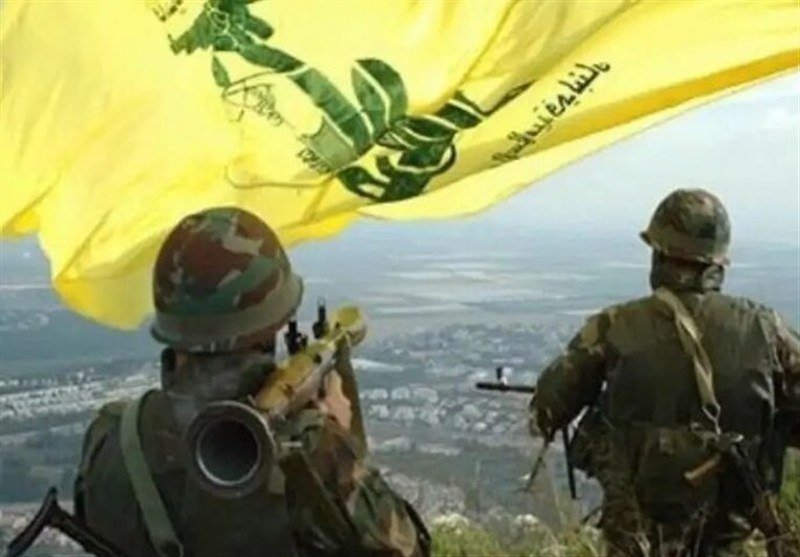
Lebanon's President Joseph Aoun used an explicit historical reference on 27 April to frame his government's push for a formal ceasefire with Israel: a return, he said, to the armistice architecture of 1949 — the year a UN-brokered agreement ended the first Arab-Israeli war and set the border that Lebanon's leadership now says it wants restored and respected. The call was direct, the language was sharp, and the backlash was immediate.
Aoun, who assumed the presidency in late 2022 following the extended paralysis of Lebanese state institutions, has made normalisation of relations with Israel a stated priority — a position that puts him on a collision course with Hezbollah, the most powerful armed faction in the country, and the political formations aligned with it. The criticism pouring in from those quarters was not measured disagreement; it was an accusation of betrayal. Aoun's response, delivered publicly before negotiations commenced, was to call that framing what it was: an attempt to delegitimise state policy before it could take shape. "Before the start of the negotiations, some began directing criticism and accusations of treason," he said on 27 April, according to a translated account of his remarks. He did not name specific critics, but the reference was read in Beirut and across regional wire services as a direct rebuttal to Hezbollah-linked messaging.
What the 1949 Framework Actually Means
The reference to the 1949 Armistice Agreements is not merely rhetorical. Those agreements — signed separately by Israel with Egypt, Jordan, Syria, and Lebanon between February and July 1949 — ended active hostilities without establishing formal peace. The Lebanon-Israel armistice, signed on 23 March 1949 in Ras Nakoura, created a demilitarised zone along the border and a framework for relative quiet that held, with significant interruptions, until 2000. Aoun's framing suggests his government is not pushing for a comprehensive peace treaty — a political step that would require overcoming decades of hostility and Lebanon's own confessional political dynamics — but rather a ceasefire arrangement anchored in internationally recognised boundaries.
Israeli officials, for their part, have signalled conditional openness to talks focused on border demarcation and security guarantees along the northern frontier. The government in Jerusalem has for years maintained that Hezbollah's military presence south of the Litani River constitutes a red line. Any deal that resolves that problem, Israeli framing suggests, is negotiable. The asymmetry is familiar: Beirut wants a ceasefire; Jerusalem wants disarmament. Whether those two things can be sequenced into a single agreement is the core question the proposed negotiations will have to answer.
The Domestic Political Fault Line
The Hezbollah line of attack deserves scrutiny on its own terms. The faction, which fought Israel to a bloody stalemate in 2006 and maintained a military posture along the border ever since, argues that any formal diplomatic engagement with Jerusalem without a comprehensive peace framework — and without guaranteed returns on Lebanese territorial claims — is capitulation dressed in procedural language. That is a coherent position within the faction's own logic. It is also a position that, critics of Hezbollah note, served the faction's interests as a veto over Lebanese state policy for eighteen years, during which Beirut was structurally unable to act independently on the file.
Aoun's government, backed by Western diplomatic support and by the institutional legitimacy that flows from a presidency elected by parliament, is attempting to reclaim that veto. Whether it has the enforcement capacity to follow through is a different question. Lebanon's state institutions are weak, its economy is fragile, and the Lebanese Armed Forces — the only state-sanctioned military — are outmatched in heavy equipment by Hezbollah's estimated arsenal. Aoun can set policy. Whether he can compel compliance along the border is the unresolved variable.
What Remains Uncertain
The sources consulted for this article do not specify the precise terms Israel has put on the table, nor do they indicate whether the proposed negotiations have a confirmed date or venue. The scope of what "1949-style" means in operational terms — whether it includes a demilitarised zone, a withdrawal of armed formations from the border area, or merely a cessation of hostilities — is not detailed in the available public record. The specific institutional actors who would sign any agreement on Lebanon's behalf, and whether Hezbollah would accept their authority to do so, are likewise not addressed in the materials reviewed.
Why This Moment, and Why Now
The urgency in Aoun's framing is not accidental. The 2025-2026 period has seen sustained pressure on Lebanon from multiple directions simultaneously: economic deterioration tied to the Syria crisis spillover, ongoing displacement dynamics, and what regional analysts describe as a closing window for diplomatic solutions before either Israel proceeds with unilateral security operations or Hezbollah reconsiders its own posture. Aoun appears to be calculating that the costs of diplomatic engagement are lower than the costs of continued ambiguity — a bet whose outcome depends on variables his government controls only partially.
The structural question underneath the episode is familiar: what happens when a state government and a non-state armed faction claim competing authority over a single foreign policy file? Lebanon has never answered that question cleanly. The international system, built around the principle of state sovereignty, formally supports Beirut's position. The ground reality inside Lebanon has historically complicated that support at every turn. Aoun is pushing the state-over-faction argument into active negotiation for the first time in years. Whether the international actors watching — the United States, France, Saudi Arabia, Egypt — can supply the backing needed to make it stick is the bet the next phase of talks will test.
This publication's coverage prioritises the institutional Lebanese government framing consistent with Lebanon's status as a sovereign UN member state. Wire reporting from regional outlets was consulted alongside the available source material.
Wire provenance
This editorial synthesis draws on the following public wire/social posts:
- https://t.me/thecradlemedia/1842
- https://t.me/wfwitness/1104