Lebanon Strikes Kill 14 as Fragile Ceasefire Frays at the Edges
Israeli strikes reportedly killed fourteen people in southern Lebanon on Monday, testers a temporary ceasefire arrangement that has frayed under sustained military pressure from both sides.
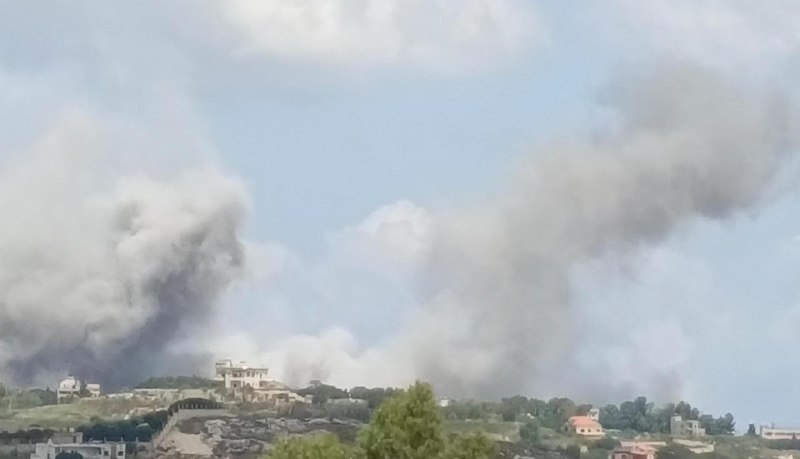
At least fourteen people were killed in Israeli strikes across southern Lebanon on Monday, according to initial reporting from the BBC. The attacks, which reportedly included a large-scale explosion in the village of Ita al-Sha'ab, occurred against the backdrop of a fragile and deteriorating ceasefire arrangement that has been under strain for weeks.
The Israeli military confirmed activity in southern Lebanon on the morning of 27 April 2026, though official casualty figures from the IDF had not been independently confirmed at time of publication. Lebanese social media channels, citing local sources, published documentation of the Ita al-Sha'ab detonation and said the death toll from Monday's strikes was still climbing as rescue workers searched collapsed structures.
The strikes represent a significant breach in the nominal ceasefire architecture that had managed to limit major exchanges between Israel and Hezbollah since the original November 2024 agreement. That agreement, brokered under intense American and French diplomatic pressure, called for a sixty-day initial halt to hostilities and the progressive withdrawal of armed groups from the border zone. Neither side has fully complied with the terms, and mutual accusations of violations have accumulated steadily over the past four months.
A Ceasefire That Never Held
The November agreement was always conditioned on verification mechanisms that both sides found difficult to accept. Israel insisted on a residual right to strike what it described as imminent threats emerging from the south Lebanon buffer zone. Lebanese officials and Hezbollah-aligned media characterised those strikes as pretextual — an opening for a gradual reoccupation of territory the IDF had withdrawn from in 2006. The result has been a ceasefire in name more than in substance: artillery duels continue at reduced frequency, drone overflights persist, and intelligence assessments circulating in Western capitals have for weeks described the situation as “,随时可能” — prone to sudden escalation.
Monday's strike in Ita al-Sha'ab, a village in the Tyre district approximately fifteen kilometres from the established demarcation line, appears to fall into the category of incidents that both sides have used to justify resumed operations. Israeli officials have not publicly commented on the specific targeting rationale. Lebanese authorities called it an unprovoked assault on a civilian-populated area.
The Regional Dimension
The strikes land at a diplomatically sensitive moment. American officials have been engaged in parallel negotiations over Iran's nuclear programme and the broader regional posture of Tehran's allied forces. A stable Lebanese border has been a stated American objective in those talks, and Israel's willingness to conduct significant operations inside Lebanon while those negotiations are ongoing signals either a deliberate attempt to shape the regional environment ahead of any Iran deal — or a loss of American leverage over a partner that has shown increasing willingness to act unilaterally.
Iranian state media, in its initial coverage of the strikes, framed the deaths as evidence that the ceasefire had been “used as a cover for ongoing aggression.” That framing is consistent with Tehran's broader position that American-brokered agreements in the region serve primarily to legitimise Israeli military freedom of action. Whether that framing is accurate or self-serving, it reflects a view that is finding resonance across parts of the Arab diplomatic establishment, where patience with the ceasefire process has thinned.
What Comes Next
The immediate question is whether Monday's casualties trigger a retaliatory response. Hezbollah has in previous rounds responded to high-casualty incidents with rocket and missile salvos targeting northern Israel. The organisation has not issued a formal statement as of late Monday UTC, though affiliated channels were carrying reaction content consistent with internal deliberation.
The longer-term question is whether the ceasefire arrangement itself survives. American and French diplomats who invested significant political capital in the November 2024 brokered pause will face pressure to reassert the framework. But the structural logic that has made full compliance impossible — Israel seeking preemptive strike rights, Hezbollah unwilling to disarm or withdraw under any arrangement that lacks international guarantees — remains intact. Each incident of violence tightens the argument of those in both Tel Aviv and Beirut who contend the agreement was never designed to hold.
For the fourteen killed in Monday's strikes — their names, ages, and family circumstances still being established by Lebanese civil defence teams — the diplomatic architecture around their deaths is secondary to the immediate fact of them. The ceasefire, such as it was, has again shown itself to be less a resting state than a threshold between phases of conflict, waiting for the next trigger.
This publication's coverage of the Israel–Lebanon border situation reflects both IDF-confirmed activity and Lebanese reporting as of 27 April 2026 UTC. Monexus will update as independent casualty figures and official Israeli responses become available.
Wire provenance
This editorial synthesis draws on the following public wire/social posts:
- https://t.me/abualiexpress
- https://x.com/unusual_whales/status/1573892073629859841