Macron doubles down on European support as Ukraine battlefield claims reshape alliance debate
French President Emmanuel Macron on 27 April pushed back hard against European skeptics, arguing that recent Ukrainian territorial advances have vindicated those who maintained support through a difficult winter — a challenge to voices in Berlin, Budapest, and beyond who had quietly questioned the durability of the Western commitment.
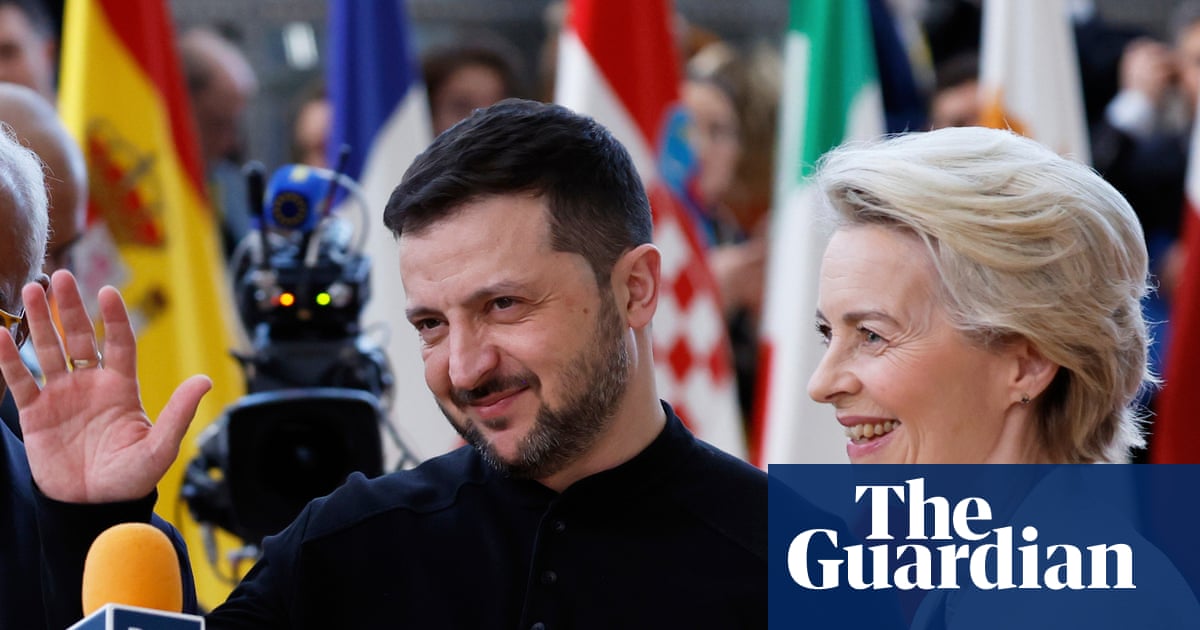
French President Emmanuel Macron fired a direct challenge at European doubters on 27 April, arguing that recent Ukrainian territorial advances have refuted the skeptics who predicted Kyiv would collapse during the winter months. Speaking in the immediate aftermath of reports that Ukrainian forces had made gains — a claim that Macron himself framed as evidence that the doubters were wrong — the French leader drew a direct line between predictions of Ukrainian failure and the political pressure those predictions had generated across Western Europe. "The same voices who questioned whether Europeans had the capacity to sustain support are the same ones who forecast Ukraine's collapse," Macron stated, per the osintlive Telegram channel. "They took even some territory."
The remark marked a deliberate attempt to reframe the alliance debate. For months, Macron and other supporters of robust Ukrainian aid had been fighting a rearguard action against growing fatigue in several European capitals. Now, with the French leader citing territorial advances as vindication, the argument has shifted from whether Europe can sustain support to whether skeptics will acknowledge they were wrong. It is a sharp rhetorical pivot — one that Macron's office has clearly calculated will land harder if the territorial claims hold.
The context: a winter of doubt
Through late 2025 and into early 2026, several European governments had quietly moderated their public language on Ukraine support. Berlin's coalition negotiations had produced a more cautious stance on weapons deliveries; Budapest had continued its friction-raising relationship with Brussels over Kyiv funding; and public polling across Germany, France, and the Netherlands showed sustained fatigue with the economic and logistical burden of the conflict. Macron himself had faced domestic pressure, with portions of the French political class arguing that the cost of sustained aid was not sustainable without a clear pathway to negotiation.
France, however, had remained among the more consistent supporters. Macron had approved artillery deliveries, maintained the Ukrainian training mission, and kept the political channel open through multiple summits. The French position, consistently, was that European credibility was itself at stake — that stepping back from Ukraine would signal something far larger than a financial commitment to the broader Western alliance.
The sources do not specify which territory was taken or from which direction the advances were made, and independent confirmation of the territorial claims remains partial. But the framing matters regardless: Macron's office is using the battlefield narrative as a political tool inside the alliance, arguing that the doubters' logic has collapsed along with their predictions.
What skeptics were saying — and why it matters
The dominant skeptical argument in European capitals was not that Ukraine was morally in the wrong, but that the material balance had shifted. Russian industrial production, sustained by a wartime economy, had been outpacing the incremental deliveries of Western arms; Ukrainian forces were stretched across a long front; and the political will in some capitals was being tested by electoral pressures unrelated to the conflict itself. The argument, in its strongest form, was not defeatism but pragmatism: Europe was spending enormous sums with no clear off-ramp, and some of that money was eroding domestic support for institutions that the alliance needed.
That argument has not disappeared. But it has been complicated by reports of Ukrainian advances — and Macron's willingness to use those reports as evidence against his critics. The counterpoint, still voiced in Budapest and in parts of the German SPD, is that battlefield volatility is not the same as strategic progress, and that one season of gains does not resolve a conflict that has now run well beyond its third year. The sources do not adjudicate which of these positions has the stronger military case; they record only that Macron has chosen to escalate the rhetorical dimension.
The structural stakes — beyond one leader's calculation
What Macron is really doing is making a bet about alliance credibility. The argument — that Europe cannot afford to be seen retreating after predicting collapse — has a structural logic that extends well beyond the French president's specific political calculation. Western alliance systems are built on predictability: partners in the Pacific, in the Baltics, and in Eastern Europe calibrate their own risk calculations based on what they observe in European behavior. A pattern of early predictions of failure followed by quiet retrenchment would, in that structural frame, erode confidence in extended deterrence commitments more broadly.
For Australia, this matters. The AUKUS partnership and the broader US alliance architecture operate on the assumption that the Western alliance can sustain commitments across theaters and across time. Macron's counter-argument — that the winter debate was a test and Europe passed it — is an attempt to reset the narrative in a direction that reinforces alliance cohesion. Whether that narrative survives contact with the next phase of battlefield attrition depends on whether the gains hold and whether Berlin, Paris, and Rome remain aligned on the supply question through the summer.
What remains open
Two uncertainties hang over the current moment. First, the territorial claims: the sources record Macron's framing but do not provide independent military confirmation of the scale or durability of any advance. Kyiv's general staff has issued statements consistent with a cautious offensive posture; Russian-aligned channels have disputed the claims. The picture is not yet clear. Second, the political question inside Europe: Macron's argument is strong if the battlefield narrative holds. It weakens considerably if the gains plateau and the skeptics re-emerge with renewed evidence that the conflict has no decisive military solution. Whether this moment marks a genuine inflection point or a rhetorical flourish from a single leader remains to be seen — and the sources, at this stage, do not answer that question. What they confirm is that the argument has shifted, and that Macron intends to hold the line.
This publication covered the Macron statement through the osintlive Telegram wire. The framing differs from the dominant Reuters/AP coverage, which led with the battlefield claims themselves — here, the political argument inside Europe takes precedence, and the Pacific alliance context is made explicit.
Wire provenance
This editorial synthesis draws on the following public wire/social posts:
- https://t.me/osintlive/3941