Musk v. Altman: Silicon Valley's Billionaire Divorce Lands in Court
The trial between two of tech's most powerful figures opens in California this week, exposing a bitter dispute over what OpenAI was supposed to become — and who gets to decide what it becomes now.
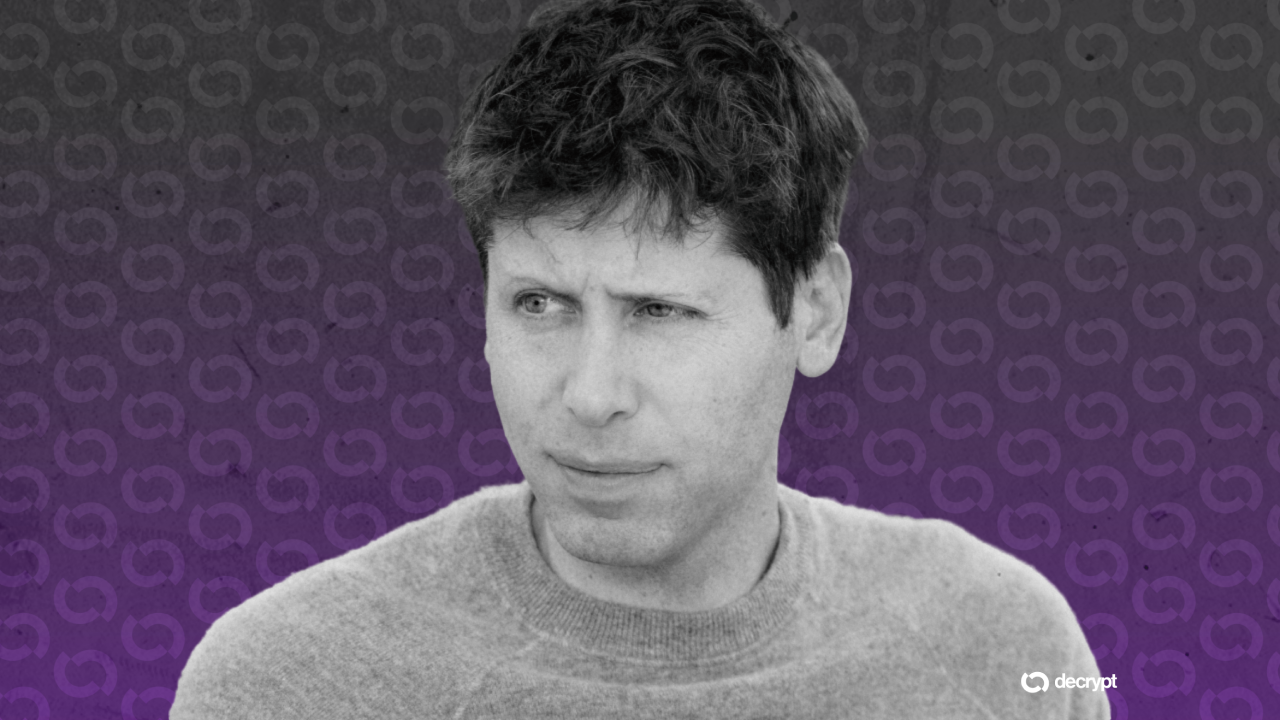
The courtroom doors in San Francisco opened this week to a spectacle that Silicon Valley typically prefers to conduct behind closed doors: two of the industry's most recognizable figures, each with fortunes built on the backs of companies that reshaped daily life, accusing each other of betrayal.
Elon Musk and Sam Altman arrived at the trial on 27 April 2026 as adversaries, though they were once co-founders united by a shared ambition to build artificial intelligence that would serve humanity rather than concentrate power in a single corporation. The lawsuit Musk filed accuses Altman of fraud — arguing that Altman systematically departed from OpenAI's founding agreement, redirecting the nonprofit toward commercial ends that benefit Microsoft and, by extension, Altman himself. OpenAI's response has been blunt: Musk is motivated by jealousy.
The case rests on a document that may or may not exist in the form Musk's lawyers describe: a founding charter, allegedly signed in 2015, that committed OpenAI to developing AI for the public good and preventing any single entity from monopolizing the technology. What is not in dispute is that OpenAI transformed — from a research nonprofit into a capped-profit company that accepted a $13 billion investment from Microsoft and is now valued at roughly $300 billion. The question the court must answer is whether that transformation broke a promise, violated a contract, or simply reflected an organization growing into what its circumstances required.
What the Charter Allegedly Said
Musk's legal team argues that the 2015 founding documents established OpenAI as a counterweight to Google — a deliberate check on the concentration of AI power in one corporation. The complaint, reviewed in filings ahead of the trial, contends that Altman privately assured early backers the organization would never convert to a commercial vehicle controlled by a single investor. When OpenAI structured itself as a "capped-profit" entity and accepted Microsoft's investment, those assurances were broken, Musk's side argues.
OpenAI has rejected this framing entirely. The company's public statements describe Musk's lawsuit as an attempt to regain influence over an organization he chose to leave in 2018. He departed the board citing conflicts of interest with Tesla's own AI ambitions. The company notes that Musk himself proposed converting OpenAI into a for-profit entity during his tenure — a claim that, if proven, would significantly complicate the narrative of principled opposition his current lawsuit implies.
The tension between these two accounts exposes something Silicon Valley rarely acknowledges in public: founding documents in tech are often aspirational rather than contractual. Organizations start with a mission statement, attract talent and capital on the strength of that mission, and then face the compounding pressures of competition, capital requirements, and scale that may demand departures from the original framework. The court will need to determine whether OpenAI's charter was a binding commitment or a marketing document.
The Microsoft Dimension
Whatever the court decides about founding intentions, the relationship with Microsoft is where the stakes become geopolitical rather than merely commercial. OpenAI's infrastructure runs substantially on Azure. Its distribution — ChatGPT, the API platform, enterprise deals with Fortune 500 companies — flows through a commercial architecture that Microsoft helped fund and now profits from. For Musk, this represents the scenario the original nonprofit structure was designed to prevent: a dominant AI capability embedded inside a single technology conglomerate.
The irony is not lost on observers: Musk built Tesla into a vertically integrated automotive company and SpaceX into a private launch provider precisely by accepting the logic of commercial concentration. His sudden conversion to the cause of decentralized AI development strikes some analysts as convenient given that his own xAI startup, Grok, now competes directly with OpenAI's commercial products. OpenAI's "motivated by jealousy" characterization, while legally unsubstantiated, reflects a view widely held in San Francisco's AI community.
That community will be watching the trial closely for a simpler reason: the outcome may shape how the next generation of AI companies are structured. If Musk prevails on his fraud claim, it establishes precedent that founding charters create enforceable obligations that cannot be departed from as circumstances change. That would make it harder for nonprofit-to-commercial pivots and would give early backers of AI ventures considerably more leverage over founders. If Altman prevails, it reinforces the existing norm: mission statements are guidance, not covenant.
The AI Governance Vacuum
Beyond the bilateral dispute lies a structural question that neither party may want the court to resolve cleanly: who governs artificial intelligence, and on what authority?
OpenAI operates in a regulatory environment that largely does not exist yet. The EU's AI Act, the US executive orders signed in 2023 and 2025, and a handful of state-level proposals in California and New York represent early attempts at a framework, but none directly addresses the corporate governance structures that determine how AI labs make decisions about capability deployment, safety research publication, and partnership agreements. The Musk v. Altman trial will not create that framework, but it will test whether existing corporate law — designed for factories and steel mills and software licensing — can adequately adjudicate disputes over organizations that may be the most consequential institutions of the next half-century.
The sources do not indicate how the court plans to handle the technical complexity of AI development in its deliberations, nor whether expert witnesses have been called to explain the architectural decisions at the center of the dispute. That absence is itself notable: courts confronting transformative technologies routinely struggle to establish factual baselines that both sides accept, and this trial shows no signs of being an exception.
What Happens Next
The trial is expected to run for several weeks. Both sides have lined up witnesses whose testimony will be contested: former OpenAI board members, early employees, and Microsoft executives are among those who may be called. The sources do not indicate that any settlement discussions are underway, suggesting both parties believe they have more to gain from a judicial ruling than from a negotiated compromise.
The outcome will not settle the larger argument about what OpenAI should become. That argument is being conducted simultaneously in Washington, Brussels, Beijing, and in the living rooms of millions of users whose daily routines now depend on systems that did not exist five years ago. But it will establish — at least for this case, for this moment — who gets to claim the moral high ground in a dispute that is, at its core, about who can be trusted with technology powerful enough to reshape civilization.
That question deserves a better answer than two billionaires fighting over legacy in a courtroom. So far, it has not received one.