Pezeshkian's Freedom Day Message to South Africa Reveals Tehran's Multipolar Diplomatic Play
Iranian President Pezeshkian used South Africa's Freedom Day commemoration to signal a diplomatic realignment, thanking Pretoria for solidarity while positioning Tehran as a partner for nations navigating a world in which Western-led order is no longer the only framework available.
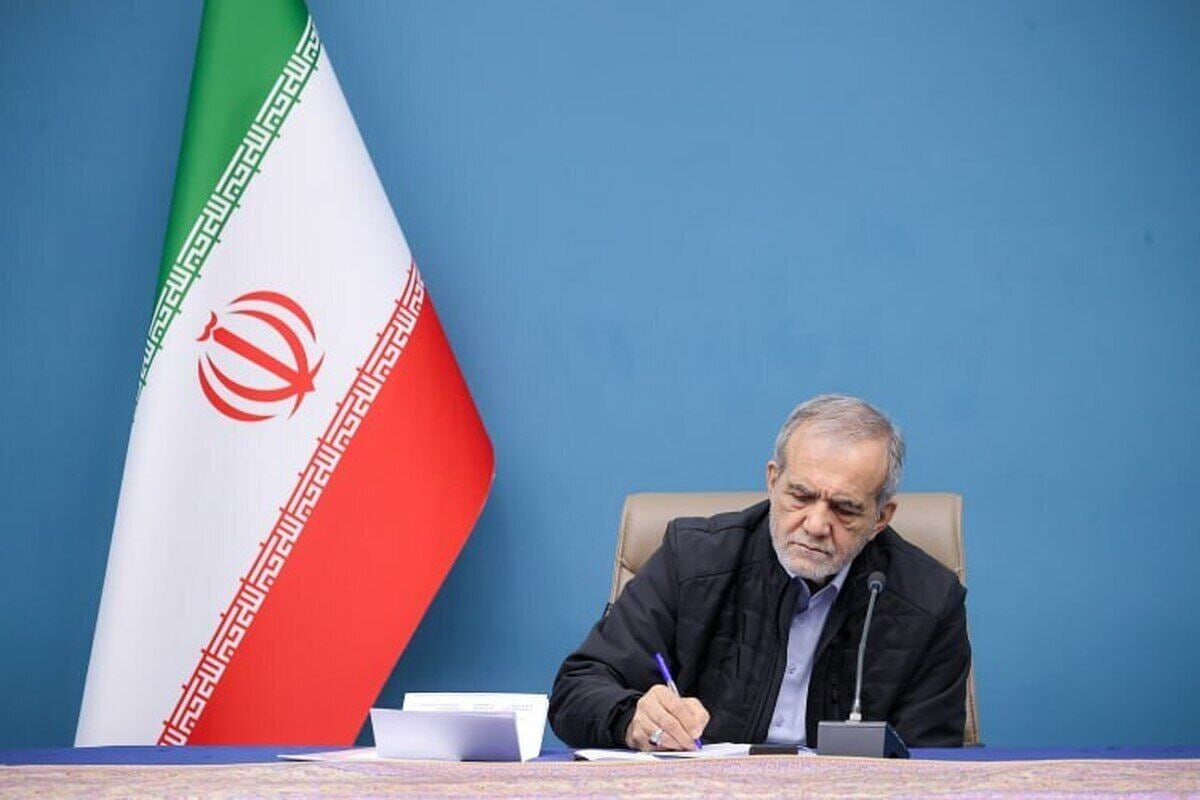
On 27 April 2026, Iranian President Masoud Pezeshkian sent a formal message of congratulation to his South African counterpart, Cyril Ramaphosa, marking the anniversary of South Africa's Freedom Day. The message, carried by Iranian state media including Mehr News and the Islamic Republic News Agency, went beyond routine diplomatic courtesy. Pezeshkian thanked the government and people of South Africa "for their solidarity with Iran" — language that positioned the relationship within a framework of political affinity rather than mere state-to-state protocol. The Iranian president spoke of building a world "free of discrimination, wars and colonialism," phrasing that drew explicitly on the anti-apartheid struggle as shared historical ground between the two nations.
The communication is notable for its timing and its framing. Freedom Day commemorates the first democratic election in South Africa on 27 April 1994, a moment that remains foundational to Pretoria's post-apartheid national identity. By choosing this anniversary to articulate Iran's own vision of international solidarity, Pezeshkian's message did something a standard bilateral exchange would not: it invited South Africa to see itself as part of a broader political project, one that positions both countries as navigating the same currents of an international order they regard as imperfect.
The Diplomatic Grammar of Solidarity
South Africa and Iran have maintained formal diplomatic relations for decades, but the character of that relationship has shifted as the global environment has changed. Under the strain of sweeping US sanctions reimposed after the 2018 withdrawal from the Joint Comprehensive Plan of Action, Tehran has increasingly looked toward non-Western partnerships — not as ideological preference, but as strategic necessity. Countries that have not aligned themselves with Western sanctions regimes have become essential diplomatic partners, and South Africa, as a mid-sized power with its own history of navigating great-power pressure during apartheid, occupies a specific niche in that outreach.
Pezeshkian's message thanked the South African government and people, making no distinction between state and society — a deliberate rhetorical choice that echoes how Tehran has long framed its own international relationships. The language of solidarity, rather than transactional partnership, signals that Iran is offering South Africa something beyond economic calculation: political recognition of shared grievances against a Western-led order that, from Tehran's perspective, has been weaponised against both countries at different moments in their modern histories.
South Africa has not publicly reciprocated with equivalent language regarding Iran. Ramaphosa's office has not issued statements characterising the relationship in anti-colonial terms, and Pretoria continues to balance its engagement with Tehran against its broader diplomatic commitments, including its relationship with the United States and its role in African Union peace and security architecture. The gap between Iran's framing and South Africa's more pragmatic posture is itself informative: it suggests Tehran is planting a flag in advance of a relationship that Pretoria has not yet fully embraced on those terms.
What South Africa's Response Tells Us
The sources reviewed do not include a direct response from Ramaphosa or the South African presidency. This is not unusual — diplomatic acknowledgments of congratulatory messages do not always generate public statements, particularly when the relationship is conducted through quieter channels. But the absence of matching language matters for what it implies: South Africa is not, at this stage, publicly adopting Iran's framing of their shared political identity.
This restraint reflects Pretoria's own complex positioning. South Africa is a member of the BRICS grouping, which Iran joined in January 2024, and Pretoria has sought to cultivate a foreign policy that maintains engagement with multiple power centres rather than exclusive alignment. At the same time, South Africa hosts a significant Jewish community and maintains working relationships with Israel — a sensitivity that colours how Pretoria engages with Iranian political messaging, given Tehran's active role in the region through proxy relationships with Hezbollah, Hamas, and the Houthis. South Africa's Department of International Relations and Cooperation has not issued a statement characterising its relationship with Iran as solidarity-based, and the gap between what Iran says and what South Africa does not say publicly is notable.
South Africa's voting record at the United Nations on matters relating to Iran has generally reflected mainstream international legal positions rather than sympathy with Tehran's defiance of nuclear agreements. This suggests that whatever political affinity exists between the two governments operates within carefully defined limits — close enough for a Freedom Day message, not close enough for a public political alignment.
The Structural Context: BRICS, Sanctions, and the Search for Policy Alternatives
The exchange must be understood within the larger pattern of how mid-sized and emerging powers are recalibrating their diplomatic options in a period of mounting great-power competition. Iran's outreach to South Africa is part of a broader strategy of building relationships with countries that have not accepted Western sanctions as a legitimate basis for isolating Tehran. South Africa's BRICS membership makes it a natural interlocutor in this effort, but BRICS is itself a loose arrangement, not a political bloc with binding commitments that would require Pretoria to align its Iran policy with Beijing or Moscow.
The sanctions regime against Iran, expanded substantially under successive US administrations, has created significant economic pressure while simultaneously incentivising Tehran to deepen ties with non-Western partners. China and Russia have emerged as the primary economic lifelines, but countries like South Africa — which have not imposed their own unilateral sanctions — represent a secondary tier of diplomatic importance. Tehran's goal in such outreach is not necessarily to win a public political ally, but to ensure that at least some channels of international engagement remain open, and that its isolation does not become total.
The language of the Pezeshkian message — anti-colonial, anti-hegemonic — is calibrated to resonate with audiences in the Global South for whom these framings carry genuine political weight. It is also language that is difficult for Western outlets to dismiss without appearing to dismiss the anti-apartheid struggle itself, which remains a globally recognised moral reference point. This is not accidental: framing Iranian foreign policy in the language of decolonisation and solidarity is a deliberate rhetorical strategy, one that seeks to position Tehran as a natural partner for countries that have themselves experienced colonial rule and are sensitive to perceptions of continued Western dominance in international institutions.
The Limits of the Gesture
Several aspects of this exchange remain unclear from the available sources. The specific context in which South Africa expressed solidarity with Iran — whether in response to a specific diplomatic incident, a UN vote, or a domestic political development inside Iran — is not detailed in the messages reviewed. It is possible that Pretoria's expression of solidarity was a response to Western pressure on Iran that South Africa regarded as disproportionate; it is equally possible that it was a general diplomatic courtesy without specific policy content.
The economic dimensions of the bilateral relationship are also absent from the available sources. Trade figures, energy cooperation, banking通道 considerations, and the practical impact of sanctions on Iran-South Africa commercial activity would all be relevant to assessing whether the political language of solidarity corresponds to any material relationship. The sources reviewed do not address these questions.
There is also the question of domestic politics inside both countries. Pezeshkian, elected in 2024 as a relative moderate within Iran's complex political system, has sought to manage relations with both reformist and hardline power centres. His outreach to South Africa — and the framing he chose — reflects both a genuine diplomatic impulse and a need to demonstrate to domestic audiences that Iran retains international partners and is not wholly isolated. South Africa's own domestic politics, including the pressures facing Ramaphosa's coalition government, shape how prominently the Iran relationship features in Pretoria's foreign policy priorities at any given moment.
What Comes Next
The Pezeshkian message is a data point, not a turning point — but data points accumulate. Each communication of this kind adds to a pattern of Iranian diplomatic positioning in the Global South, one that is patient, calibrated, and designed to build relationships before they are urgently needed. South Africa, for its part, retains the ability to engage with Tehran without fully endorsing Tehran's framing, a posture that preserves diplomatic flexibility while keeping channels open.
The longer-term question is whether this engagement deepens into something more substantive. Iran will need economic partners willing to operate outside the dollar-dominated financial system as sanctions pressure intensifies. South Africa, navigating its own pressures from Western creditors and institutional investors, has reasons to be cautious about relationships that could complicate its access to international capital. The language of solidarity is easy; the logistics of sanctions-busting are not.
For now, the message from Tehran to Pretoria on Freedom Day serves its immediate purpose: it reminds both audiences that Iran is not friendless, that its history of anti-colonial resistance is shared by at least some of the world's democratic governments, and that in a world where the Western order no longer commands automatic deference, there are capitals willing to listen. Whether that listening translates into anything beyond diplomatic courtesy will depend on factors — economic necessity, political courage, the evolution of the sanctions regime — that this message alone cannot determine.
This publication noted that wire coverage of the Pezeshkian message focused on its congratulatory elements, treating the "solidarity" phrasing as diplomatic boilerplate. Monexus has assessed the framing language more structurally, reading the specific invocation of anti-colonial solidarity as a deliberate rhetorical choice with implications for how Tehran positions itself in relation to Global South partners rather than as a routine expression of bilateral goodwill.