Putin's Eternal Russia Is a Confession, Not a Claim
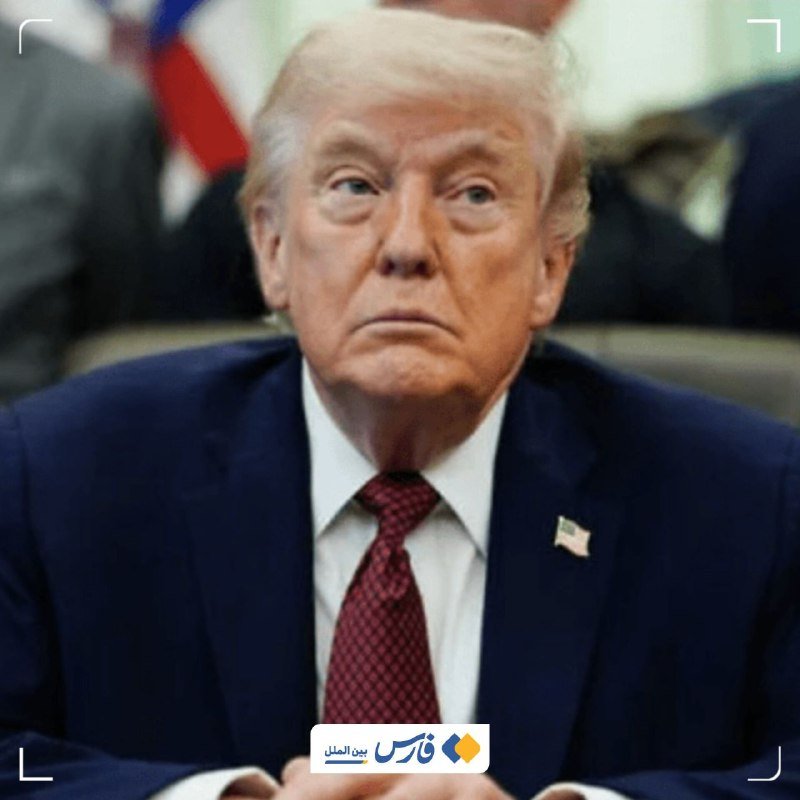
The statement arrived via Kremlin Telegram channels at 11:17 UTC on 27 April: "Difficulties are temporary, but Russia is eternal." Vladimir Putin, speaking on what the Russian state apparatus frames as a day of national significance, offered his citizens a philosophical dodge in place of an economic reckoning. The declaration trades on historical resonance—Orthodox imagery, imperial mythology, the Great Patriotic War's sacrifice—to manufacture permanence from a leadership that has presided over the most sustained period of Western economic isolation since the Soviet collapse. By 10:21 UTC the same morning, Iranian Foreign Minister Abbas Araghchi was photographed arriving in Moscow, completing a regional tour conducted in the company of governments facing their own compound crises. The optics of besieged solidarity tell their own story.
The "Russia is eternal" formulation is not confidence. It is displacement—a rhetorical sleight of hand that transmutes structural failure into temporal abstraction. The invocation of eternity removes any specific policy, any named official, any concrete decision from accountability. When difficulty becomes eternal rather than addressed, it demands patience, not solutions. This framing serves the Kremlin's immediate interests but exposes a longer-term strategic problem: a regime that must invoke permanence to survive has already conceded that its present is failing.
The Rhetoric of Deflection
State television has spent years constructing a vocabulary designed to neutralize public discontent. "Collective West," "hybrid war," "unprecedented challenges"—each phrase functions as a shield, distributing responsibility across a faceless adversary rather than concentrating it on identifiable decision-makers. Putin's "eternal Russia" follows this template precisely. It transforms the consequences of his own choices—military overreach, diplomatic catastrophe—into tests of national character. The population is asked to endure not because policy has failed but because Russia, in some essential and unchanging sense, is indestructible.
The framing also does specific ideological work. By positioning skepticism as incomprehension—"they do not understand Russia"—the Kremlin transforms critique into evidence of disloyalty. Those who question the direction of the country reveal themselves as insufficiently Russian. This is a closed logical loop: dissent proves you are foreign, and loyalty means not dissenting. It is a governance philosophy that requires its citizens to perform incomprehension of their own circumstances.
The Iran Gambit
Araghchi's arrival in Moscow on the same day as Putin's address provides essential context for the eternal-Russia rhetoric. The Iranian foreign minister has spent recent weeks navigating the wreckage of stalled nuclear negotiations and escalating regional tensions. The meeting produces mutual benefit in a narrow technical sense: both governments face severe sanctions pressure and share interest in alternative financial architecture outside dollarized systems.
But the partnership carries real costs for both parties. Iran deepens its isolation with each such alignment; Russia's dependence on a similarly sanctioned counterparty does not broaden its diplomatic options—it narrows them. The two governments negotiating together on 27 April are not presenting an alternative pole to Western power. They are two actors whose international standing has contracted in parallel over the past three years, finding in each other's company a symmetry of disadvantage rather than a source of strength. Alliance formation born of desperation reads differently from alliance formation born of ambition. The same photograph can be framed as resilience or as retreat, depending on what you need the image to mean.
The Empire Imaginary
Putin's assertion that those seeking to divide Russian society "made a mistake because they do not understand Russia" deserves particular scrutiny. The claim rests on an unexamined premise: that Russia possesses some essential character beyond the decisions of its leadership, some permanent national identity resistant to the consequences of those decisions. This argument conflates geography with destiny, accident with essence.
Russian citizens living through currency volatility, mass mobilization, and international pariah status may reasonably ask what exactly is eternal about their current circumstances. The rhetoric of incomprehension functions as a circular shield—those who fail to support the regime simply prove they are not real Russians, and those who suffer under it confirm they lack sufficient national understanding. It is a logic that exempts power from accountability by defining accountability itself as evidence of disloyalty.
What the Kremlin presents as civilizational depth is, upon examination, a liability management strategy. By wrapping immediate governance failures in historical abstraction, the leadership insulates itself from the specific criticisms that might otherwise accumulate into political consequence. This is not the behavior of a regime secure in its mandate. It is the behavior of a leadership that has used up its supply of affirmative arguments and is drawing on reserves instead.
What the Evidence Actually Shows
Stripped of both Kremlin mythology and Western triumphalism, what this moment reveals is a leadership that has transformed imperial nostalgia into a governing instrument. The costs of this choice—economic stagnation, diplomatic isolation, military overextension—fall primarily on ordinary Russians, not on the structures of power that imposed them. The Iran relationship demonstrates that Moscow's answer to Western containment is not strategic recalculation but alignment with the most isolated actors on the global stage.
This is not multipolarity. It is a bilateral of last resort, conducted by two governments whose combined international standing has contracted significantly over the past several years. The "eternal Russia" framing obscures a more uncomfortable present: a Russia whose global relevance is, in measurable and documented terms, declining. The invocation of eternity in politics is almost always a confession. It signals an inability to defend the present on its own terms, requiring instead the borrowed authority of centuries. Putin's Russia, invoking permanence against its current difficulties, has revealed more than it intended: that the difficulties, not the eternity, are what actually require explaining.
Wire provenance
This editorial synthesis draws on the following public wire/social posts:
- https://t.me/euronews/34567
- https://t.me/ClashReport/45678