Trump's Iran War Is Eating Its Own Tail — And Americans Are Paying at the Pump
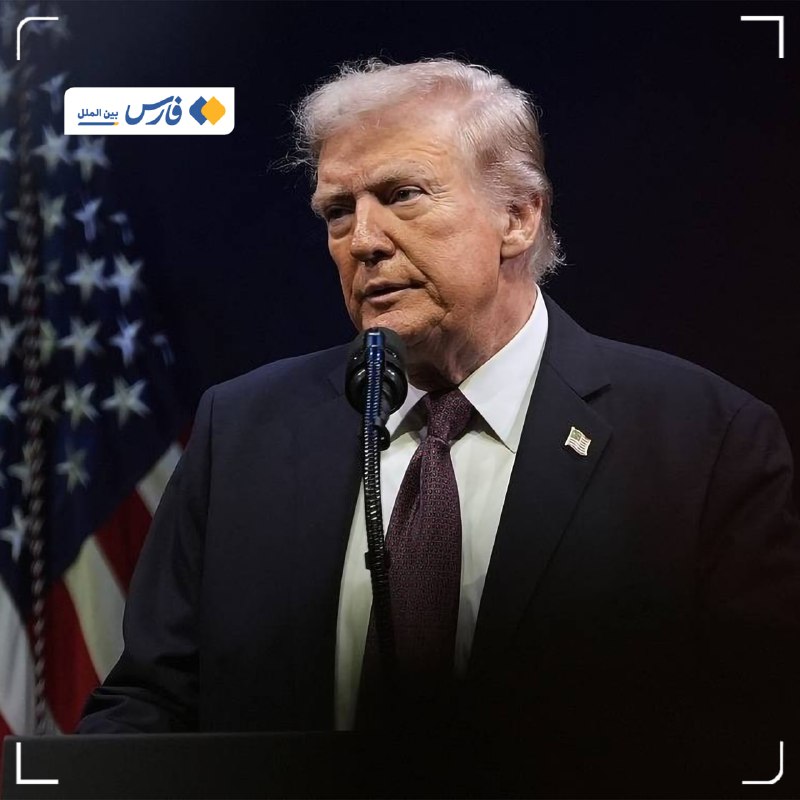
On 18 April 2026, White House Press Secretary Karoline Leavitt told reporters aboard Air Force One that President Trump would ultimately dictate the timeline for the Iran campaign — a formulation she had presumably been coached to deliver. The same day, NBC News reported that American fishermen along the Gulf Coast were already feeling the strain: fuel prices had climbed sharply as oil markets priced in the ongoing military friction between Washington and Tehran. Three months into a campaign the President had once suggested would wrap up quickly, the gap between rhetoric and reality is becoming a political liability.
The New York Times, in a piece filed 27 April 2026, described the situation as an "awkward limbo of no war, no peace" — each side apparently convinced it can outlast the other. That framing is charitable. A limbo implies equilibrium. What the evidence suggests is something closer to managed attrition, with the costs unevenly distributed.
The Domestic Bill Is Already Arriving
NBC's reporting on fishermen is not an outlier anecdote. It is a structural indicator. Fuel price inflation is regressive — it hits small operators, haulers, and logistics businesses hardest, because they cannot hedge or pass costs the way larger enterprises can. American fishermen operating on thin margins are absorbing oil market premiums driven directly by the standoff. The supply chain logic runs through diesel, through refrigeration, through bait and ice and engine hours. When a barrel of Brent climbs because a US carrier group is conducting operations in the Gulf, someone on the Gulf of Mexico is paying for it in real time.
Oil prices rose broadly on 27 April 2026 when reports emerged that the US had cancelled plans to send a negotiating team to Pakistan — a circuitous diplomatic channel that had been floated as a back-channel to Tehran. The stall sent a signal. Markets read it as a sign that the military dimension of the US approach was not being offset by credible diplomatic off-ramps. Prices moved up. Motorists will feel it within weeks.
The War Nobody Can Define
Leavitt's statement on timeline was revealing precisely because it sidestepped the substance of the question. "President Trump ultimately will dictate the timeline" tells a记者 nothing about benchmarks, exit conditions, or defined endpoints. It places the entire temporal logic of the campaign inside the President's discretionary authority — which is another way of saying it is undefined.
This is not a minor structural observation. Wars with defined legal statuses and UN authorization have withdrawal conditions. Wars conducted as executive-branch discretionary actions do not, at least not in any public framework. The Times noted that the two sides are "betting" on outlasting each other — a phrasing that accurately captures the absence of a structured negotiation process rather than conveying any sense of purposeful diplomacy.
The cancellation of the Pakistan mission appears to reflect internal administration disagreement over whether to keep a diplomatic thread open while military operations continue, or to signal to Tehran that the pressure campaign is unconditional. That the mission was cancelled rather than rescheduled suggests the hawks held that argument. The result is a tighter linkage between military activity and diplomatic silence — which suits neither side's long-term interests.
The Overstretched Assumption
A counter-framing worth engaging: perhaps the administration is executing precisely the strategy it intended. Maximum pressure, military visibility, diplomatic ambiguity — the theory being that Iran's economy, already battered by prior sanctions, cannot sustain the uncertainty indefinitely. There is a coherent logic to that case, and it is the logic the White House has gestured toward without fully articulating.
The problem is the domestic distribution of uncertainty costs. Maximum pressure on Tehran does not translate directly into maximum pressure on American consumers — but it does in the oil market, which is genuinely global and price-responsive. Every escalation signal sends Brent up a few dollars. Every diplomatic stall sends it up again. The fishermen NBC profiled are not collateral damage in any military sense. They are the primary damage of a foreign policy that has not adequately accounted for how energy markets encode geopolitical risk.
Iran, meanwhile, has absorbed sanctions and military posturing before. Its resilience is not guaranteed, but neither is it illusory. The regime's survival through prior maximum-pressure campaigns is a data point the current strategy appears to be discounting.
Who Pays the Bill — And For How Long
The stakes are concrete. If the current trajectory holds — military operations continuing, diplomatic channels closed, oil markets pricing in sustained friction — the domestic political exposure grows in proportion to the pump price. American consumers are not a pressure valve. They are a political base with memories of 2022's inflation surge and clear views on gasoline costs.
The Times framed the global risks of the "no war, no peace" equilibrium. Those risks are real — regional instability, the signal sent to other adversaries, the erosion of diplomatic norms that require defined off-ramps. But they are diffuse and long-range. The fishermen's fuel bills are immediate and specific.
The administration has time to recalibrate. The Pakistani channel can be reopened. Escalation signals can be calibrated rather than maximized. The cost of recalibration is admitting the current approach has edges that cut inward as well as outward. That admission is politically difficult. The alternative — sustaining a campaign that eats its own tail while ordinary Americans pay the fuel bill — is not obviously better.
The President will dictate the timeline, Leavitt said. That much is true of any war. Whether that timeline produces a result worth having is a separate question — and one the sources suggest nobody in the administration has yet answered in public.
This publication noted the gap between the administration's framing of the Iran campaign as controlled leverage and the domestic fuel-price signal that markets were sending in real time. BBC and NBC provided the economic angle; the New York Times provided the diplomatic-status framing. The two together tell a story the administration has not yet managed to narrate coherently.