The Diplomacy That Wasn't: Oil Markets Reprice as US-Iran Talks Stall
The breakdown of US-Iran negotiations and a cancelled Pakistan leg have sent crude climbing and raised questions about where the Trump administration is heading on the nuclear file.
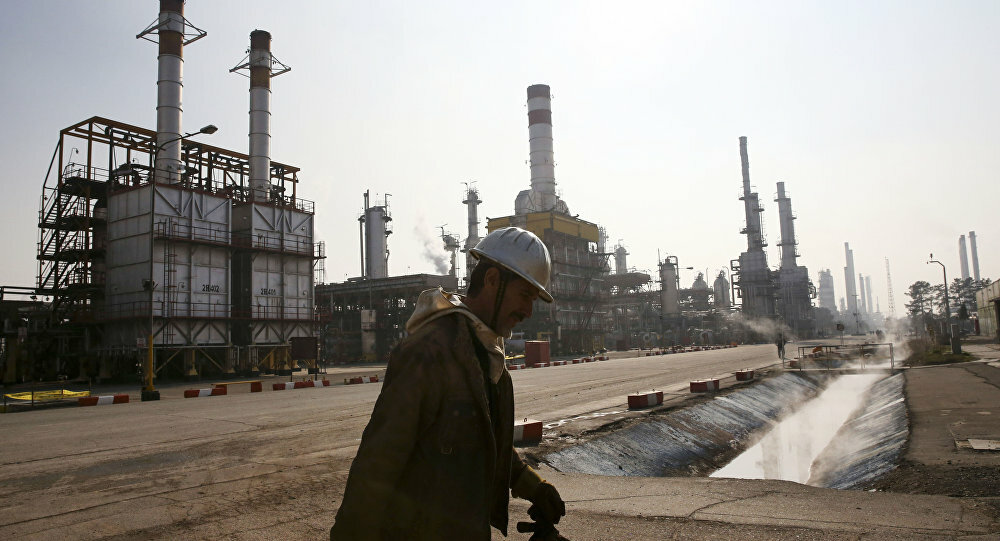
On Saturday, 25 April 2026, the Trump administration cancelled plans to send a diplomatic team to Pakistan for indirect negotiations with Iran. By Sunday, crude had climbed more than two percent. On Monday, according to multiple reports, Trump was expected to convene his senior national security officials and uniformed generals for a full-scoped review of where things stand — and what comes next. The US-Iran peace talks, pursued with varying intensity since the administration's return to office, had stalled. Markets had noticed. So had the Gulf states, the Europeans, and Tehran itself.
The cancellation of the Pakistan channel marks the most concrete rupture in months of on-and-off engagement. It does not, by itself, close the door on a deal. But it shifts the posture from search to assessment — and assessment, in the language of sanctions politics, carries its own momentum. The question is no longer whether Washington will stay at the table. The question is what leverage it reaches for when the table is empty.
The Breakdown in Context
The timeline matters. Reporting from Axios indicated that senior officials had been exploring a Pakistani venue as a neutral setting for US-Iran proximity talks — a format familiar from backchannel practice in the Obama years, when Oman served a similar role. That channel had reportedly produced enough preliminary movement to justify a dispatch of a working-level team to Islamabad. The cancellation of that dispatch, confirmed by Axios on Saturday and reflected in reporting from BBC News, did not come with a stated reason from the White House. The Iranian side has not publicly attributed the breakdown to any single cause.
What is clear is the sequencing. A promising backchannel becomes public. An intended dispatch is announced. That dispatch is cancelled before it departs. The president then announces a review meeting with his security leadership for the following Monday. That sequence — backchannel, announcement, cancellation, review — has appeared before in US diplomatic history, typically preceding a pivot toward pressure rather than compromise.
Iran's own posture has been consistent throughout: a deal is possible, but not at any cost. Tehran has insisted on sanctions relief proportional to any verified commitment on its nuclear programme, and has pointed to the practical difficulty of any agreement that does not carry a path to full sanctions removal — a position that successive US administrations have found difficult to accommodate without political cost at home. The gap between what Iran wants and what a US president can offer has never been narrow. It is the structural condition beneath these talks, not a temporary obstacle.
What Tehran Sees
From Tehran's perspective, the stalled talks confirm a pattern the Iranian leadership has long expected: American diplomacy is episodic, subject to domestic political calculation, and ultimately unreliable as a basis for long-term commitments. Iranian state media, in commentary carried by regional outlets, has framed the cancellation as evidence that the United States was never genuinely prepared to offer the sanctions relief a final agreement would require. The nuclear programme, in this framing, remains a strategic asset precisely because it produces leverage — leverage that the 2015 Joint Comprehensive Plan of Action (JCPOA) temporarily reduced, and whose restoration Iran's negotiators have always regarded as a negotiating position, not an aspiration.
The Iranian position is not monolithic. Within the Islamic Republic's decision-making structure, there are factions that view any engagement with Washington as inherently compromised, and factions that regard economic relief as a genuine priority given the cumulative toll of sanctions on ordinary Iranians. The talks, in their view, were never doomed by ideology alone — they were complicated by a mismatch in what each side could credibly promise the other at home.
The Structural Frame: Oil, Dollars, and the Price of Pressure
The oil market reaction tells part of the story. A two-percent-plus move on a single Saturday — driven by what traders call a risk-on Iran premium — reflects a market that had priced in a meaningful probability of sanctions relief and is now revising. The mechanics are straightforward: a deal, or the credible prospect of one, would eventually bring additional Iranian crude into global supply, easing the structural tightness that has supported prices since the Russian invasion of Ukraine disrupted established energy corridors. The stalled talks remove that prospect from near-term pricing models.
But the structural frame runs deeper than supply and demand. The dollar-denominated sanctions architecture is itself a tool of statecraft, not merely an economic mechanism. Every barrel of Iranian oil that stays off the market, every banking transaction that fails to clear, every sovereign credit line that remains restricted — all of it reinforces the dollar's role in global commodity markets. A deal that restored Iranian oil flows would also, in the medium term, test whether the dollar's grip on energy trade is as structural as the United States has long assumed.
This is not a secondary consideration. The petrodollar system — the arrangement by which oil is priced and settled in dollars, and in which oil-exporting nations recycle revenues through US Treasury markets — has been a quiet pillar of American financial hegemony since the 1970s. Sanctions targeting Iran are simultaneously a foreign policy tool and a demonstration of the dollar's reach. A successful Iranian reentry into global oil markets, under terms that bypassed dollar settlement, would have been more than an economic event. It would have been a test of whether the architecture is rules-based or merely enforced by the dominant player. Whether Tehran would push for non-dollar terms in any final deal is a question the sources do not resolve, but it is a question that serious analysts of the energy trade have been asking for years.
Precedent and Its Limits
The JCPOA is the obvious reference point. Signed in 2015 by the United States, Iran, and five other world powers, the agreement promised sanctions relief in exchange for verified caps on Iran's nuclear programme. It survived until 2018, when the Trump administration withdrew and reimposed the full battery of sanctions, calling the agreement flawed. Iran gradually exceeded the agreement's nuclear limits in response. By the time Biden took office promising to revive the deal, the original framework had been stretched past its tolerances. The diplomatic effort that followed — intense, technically complex, and ultimately unsuccessful — produced the backchannel environment that the current administration inherited.
What is different this time is not the structural logic — Iran still wants sanctions relief, Washington still wants limits on the nuclear programme — but the political environment. The current administration has framed the problem as one of leverage: if Iran will not take a deal that previous administrations found acceptable, then perhaps the terms of pressure have not been sufficiently escalated. That logic produced maximum pressure in the first Trump term. It is producing a review meeting in the second.
The Europeans, for their part, have watched this cycle before. The JCPOA was, in significant part, a European diplomatic achievement — French, German, and British negotiators sustained the talks through the Obama years and scrambled to preserve what they could after the American withdrawal. The current stalemate finds the same capitals again attempting to preserve the viability of talks that Washington has effectively interrupted. Whether the Europeans can re-energise a parallel channel — or whether their leverage with Tehran has itself eroded — remains an open question.
What Comes Next
Monday's meeting at the White House will not produce a deal. It will produce a posture — either a decision to maintain the current backchannel with a different venue, a signal that maximum pressure is returning, or a more ambiguous message designed to keep markets uncertain and Tehran guessing. The sources do not establish which direction the administration is heading, and the history of Trump-era Iran policy suggests the president himself may not have resolved that question in advance.
What is knowable is the track record. Sanctions have constrained Iran's economy and reduced its oil export capacity. They have not produced a change in the Iranian government's posture on the nuclear question. The nuclear programme has continued, under varying levels of international scrutiny, throughout a decade of escalating pressure. Whether the administration calculates that more pressure will succeed where it has not before, or whether Monday's meeting produces a revised diplomatic offer, will define the trajectory of the oil market, the Gulf security environment, and the broader question of whether the United States can negotiate structural agreements with adversaries — or only impose them.
Tehran, for its part, has watched this before. The pattern — engagement, frustration, pressure — is familiar enough that the Iranian side has likely modelled multiple scenarios for the weeks ahead. What they do not know, and what no one outside the White House meeting room knows on Monday morning, is what the president has decided to want.
The oil market priced uncertainty on Saturday. It will price more on Monday.
This publication covered the stalled US-Iran talks with a structural lens — examining the currency and energy architecture beneath the diplomatic surface — rather than treating the breakdown as a simple failure of will or good-faith negotiation.
Wire provenance
This editorial synthesis draws on the following public wire/social posts:
- https://t.me/alalamarabic
- https://t.me/Middle_East_Spectator
- https://t.me/alalamarabic
- https://t.me/Middle_East_Spectator
- https://t.me/alalamarabic
- https://t.me/Middle_East_Spectator