The War on Iran Is Making the World Less Safe — And No One in Washington Seems to Care
Military strikes on Iranian nuclear facilities may satisfy a short-term political appetite, but they are systematically dismantling the very architecture designed to prevent the next Hiroshima. The non-proliferation regime did not die of old age. It is being killed in real time.
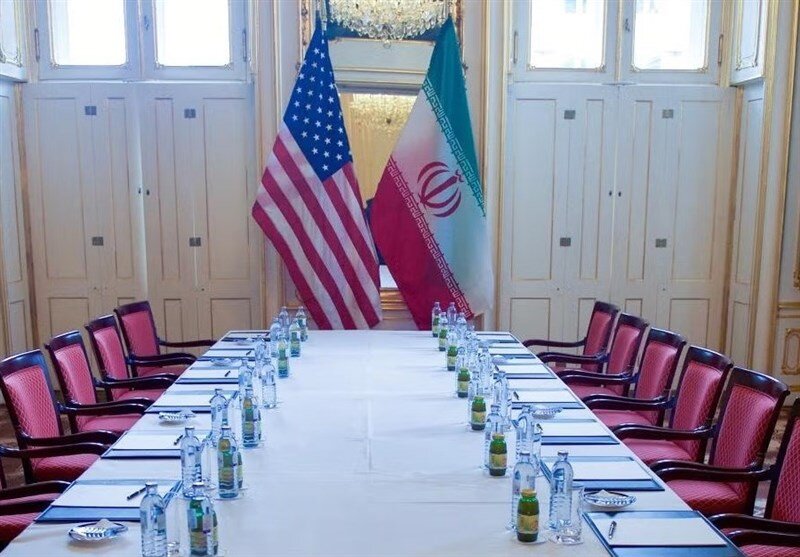
The war on Iran is not a sidebar to the non-proliferation story. It is the non-proliferation story — and it is ending badly.
On the morning of 27 April 2026, as investors watched gold prices hold steady amid what Reuters described as a broader hunt for clarity on US-Iran diplomatic channels, the international framework that has governed nuclear arms since 1968 was quietly bleeding out. Al Jazeera reported that the combined US-Israeli strikes on Iranian nuclear sites are actively eroding confidence in the Nuclear Non-Proliferation Treaty — not as a rhetorical abstraction, but as a measurable shift in how states calculate their security. The NPT was designed to prevent exactly this scenario: a world where great powers attack non-nuclear states under the cover of non-proliferation logic, thereby demonstrating that the only real protection is a nuclear arsenal of your own.
That logic is now running in real time, in multiple capitals simultaneously.
The Official Story Doesn't Hold
The administration and its allies have settled on a straightforward justification: Iran was weeks from a bomb. The strikes were defensive. The legal basis is Article 51 of the UN Charter. None of this withstands scrutiny.
The intelligence basis for "weeks from a bomb" has not been released. The International Atomic Energy Agency's last verified accounting of Iranian enrichment placed Fordow and Natanz well below weapons-grade thresholds. A 90-percent uranium enrichment capability does not equal a deliverable warhead, a test, or a doctrine of first use — the markers that define an actual nuclear weapons program. What the strikes demonstrably achieved was the destruction of a monitored facility that was, by definition, under international inspection. The inspected sites are gone. The inspections are over. Whatever verification architecture existed is rubble.
The legal justification — anticipatory self-defense — rewrites the UN Charter in real time. If a non-nuclear state with no active attack posture, no alliance that threatens a nuclear power, and no verified weapons program can be struck preemptively, then every non-nuclear signatory to the NPT has just been handed a sovereign security guarantee backed by nothing.
What the Market Knows That Diplomats Won't Say
Polymarket, the prediction market platform, registered a 15 percent probability of a further US-Iran diplomatic meeting by the end of April 2026. That number is not optimism. It is a rational assessment by people risking real money on the likely trajectory of events.
Fifteen percent means the market thinks there is an 85 percent chance that no diplomatic channel opens before May. It means the people most directly incentivized to read the situation accurately — traders with capital riding on outcomes — see continued military escalation as the base case. When prediction markets diverge sharply from official confidence, it is usually the market that is correct. The sources do not specify which way the deviation runs, but the asymmetry is worth sitting with: a war is underway, the nuclear norm is fracturing, and the machinery of diplomacy is running at roughly one-in-seven odds of producing a meeting in the next thirty days.
Gold holding steady near record levels reflects the same information. Safe-haven demand is not a vote of confidence in a rapid de-escalation. It is the financial system pricing persistent uncertainty into the medium term.
The Non-Proliferation Regime Is the Casualty
The NPT's bargain was always stark: non-nuclear states would forego the bomb. In exchange, nuclear states would negotiate disarmament, share peaceful nuclear technology, and refrain from threatening or using force against non-nuclear parties. That bargain has now been visibly broken by states that wrote it.
What replaces it when it dies? The answer is not mysterious. Every state that can afford an enrichment program and sits outside the nuclear umbrella will now have a structural incentive to pursue one. Not because they want a bomb — though some will — but because the alternative is being a non-nuclear state in a world where non-nuclear states get invaded. The logic is identical to the one that drove North Korea's withdrawal from the NPT in 2003 and its subsequent test in 2006. That precedent looked like an anomaly then. It looks like prophecy now.
The strikes on Iran do not eliminate the Iranian nuclear file. They transfer it from the controlled environment of international inspection to the uncontrolled environment of a wartime program operating under siege. That is not a better outcome. It is a demonstrably worse one.
The Stakes — Named
The conflict is not regional in any meaningful sense. A US-Israeli military operation targeting Iranian nuclear infrastructure on the territory of a signatory to the NPT — with no prior exhaustion of diplomatic remedies, no UN Security Council authorization, and no verified weapons capability — sets a precedent that every nuclear-armed state will study and that every non-nuclear state will fear. The precedent is simple: the non-proliferation regime offers no protection against a determined military power that claims self-defense.
If the regime collapses, the downstream consequences are not speculative. A world with five nuclear powers is unstable. A world with fifteen is ungovernable. The cost of containment, deterrence failure, and regional arms races will be measured in trillions of dollars and millions of lives over a horizon measured in decades, not years. The policymakers who authorized these strikes will not bear that cost. Their successors will.
The 15 percent chance of a diplomatic meeting is not a floor. It is a ceiling on an approach that has, so far, shown no capacity to generate anything else. The non-proliferation architecture that survived the Cuban Missile Crisis, the Gulf War, and the North Korean tests is not surviving this. The question now is not whether it can be preserved. It is how many states will draw the logical conclusion before the wreckage is cleared.
The market knows. Gold knows. The diplomats, apparently, are still working on their talking points.
—
This publication's war coverage leads with Ukrainian and Western-allied official sources. For this article, the conflict's geographic focus — Iran — and the nature of the question (non-proliferation architecture, a US-initiated military campaign against a non-nuclear signatory state) placed Al Jazeera's structural analysis at the centre of the argument, supplemented by Polymarket's financial probabilities as an independent calibration of diplomatic likelihood. The Reuters gold market item anchors the financial read. IRIran Military Telegram provided the factual predicate — that strikes are ongoing — without which no editorial judgment on the non-proliferation angle was defensible.
Wire provenance
This editorial synthesis draws on the following public wire/social posts:
- https://t.me/IRIran_Military
- http://reut.rs/4wbmhyn