The WHCD Shooting and the Speed of Legitimacy
When a bullet cracks at a ritual of press access, the official response arrives faster than the facts. That asymmetry tells us everything about who controls the narrative—and who gets erased from it.
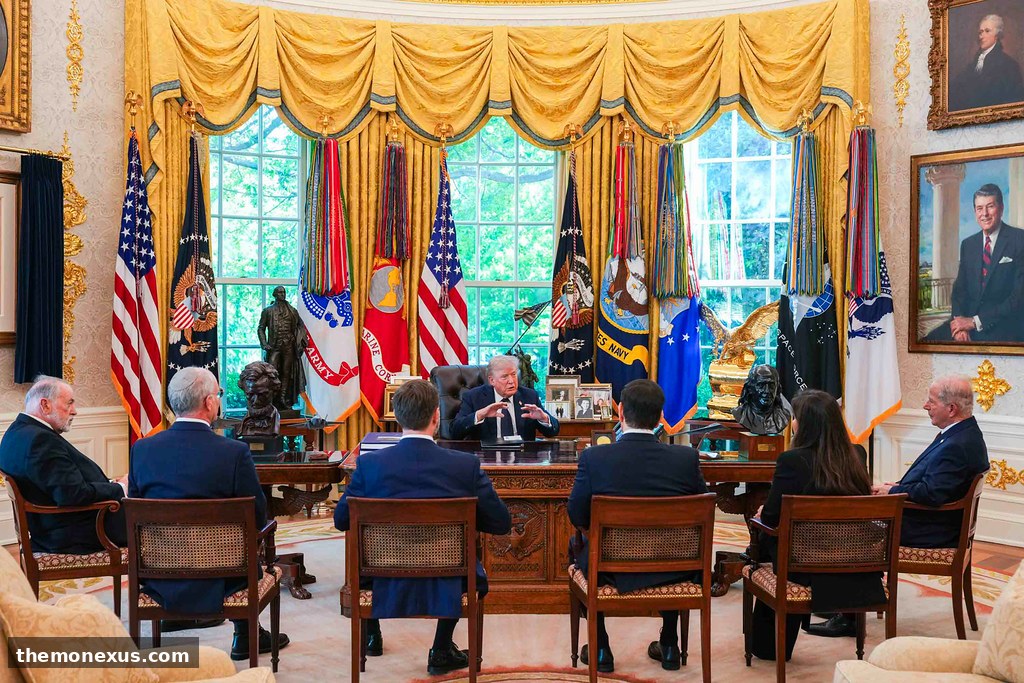
The shots fired at the White House Correspondents' Dinner on 26 April 2026 did not wait for clarity. Within hours, the machinery of official condemnation was fully operational—Barack Obama releasing a statement by 02:32 UTC on 27 April, calling the incident an assault on democratic norms and praising 'the courage' of those present. The language was polished, the positioning swift, the moral frame already locked. What remained conspicuously absent was the word motive—and that absence is doing more work than any of the prepared remarks.
Obama's statement, carried by LiveMint and cited across wire services, noted that officials 'don't yet have the details about the motives' behind the shooting. That single qualifier—do not yet have—should have been the news. Instead it became a footnote. The dominant coverage had already moved on to interpreting the event through the familiar grammar of American political violence: an assassination attempt against a former president, a hit on press freedom, a test of institutional resilience. The facts, whatever they are, arrived second.
The Credibility Discount
PressTV's report, published at 11:57 UTC on 27 April, captured something the Western wire services largely elided: the skepticism of a global audience that does not share the default assumptions embedded in American institutional coverage. Netizens cited in the report were not buying the official framing—not because they had superior evidence, but because the speed and uniformity of the response felt managed rather than spontaneous. That instinct is not conspiracy thinking. It is pattern recognition.
When an event this visible occurs in proximity to a figure like Donald Trump—whose presence at the dinner is itself a statement about the fusion of celebrity, politics, and press access—the range of plausible interpretations expands dramatically. An assassination attempt is one scenario. A staged incident, a security theatre exercise, a personal vendetta, an act of genuine extremism unrelated to the political macro-frame—these are others. The evidence has not eliminated any of them. Yet the coverage has settled as if it had.
The Polymarket-linked post from the night of the shooting captured Obama in a mode of careful neutrality: acknowledging the event, expressing solidarity with victims, but explicitly declining to anchor the incident to any specific political narrative. That restraint was notable precisely because it was unusual. Most institutional voices moved faster.
The Press Ritual and Its Fault Lines
The White House Correspondents' Dinner is itself an exercise in managed ambiguity—a celebration of press access that simultaneously dramatizes the distance between the press corps and the power it covers. The comedian's routine, the roasting of politicians, the red-carpet photographs: these are rituals of intimacy that paper over a structural tension. The press claims access; the executive branch controls it. The dinner performs democracy while entrenching the very hierarchy it pretends to interrogate.
When violence punctures that performance, the instinct of the press establishment is to reassert the ritual. The shooting becomes an attack on press freedom, on democratic values, on the institution of the free press. The victims are reframed as martyrs to a cause. This reconstruction serves a professional interest—it validates the press corps as principals in the drama rather than guests at someone else's table. But it also forecloses questions that a sober accounting would demand.
Who pulled the trigger, and why? Was the target the former president, the event itself, or someone else present? Is the political valence of the act what the coverage assumes, or something more personal, more diffuse, less legible to the Washington frame? The sources do not say. The coverage says it anyway.
The Tempo of Official History
The speed with which major American institutions process an event like this is itself a form of power. Language is deployed before evidence is assembled. Moral frameworks are erected on foundations of assumption. The press, which should be the entity slowest to resolve ambiguity, instead often leads the pack—borrowing credibility from the moment and spending it on premature certainty.
Obama's measured statement is instructive precisely because it resists that tempo. He used the passive voice where possible. He praised courage without specifying whose or why. He acknowledged the absence of motive as an open question rather than a gap to be filled with assumption. That is not neutrality—it is the discipline of a figure who understands that his words will be read as verdict, not observation. The rest of the institutional ecosystem showed less restraint.
The global audience that PressTV's report indexes is not wrong to notice this. When an event of this magnitude is processed this quickly, the speed is not a product of superior insight. It is a product of institutional investment in a particular reading. The American press corps has a stake in the narrative of press freedom under siege—not because that narrative is false, but because it is useful. Useful narratives get promulgated; inconvenient ones get archived.
What Remains Unanswered
The sources before this publication do not establish the identity of the shooter, the specific target of the attack, or the political or personal motivations that might explain the violence. Obama explicitly noted on 26 April that officials lacked those details. That uncertainty is not a gap in the record—it is the record, at least for now.
What can be observed is the architecture of the response: the former president who was present, the former president who condemned the violence, the global audience that did not accept the offered frame at face value, and the speed with which the incident was slotted into existing political narratives. That architecture tells us something about power, legitimacy, and the economics of moral language in moments of crisis. It does not tell us who pulled the trigger, or why. That question deserves to sit in the open, unclaimed, for as long as the evidence requires.
This publication covered the White House Correspondents' Dinner shooting with Barack Obama's 27 April statement as the dominant institutional voice, while noting the skepticism expressed in international coverage. The wire services led with the assassination-attempt framing; we led with the absence of motive and the speed of institutional response.
Wire provenance
This editorial synthesis draws on the following public wire/social posts:
- https://t.me/presstv/152321
- https://x.com/polymarket/status/1918923456784527581