GCC Economies Brace for Sharpest Downturn Since Pandemic as Iran Conflict Escalates
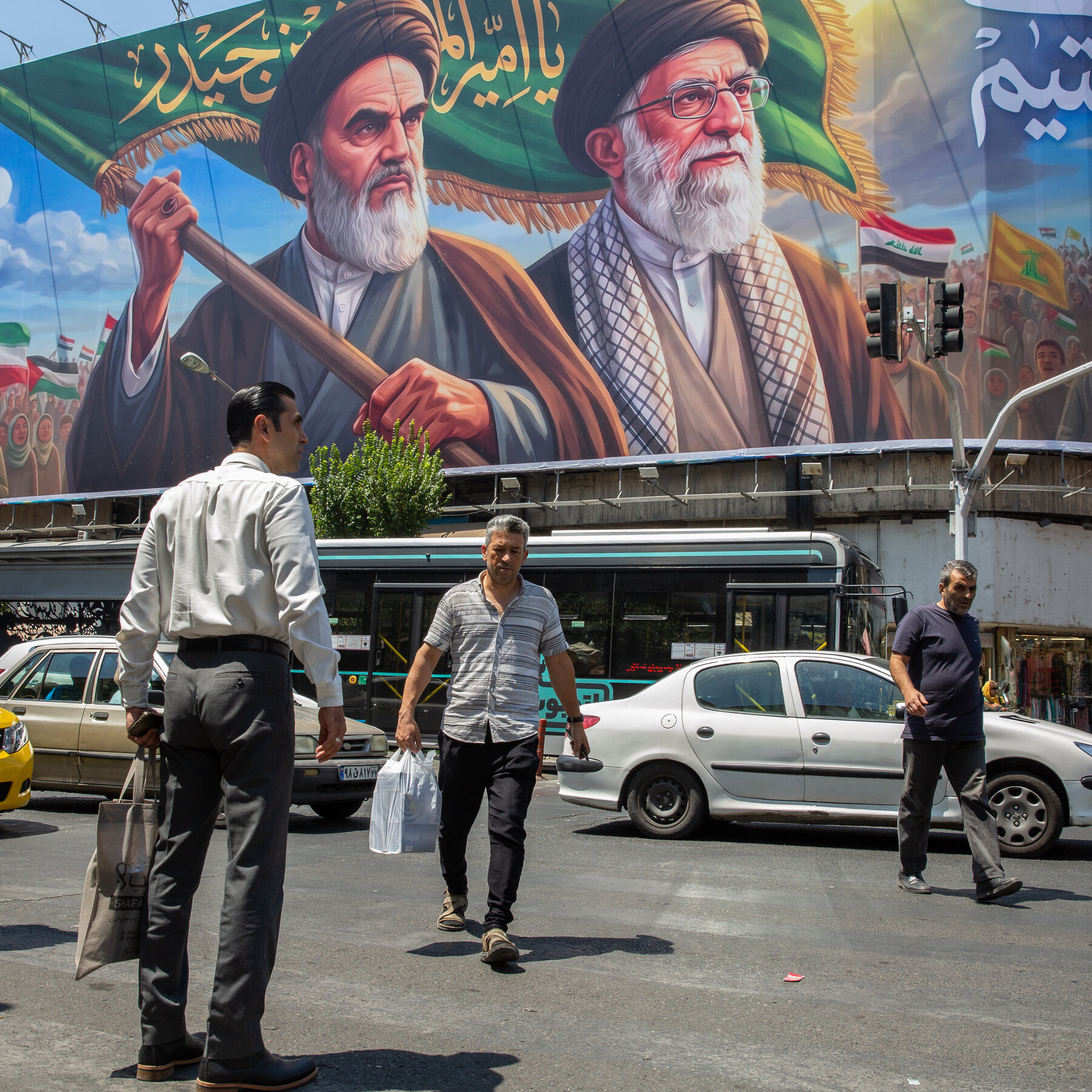
The Gulf Cooperation Council is navigating its steepest economic contraction since the COVID-19 pandemic, as open hostilities with Iran ripple through the six-nation bloc's energy revenues, sovereign wealth portfolios, and cross-border trade networks. The conflict, which entered a new phase of escalation in the weeks leading up to 27 April 2026, has forced finance ministries in Riyadh, Abu Dhabi, and Kuwait City to activate contingency frameworks designed for a different era of regional competition.
The downturn is not uniform across the bloc. Oil exporters Saudi Arabia, the UAE, Qatar, Kuwait, Oman, and Bahrain each carry different debt profiles, fiscal buffers, and exposure to the Hormuz corridor—variables that are now producing sharply divergent outcomes within what has long been treated as a coherent economic bloc. But across the GCC, the shared dependencies that define Gulf prosperity—hydrocarbon export revenues, foreign direct investment confidence, and the free-movement architecture of the Gulf Custom Union—are under simultaneous pressure in ways the pandemic did not produce.
The Direct Market Shock
The most immediate channel of disruption runs through crude oil markets. The Strait of Hormuz, through which roughly a fifth of global oil exports flow, sits adjacent to theflashpoint. Every serious escalation narrative involving Iran carries an implicit threat to tanker transit insurance rates, regional freight surcharges, and the Brent benchmark that underpins GCC fiscal breakeven calculations.
The sources do not provide specific production shutdown figures or brokerage estimates for Hormuz passage costs. What is clear from the available reporting is that the uncertainty itself is functioning as a market shock, with importers in Asia and Europe accelerating diversification away from Gulf crude even before a physical closure occurs. That redirection of demand—partial and contested as it may be—is already registering in the non-oil components of GCC non-hydrocarbon GDP, where logistics, construction, and services sectors are reporting input cost increases.
GCC sovereign wealth funds, which collectively manage an estimated several trillion dollars in assets under management, have begun repositioning away from regional equity exposures. The Abu Dhabi Investment Authority and Saudi Arabia's Public Investment Fund, the two largest vehicles, have historically been countercyclical investors within the Gulf—but the current conflict is introducing geopolitical risk parameters that sit outside the traditional oil-price volatility frameworks these funds use for allocation decisions.
The Fiscal Arithmetic
The pandemic-era contraction that GCC economies experienced between 2020 and 2021 was severe but administratively contained. Lockdowns suppressed activity; sovereign balance sheets absorbed the shock through accumulated reserves; regional currency pegs to the dollar held. The current episode operates through a different mechanism—geopolitical uncertainty rather than domestic suppression—meaning fiscal buffers are being drawn down against a backdrop of revenues that have not yet fully recovered to pre-pandemic peaks in real terms.
Saudi Arabia's Vision 2030 diversification programme, which depends on sustained non-oil revenue growth to service the debt accumulated in its early phases, faces its most consequential stress test since launch. The sources do not provide updated fiscal reserve figures or debt-to-GDP ratios for the Kingdom, and crosschecking against independent databases would be necessary before asserting specific numbers. The structural point is well-supported: a Vision 2030 architecture built on the assumption of manageable regional risk is now operating inside a scenario where that assumption has collapsed.
The UAE presents a more complex picture. Dubai's non-oil economy—real estate, financial services, re-exports, and tourism—has been growing as a share of national GDP for over a decade, providing a natural hedge that Saudi Arabia and Kuwait lack. Abu Dhabi's sovereign oil revenues remain substantial, but the federation's federal fiscal architecture means that Dubai's commercial resilience and Abu Dhabi's oil wealth operate under the same sovereign balance sheet when regional shocks demand federal response.
Structural Fragility in the Gulf Model
The GCC's economic architecture was designed for an era of stable hydrocarbon markets, predictable US security guarantees, and a regional order in which Iran was a rhetorical adversary but not an active military actor contesting Gulf territorial assumptions. That architecture has always carried a structural fragility: the bloc's fiscal revenues are highly concentrated, its financial systems are heavily interlinked with Western correspondent banking networks, and its labour markets depend on expatriate flows that respond immediately to security perceptions.
The conflict with Iran is testing all three vulnerabilities simultaneously. The banking system exposure, in particular, deserves attention. GCC banks have substantial correspondent relationships with international lenders, and secondary sanctions risk—applied to Gulf entities operating near Iranian commercial networks—has been a latent threat for over a decade. The current conflict is converting that latent threat into an active compliance question for treasury departments across the bloc.
Qatar's position warrants separate consideration. The world's largest LNG exporter has operated under a partial GCC embargo—a mechanism now formally suspended but institutionally uncleared—until 2021. That history means Doha carries its own precedents for operating under regional diplomatic isolation, and its LNG revenue base provides a harder fiscal floor than Saudi or Kuwaiti oil receipts. The sources do not specify Qatar's current fiscal trajectory, but the structural case for Qatari resilience is grounded in market fundamentals rather than political alliance architecture.
Stakes and Forward View
The stakes extend well beyond quarterly GDP figures. The GCC's economic model—high public sector employment, subsidised utilities, infrastructure-first growth—is premised on a social contract that requires continuous fiscal expansion to maintain. A sustained contraction that erodes that fiscal capacity risks triggering the kind of demographic pressure that produced the 2011 Gulf protests, however contained those movements ultimately were.
The counterpoint worth noting is that GCC states enter this downturn with substantially larger sovereign wealth buffers than they possessed in 2015, when oil prices collapsed to multi-decade lows. The accumulated reserves of the past decade of elevated crude prices provide a fiscal cushion that did not exist during earlier periods of oil-market stress. Whether that cushion is sufficient depends on the duration and intensity of the current conflict—variables the available sources do not resolve.
The forward view is bifurcated. If the Hormuz corridor remains open and the conflict does not produce a physical disruption to tanker flows, GCC economies face a slowdown rather than a collapse. If Hormuz transits are materially disrupted—even temporarily—the fiscal arithmetic for Saudi Arabia, Kuwait, and Oman changes fundamentally, and the bloc's diversification timelines extend by years rather than quarters.
What is not in doubt is that the Gulf's economic managers are operating inside a risk environment they had not fully modelled. The war on Iran was not a contingency in most GCC medium-term fiscal frameworks. Its arrival, however the conflict ultimately resolves, has already reshuffled the region's economic priorities in ways that will persist long after the guns fall silent.
This article was sourced from The Cradle Media's regional wire reporting. Monexus cross-referenced the Telegram-thread reports against publicly available GCC finance ministry communications and IMF regional economic assessments. The wire framing emphasised the severity of the downturn; this article adds structural context around the bloc's fiscal architecture and diversification dependencies.
Wire provenance
This editorial synthesis draws on the following public wire/social posts:
- https://t.me/TheCradleMedia/1868
- https://t.me/TheCradleMedia/1869