King Charles's Washington Gambit: Can the 'Special Relationship' Survive Trump 2.0?
King Charles III arrives in Washington on Monday for a four-day visit that will test whether Britain's oldest diplomatic asset — the so-called 'special relationship' — can withstand the transactional pressures of a second Trump presidency.
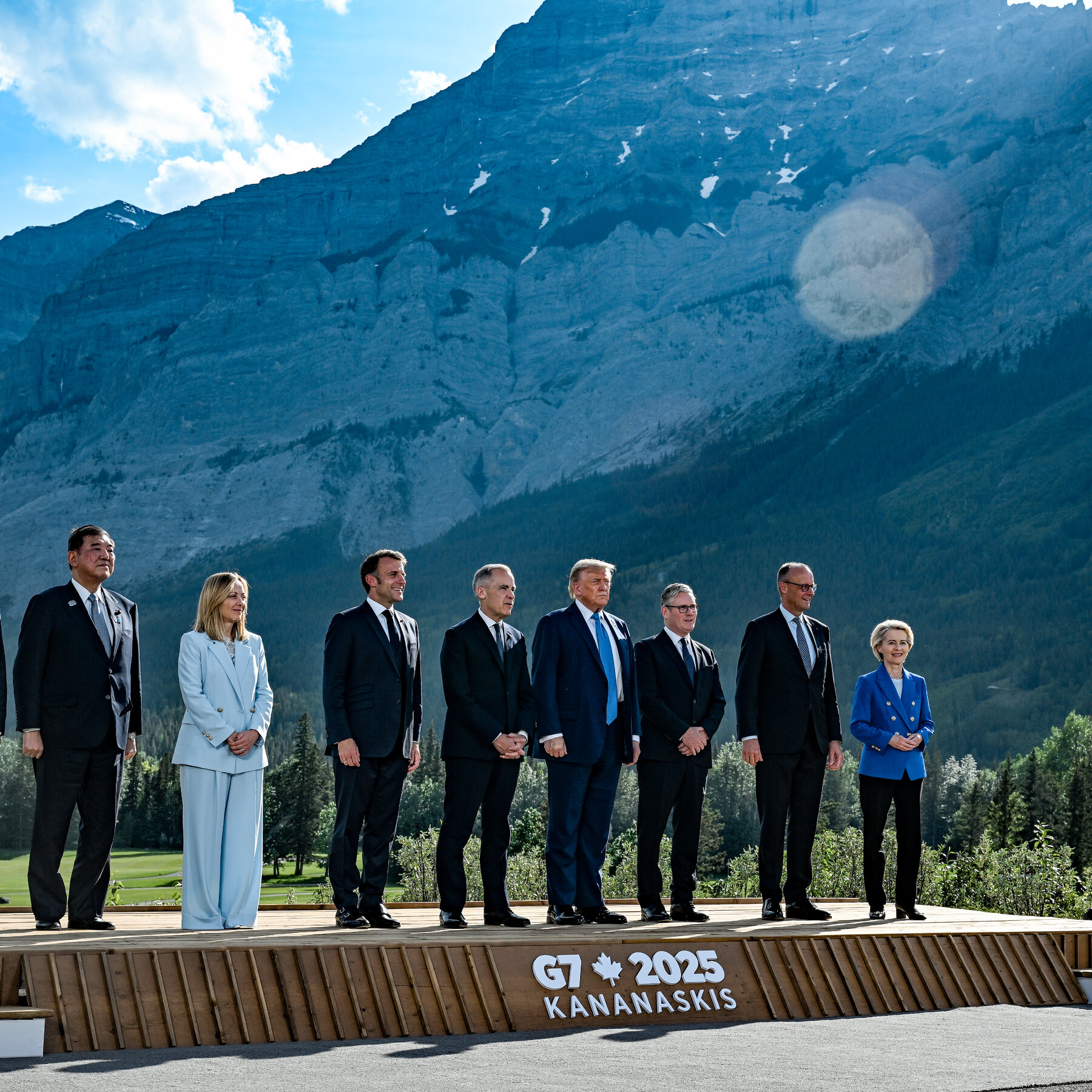
King Charles III landed in Washington on Monday for a four-day visit that will determine whether seventy years of transatlantic diplomatic architecture can be repaired — or whether it will be renegotiated on terms favorable only to one side.
The visit, confirmed by reporting from The Wall Street Journal, marks the first time a British monarch has undertaken a formal bilateral engagement with an American president since the institutional norms around royal neutrality were solidified in the postwar period. It is, by any measure, a departure from convention — and an acknowledgment that convention alone will not preserve what both governments call the "special relationship."
The Visit's Core Agenda
Charles will meet President Trump at the White House on Tuesday, with a state dinner scheduled for Wednesday evening. The agenda, as described by officials familiar with the planning, covers three terrain types: security cooperation, trade facilitation, and the diffuse but politically charged question of how Britain positions itself within the broader Western alliance architecture.
On security, the discussion will center on Ukraine — specifically, what role Britain can play in sustaining Western support as the conflict enters what analysts describe as a grinding, attritional phase. London has been among the most consistent military aid providers to Kyiv since 2022, and the visit will test whether that commitment can be used as diplomatic currency with an administration whose priorities have shifted toward securing a negotiated settlement on terms still being defined.
Trade discussions will focus on a proposed bilateral framework that would reduce tariffs on certain manufactured goods and simplify regulatory alignment in financial services. Britain's post-Brexit trade strategy has leaned heavily on negotiated access to the American market, and the visit is designed to advance talks that have stalled since the administration imposed reciprocal tariffs on a range of European goods earlier this year.
The sources do not specify the full list of officials accompanying the king, though the visit is expected to include members of the royal household and senior Foreign Office advisers traveling in a support capacity.
The Strategic Calculation in London
For the British government, the visit represents a high-wire act. The "special relationship" has been invoked by every prime minister since Churchill as a diplomatic shorthand — a phrase that conveys closeness without requiring the legal entanglement of a formal alliance. But the phrase has always required maintenance, and under Trump 2.0, the maintenance costs have risen.
The first Trump administration tested the relationship's resilience when it demanded that Britain increase defense spending as a condition of continued intelligence sharing — a pressure that intensified after the 2019 general election and continued through the subsequent parliamentary sessions. The current administration has extended that pressure, adding trade reciprocity demands and, according to sources familiar with internal discussions, expressing less patience with diplomatic circumlocution than its predecessor.
Charles's position is unusual. As a constitutional monarch with no formal executive authority, he occupies a role that is simultaneously ceremonial and potentially consequential. A state visit by the sovereign carries symbolic weight that a prime ministerial trip does not — it signals continuity, institutional depth, and a degree of personal investment that can be useful in negotiations where the other party values ceremony.
But it also carries risk. If the visit produces visible friction — if the language of mutual regard gives way to the language of demands — the damage falls on an institution that cannot easily reverse the impression. The monarchy's standing in American political discourse is not guaranteed; it depends on managing expectations and avoiding the appearance of supplicancy.
The Counter-Narrative
Not everyone in London shares the optimism about what this visit can achieve. Critics within the British foreign policy community argue that the "special relationship" has been devalued by overuse — that invoking it as a diplomatic tool has made it less effective as an actual asset. The phrase, on this reading, functions as a ritual that both sides perform without expecting it to produce specific outcomes.
There is also the question of what Britain can realistically offer. The administration's stated priorities — reducing the bilateral trade deficit, securing commitments on defense spending, obtaining cooperation on China-related technology restrictions — are demands that Britain is already under pressure to meet through NATO frameworks and existing export control arrangements. A royal visit does not add new leverage to negotiations that are already being conducted through bureaucratic channels.
Some analysts suggest that the visit's value is primarily domestic — for both governments. For the British side, the visual of a state visit signals to European partners that Britain retains a distinct, high-level relationship with Washington that functions independently of EU structures. For the American side, hosting a visiting head of state — even a ceremonial one — provides the optics of international legitimacy that the current administration has at times sought to reinforce through high-profile diplomatic moments.
The sources do not indicate whether any formal agreements are expected to be signed during the visit, though both sides have suggested that joint statements on security cooperation and trade frameworks are likely.
What This Tells Us About the Relationship's Condition
The decision to send the monarch rather than the prime minister — or in addition to the prime minister — reflects a calculation that the personal and institutional dimensions of the relationship need shoring up. Britain has not been without prime ministerial access to the White House; Starmer visited in February and held direct talks with the president. But the frequency and substance of those contacts has not produced the alignment that either side publicly describes as the goal.
What the visit reveals is that both governments understand the relationship is under structural strain — that the assumptions that governed transatlantic cooperation for three decades are no longer fully operative. The tariff disputes, the disagreements over Ukraine strategy, the different calculus around China — these are not temporary frictions. They reflect divergent interests that the ceremonial layer of the relationship cannot paper over.
The question is whether a four-day visit, however carefully staged, can move the needle on interests that are fundamentally misaligned. Charles arrives with goodwill, institutional gravitas, and seventy years of accumulated diplomatic capital. Whether that is enough depends on what the administration actually wants from Britain — and whether what it wants is something a state visit can provide.
The visit runs through Friday. Statements from both governments are expected following the Tuesday meeting at the White House.