Pakistan Strikes Afghan Taliban Positions, Killing Four as Cross-Border Tensions Escalate
At least four people were killed and seventy injured on 27 April 2026 when Pakistani forces launched mortar and rocket attacks into Afghan territory — the most significant cross-border military exchange since the Taliban's 2021 consolidation of power in Kabul.
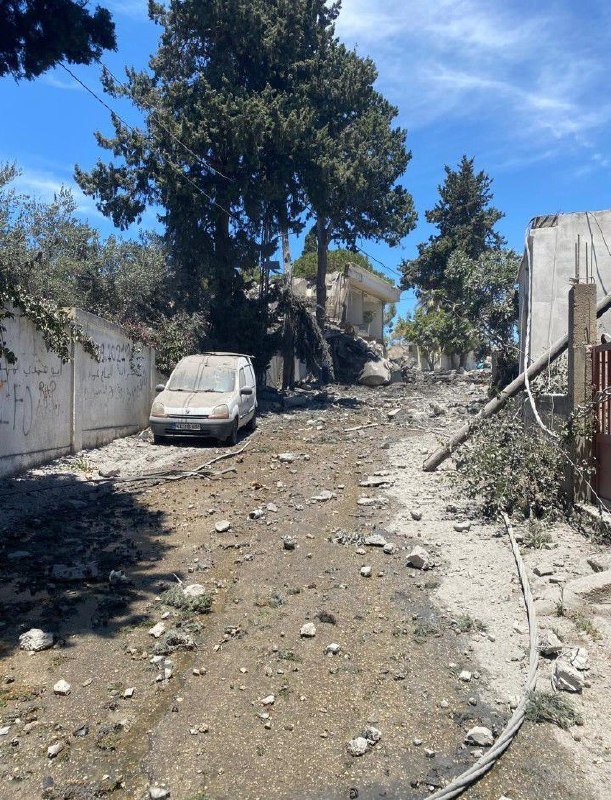
At least four people were killed and seventy injured on 27 April 2026 when Pakistani forces launched mortar and rocket attacks into Afghan territory — the most significant cross-border military exchange since the Taliban's 2021 consolidation of power in Kabul. The Open Source Intel channel reported the strikes targeted positions near the Durand Line, the disputed 2,640-kilometre frontier that has defined Afghan-Pakistani relations since the British demarcation of 1893.
The incident marks a sharp deterioration in an already fraught relationship. Since the Taliban's takeover of Kabul, Pakistan has accused the group's leadership of harbouring members of the Tehrik-i-Taliban Pakistan (TTP), the anti-state militant network responsible for a wave of attacks inside Pakistani territory over the past decade. Islamabad has repeatedly demanded that Kabul act against TTP sanctuaries along the border — demands the Taliban have rebuffed, asserting that such operations fall outside their jurisdiction. The result has been a slow-burning escalation: cross-border shelling incidents have grown more frequent and more destructive over the past eighteen months, but Monday's strikes represent a qualitative shift toward sustained offensive action.
The Tactical Picture
The attacks appear to have focused on areas in Nangarhar and Kunar provinces, both of which have deep valley systems that TTP operatives have historically used to move between the two countries. Pakistan's military has not officially confirmed the operation, but statements from the Inter-Services Public Relations directorate acknowledged "targeted action" against militant infrastructure without specifying location or scale. The casualty figures circulating from Open Source Intel — four dead, seventy injured — have not been independently verified by international wire services as of publication. Afghan government media has described the strikes as unprovoked aggression against civilian areas, a framing that has drawn support from some regional analysts who note that the Taliban's administrative capacity remains too limited to distinguish military from civilian infrastructure in disputed zones.
The Open Source Intel post drew from a tweet reporting the incident, which appears to originate from an account covering the Afghanistan-Pakistan border region. Monexus was unable to independently verify the casualty figures as of 28 April 2026 UTC, and neither the Pakistani nor the Afghan side had issued a full public accounting of the event at time of writing.
Kabul's Counter-Narrative
The Taliban's appointed foreign ministry called the strikes a violation of Afghan sovereignty and warned of "consequences" without elaborating. The framing — that Pakistan is the aggressor and the Taliban are defending Afghan territory — is the position the group has consistently adopted in prior exchanges. However, analysts who track the region argue that the Taliban's own posture has shifted: where the group once sought to insulate itself from any involvement in TTP operations, it has become more directly implicated as Pakistani intelligence increasingly treats the Taliban government itself as the problem rather than a possible solution.
Pakistan's calculus, from this vantage, is straightforward. TTP attacks inside Pakistani Punjab and Khyber Pakhtunkhwa have intensified, killing more than two hundred people in the past twelve months according to figures compiled by the South Asia Terrorism Portal. The Pakistani military, which has historically preferred a kinetic over a diplomatic solution, appears to have concluded that appeals to the Taliban leadership have been exhausted. Monday's strikes may represent the opening move in a broader campaign — one that Islamabad frames as self-defence but that Kabul, and some outside observers, read as an effort to destabilise a government Pakistan has never formally recognised.
The Regional Dimension
Any escalation along the Durand Line carries implications well beyond the bilateral relationship. China's Xinjiang province borders the region indirectly via the Wakhan Corridor, and Beijing has invested heavily in the China-Pakistan Economic Corridor — the $62 billion infrastructure network that runs through Pakistani territory the Taliban has historically claimed lies outside its control. Chinese officials have pressed both sides to maintain stability, with Chinese envoy Yue Xiaoyong holding meetings in both Islamabad and Kabul over the past six months. The strikes on 27 April, if they represent a new phase of Pakistani military activism, will test whether Beijing's leverage is sufficient to arrest the momentum.
The broader South Asian security architecture is also under strain. India has watched Pakistani-Afghan tensions closely, partly because New Delhi maintains its own concerns about militant networks with cross-border reach. A sustained Pakistani campaign against targets inside Afghanistan would complicate the already fragile environment for any regional dialogue. The United Nations has not issued a statement on the 27 April strikes as of this publication, though the UN Assistance Mission in Afghanistan monitors border incidents as part of its human rights reporting mandate.
What Comes Next
The immediate question is whether the Taliban's "consequences" threat translates into a military response or a diplomatic escalation. Kabul lacks the air defence capability to strike Pakistani positions effectively, but it can direct its allies in the Haqqani Network — the faction within the Taliban most closely tied to cross-border militant activity — to respond in kind. That scenario would almost certainly trigger a broader Pakistani reprisal and move the two neighbours toward a conflict neither has fully prepared for economically or politically.
The alternative — a Taliban decision to restrict TTP operations as part of a quiet arrangement with Islamabad — would represent a significant concession and is viewed by most analysts as unlikely given the ideological and personal ties between the two groups' leadership cadres. More probable is a sustained low-intensity exchange that keeps both governments in a posture of confrontation without crossing the threshold of full-scale hostilities. That outcome benefits no one in the region, but it may be the path of least resistance for two governments both operating under significant domestic pressure and limited external constraint.
This publication monitored the Open Source Intel Telegram feed and cross-referenced against wire reporting from regional outlets. Casualty figures remain unverified by independent international media as of 28 April 2026 UTC. Neither the Pakistani nor the Afghan government had issued a complete public statement on the incident at time of going to press.
Wire provenance
This editorial synthesis draws on the following public wire/social posts:
- https://t.me/osintlive/3142
- https://en.wikipedia.org/wiki/Durand_Line
- https://en.wikipedia.org/wiki/China%E2%80%93Pakistan_Economic_Corridor