Trade Friction and Food Prices Collide in Senate Exchange as Lutnick Accuses Canada of Disrespect
A Senate hearing on 27 April 2026 laid bare the contradictions in Washington’s approach to both trade policy and food pricing, as a cabinet official and a cabinet nominee clashed with senators over grocery affordability and transatlantic commerce.
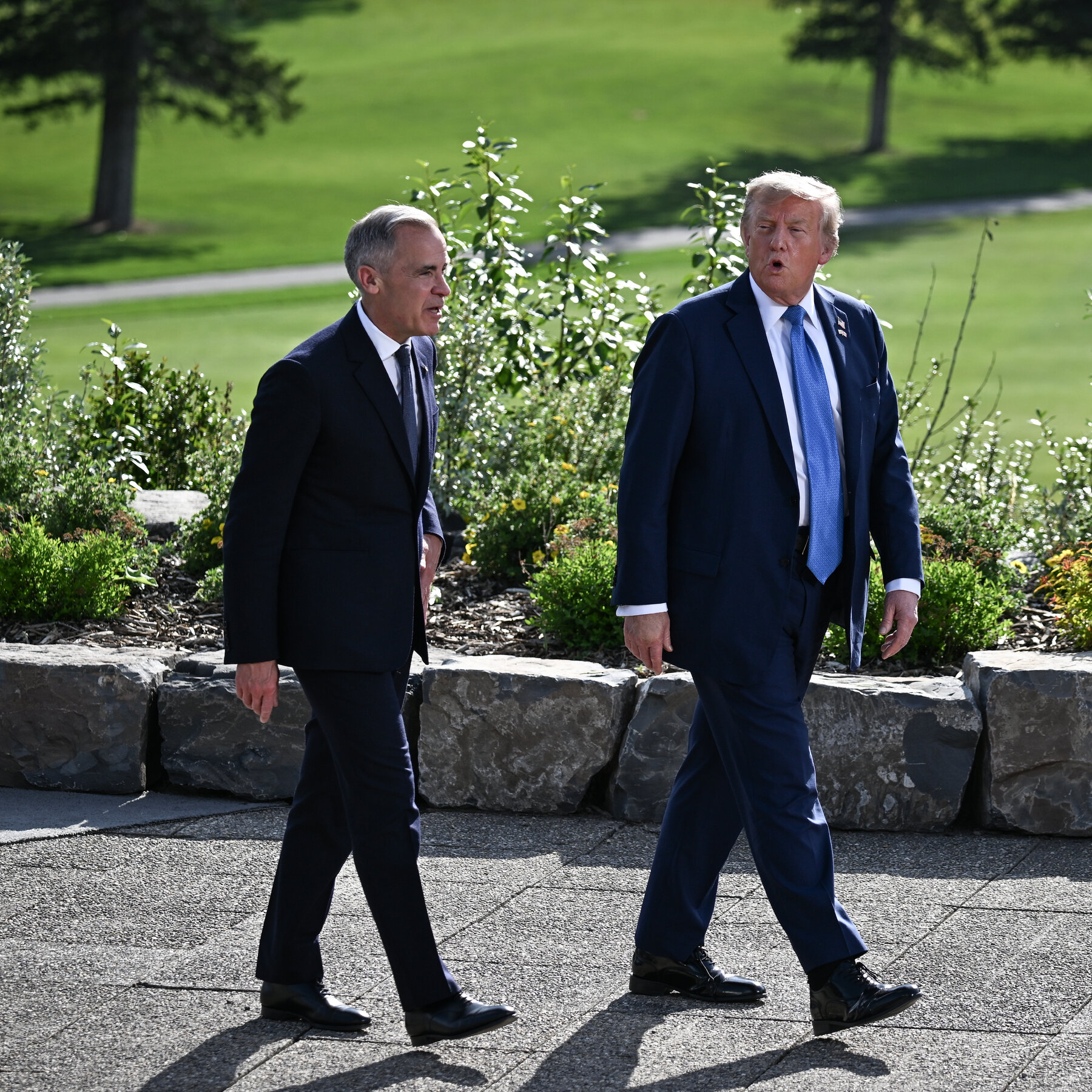
A Senate hearing on 27 April 2026 laid bare the contradictions in Washington’s approach to both trade policy and food pricing, as a cabinet official and a cabinet nominee clashed with senators over grocery affordability and transatlantic commerce. Howard Lutnick, the US Trade Representative, told the Senate Finance Committee it was “outrageous” and “insulting” that Canada had not moved to place American spirits on store shelves. A day earlier, Robert F. Kennedy Jr., the nominee for Secretary of Health and Human Services, faced questions about why food prices remained elevated under an administration that had promised relief.
What the two exchanges revealed, taken together, was not simply a dispute over tariffs or grocery receipts. It was a glimpse of a broader incoherence: the White House simultaneously demands reciprocity from allies and promises consumers relief at the checkout, while the structural drivers of both trade friction and food costs resist easy political resolution.
The Spirits Standoff
Lutnick appeared before the Senate Finance Committee with a clear message: Canada’s refusal to give American distilled products shelf space was a matter of disrespect. “It is outrageous that Canada will not put US spirits on the shelf,” Lutnick said. “It is insulting and disrespectful to America.” The remark, captured in a video posted by the account unusual_whales on 27 April 2026, was met with pushback from a senator who noted the Canadian reluctance was itself a response to the tenor of the current administration. “They won’t do it because of the insults from this president,” the senator replied.
The exchange landed in the middle of a broader tariff confrontation. The United States had imposed broad duties on Canadian goods, and Ottawa had responded with retaliatory measures covering a range of American products, including alcohol. While some American alcohol producers have sought to leverage trade deals to gain market access north of the border, the political environment in Canada has made any such accommodation difficult. The Canadian government has faced domestic pressure not to appear accommodating to what it characterises as arbitrary American demands.
Lutnick’s framing treated the spirits question as a straightforward matter of reciprocity. But trade experts note that shelf placement decisions in Canadian provincial liquor monopolies are partly commercial, partly political, and partly the product of distribution agreements negotiated years in advance. The demand that Canada alter its retail arrangements without any corresponding offer of concession is, one observer noted, not how trade negotiations typically proceed.
Kennedy and the Grocery Receipt
On 26 April 2026, a day before Lutnick’s appearance, Kennedy faced the Senate Finance Committee in a separate hearing that focused on his nomination and, increasingly, on the cost of food. A senator asked directly whether high grocery prices were making it harder for families to eat healthy food. Kennedy’s answer was to note that beef prices had, in his framing, dropped by one percent. The senator’s counter was blunt: beef prices were up twenty percent.
The exchange highlighted a persistent challenge for an administration that has made kitchen-table economics a centrepiece of its political argument. Prices for beef, eggs, and a range of processed foods have remained elevated relative to their pre-2024 levels. The administration’s preferred explanation has emphasised供应链 disruptions, labour costs, and corporate pricing behaviour. Critics note that the tariff regime itself carries costs that flow through to consumer prices, a point the senator implicitly pressed in the hearing.
Kennedy’s profile as a nominee has been shaped by his prior positions on vaccines and public health agencies. The Senate Finance Committee hearing underscored that his confirmation debate will likely range well beyond those questions to include the administration’s broader economic record.
The Structural Tension
What connects the two hearings is not merely a coincidence of scheduling. Both reflect a White House approach that treats trade relations as an extension of political signalling and domestic consumption as something that responds to rhetorical pressure rather than structural conditions.
On trade, the demand for Canadian shelf space for American spirits is embedded in a broader pattern of using trade policy as an instrument of bilateral pressure rather than multilateral rule-making. This approach has produced results in specific negotiations but has also strained relationships with partners who read the tone as dismissive of their own domestic constraints.
On food prices, the difficulty is that the drivers of grocery costs operate at a level that presidential rhetoric cannot easily reach. Cattle cycles, feed costs, processing concentration, and retail margins all moved in ways that preceded the current administration. Acknowledging that complexity in a hearing room carries political risk; offering a single-digit percentage as proof of progress is the kind of response that invites the kind of direct rebuttal senators are willing to deliver.
What Comes Next
The Senate Finance Committee will continue its confirmation and oversight hearings over the coming weeks. Lutnick’s testimony will feed into the broader debate over the direction of US trade policy, which the administration has framed as renegotiation rather than retreat. Kennedy’s nomination remains pending, with the committee’s vote expected to break along party lines regardless of the content of his testimony.
For Canadian-American trade relations, the immediate question is whether the liquor retail dispute becomes a proxy for a wider confrontation or whether both sides find space to step back. For food consumers, the question is whether the conditions that produced elevated prices in 2024 and 2025 continue to ease, or whether the tariff regime introduces a fresh wave of cost pressure in 2026.
The Senate Finance Committee hearings on 26 and 27 April 2026 did not resolve either question. What they did was make visible the distance between the administration’s public framing and the lived experience of consumers and trading partners.
Desk note: Monexus led with the Lutnick-Canada spirits exchange, framing it as part of a coherent trade-pressure strategy rather than a bilateral tantrum. The Kennedy hearing was covered with emphasis on the senator’s factual correction rather than as a gotcha moment. Both stories appeared on the wire simultaneously; we chose to run them as a single structural piece rather than two separate items, because the connection between trade friction and consumer pricing felt editorial defensible and not forced.
Wire provenance
This editorial synthesis draws on the following public wire/social posts:
- https://x.com/unusual_whales/status/1917096989873250332
- https://x.com/unusual_whales/status/1917064028279820539