Airtel Money's Bank Bridge: What Absa Integration Tells Us About Kenya's Merchant Payments War
Airtel Money, Kenya's second-largest mobile money wallet by registered accounts, announced on 27 April 2026 that it had integrated with Absa Bank Kenya, enabling small businesses to move funds between mobile wallets and bank accounts without manual processing steps that had previously slowed their operations.
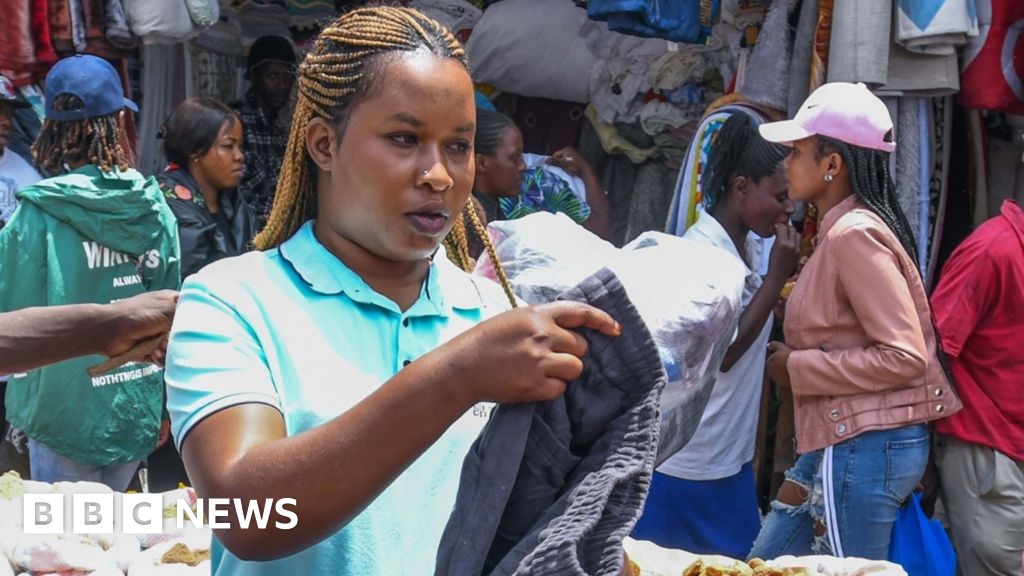
The integration matters because it addresses a friction that has long complicated life for Kenyan traders who deal in both cash and formal banking. A market vendor who receives payment via Airtel Money and needs to settle a supplier with a bank account previously had to physically visit an agent or initiate a multi-step transfer. Automating that link — pulling money from a mobile wallet into a business bank account and vice versa through a single workflow — removes one of the small but cumulative barriers that keep informal merchants from operating more like formal businesses.
Whether this particular bridge is the one that shifts Kenya's merchant payments equilibrium is an open question. What the integration does confirm is that Absa Bank Kenya is actively courting the mobile money-adjacent merchant segment, and that Airtel Africa — whose money transfer business competes against a dominant Safaricom M-Pesa — is searching for the kind of utility partnerships that convert casual users into dependent ones.
The Friction the Integration Addresses
Kenya's mobile money landscape is globally admired but structurally uneven. M-Pesa's network effect is formidable: agents on every street corner, a merchant payment code that works across hundreds of thousands of retailers, and a decade-plus head start building consumer and business habits. Airtel Money has maintained a solid second position — significant volumes, a loyal base — but has historically struggled to build the same sticky merchant ecosystem.
The Absa integration is a product play: give Airtel Money users the ability to reconcile their mobile wallet balances with a business bank account through their bank's app or portal. For a small retail business that accepts Airtel Money payments from customers, having that income automatically reflected in an Absa account means simpler bookkeeping, easier access to credit (formal lenders can see transaction history in a bank account more readily than in a mobile wallet), and less cash sitting idle in a phone account.
The sources do not specify transaction fees, daily limits, or the specific technical architecture underpinning the link. What is clear is the direction of flow: money moving between a telecom-linked wallet and a traditional banking account without the manual intervention that previously required a human step — an agent, a withdrawal, a deposit, a wait.
Why Absa Bank Kenya Is the Counterparty Here
Absa's interest in this population makes structural sense. Retail banking in Kenya has seen intense competition for the mass market, but the informal merchant segment — traders, hawkers, small shop owners — remains expensive to serve through traditional branch networks. Mobile money operators solved that problem years ago by eliminating the branch. A bank partnering with a mobile money platform to capture the merchant flow from the wallet side is a way to reach a customer the bank would otherwise have to work hard to attract.
Absa Bank Kenya, part of the South African Absa Group, has been systematically building its digital offerings for small and medium enterprises. This integration positions the bank not as a competitor to mobile money but as its downstream settlement partner — a pragmatic read of the Kenyan market where mobile wallets handle the customer-facing payment and the bank handles the accounting layer.
Whether Absa's digital SME tooling — its app, its reporting features, its lending appetite — is good enough to make the integration genuinely useful or merely technically functional is a question the source material does not answer. The integration's value will be proved or disproved in the daily experience of traders who try to use it.
M-Pesa's Shadow and Competitive Context
Any story about Airtel Money's Kenyan ambitions has to be told against the backdrop of Safaricom's market position. M-Pesa processes the overwhelming majority of Kenya's mobile money transactions. Its merchant payment code (Lipa na M-Pesa) is embedded in hundreds of thousands of businesses. Its agent density is unmatched. A new integration with one bank, however welcome, does not automatically reconfigure that landscape.
What it does signal is Airtel Africa's continued investment in product depth over breadth — finding specific use cases (business account reconciliation) that a pure-wallet product cannot serve, and partnering with institutions that have the customer relationships the telecom lacks. This is a positioning play as much as a product play: become indispensable to the merchant who already uses Airtel Money by solving a problem M-Pesa has not yet made frictionless for that specific user.
M-Pesa has its own banking integrations and has been expanding its merchant credit offerings. The gap Airtel Money is trying to close is narrow but potentially valuable: the trader who wants a business bank account and wants their mobile wallet to feed it automatically.
What This Means for Financial Inclusion and Who It Serves
Kenya's financial inclusion gains — widely cited, genuinely significant — have been built largely on mobile money access. But access to a mobile wallet and access to formal financial services are not the same thing. Millions of Kenyans use M-Pesa daily without having a bank account. Their transaction histories live in the Safaricom ecosystem, invisible to formal lenders evaluating creditworthiness.
The Airtel Money–Absa integration, if it works as intended, is a small but potentially meaningful bridge between those two worlds. A trader's mobile money income becomes a visible, auditable stream in a banking account. That account can be used for loan applications, for supplier payments that require a formal trace, for tax record-keeping. The integration does not solve the structural barriers to formal financial inclusion — income volatility, collateral absence, regulatory friction — but it reduces one administrative barrier that keeps informal merchants informal.
The question is adoption. Kenya's informal economy is not short on products that sound useful in press releases. The distribution of useful tools matters as much as their existence: an integration that requires a trader to have both an Airtel Money account and an Absa account and to actively link them is only as good as the agents, bank staff, and Airtel representatives who explain it at the point of need.
What Remains Uncertain
The source material provides the announcement of the integration and its basic mechanism. It does not specify transaction limits, fee structures, the rollout timeline beyond the announcement date of 27 April 2026, or the volume of Airtel Money merchants in Kenya who might use Absa as their settlement bank. Independent reporting has not yet captured early-adopter experience or whether the integration has faced early technical friction.
The competitive response from Safaricom — whether M-Pesa accelerates its own merchant banking integrations, adjusts its Lipa na M-Pesa fee structure, or simply relies on network effects to absorb the threat — is also unaddressed in current sourcing.
Monexus Desk Note
This publication covered the Airtel Money–Absa integration from the angle of Kenya's merchant payments competition and the financial inclusion dimension, foregrounding the product logic and the structural context of M-Pesa's dominance. The dominant wire framing, when it arrives, will likely lead with the partnership as a competitive move by Airtel Africa. Both framings are accurate; this article treats the partnership as a product story as much as a competitive one, because the execution question — whether this actually works for a busy Nairobi market trader — is at least as important as the market share question.