Israel Deploys Iron Dome, Forces to UAE as Tehran Demands War Reparations
Israel has deployed Iron Dome missile defense systems and ground forces to the UAE following the outbreak of hostilities with Iran, as Tehran seeks compensation from Gulf states it accuses of supporting the US-led military campaign.
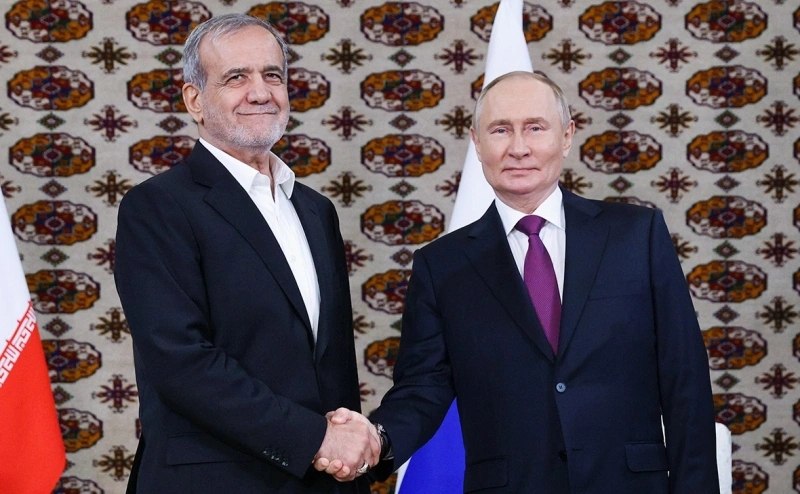
Israel has deployed Iron Dome missile defense batteries and ground forces to the United Arab Emirates, according to regional reporting published on 27 April 2026. The move comes as Iran began demanding financial reparations from several Arab states, including the UAE, over their alleged direct involvement in the US-led military campaign against Tehran.
The deployment marks the first known instance of Israeli military personnel and air defense systems operating openly on Arabian Peninsula soil under a formal defense cooperation arrangement. The timing places the development within a broader escalation trajectory that has seen the United States and its regional partners respond to Iranian military actions with coordinated military operations.
Tehran's demand for compensation from Gulf states represents a new dimension in the conflict—one that extends beyond the immediate battlefield into the economic and diplomatic sphere. Iranian state media reported that the compensation claims were directed at states that Tehran believes provided logistical support, overflight rights, or intelligence cooperation to the US-led military response. The UAE, which normalised relations with Israel in 2020 through the Abraham Accords, sits at the centre of Iran's demands.
Israeli defense officials have not issued public statements confirming the specific scale or operational details of the deployment. Military cooperation between Israel and Gulf Arab states has grown substantially since the Abraham Accords, but the transition from normalisation to active operational support—Israeli forces deployed to defend a regional partner against Iranian military action—marks a qualitative escalation in those ties.
The UAE's position is delicate. Abu Dhabi has invested heavily in diversifying its international partnerships since the 2017 Qatar crisis and has cultivated relationships with both Washington and Tehran. The presence of Israeli forces on Emirati territory, however visible, will be read in Tehran as confirmation that the Abraham Accords have evolved into a security architecture targeting Iranian interests. Other Gulf Cooperation Council states—Saudi Arabia, Bahrain, Oman—have maintained more cautious postures, publicly silent on the Israeli deployment and more guarded in their public statements about the conflict.
Israeli security concerns are legitimate. Iran has pursued a decades-long strategy of projecting power through proxy forces and, more recently, direct missile and drone strikes targeting regional adversaries. Israeli cities have faced rocket and missile barrages from multiple directions. The decision to deploy Iron Dome systems to the UAE reflects a shared assessment that Iranian military capabilities pose a credible threat to Gulf infrastructure and population centres.
The counter-argument from Tehran's perspective deserves acknowledgment. Iranian state media framing characterises the compensation demands as a legitimate response to what it characterises as aggression by foreign powers operating through allied regional states. From Tehran's vantage point, states hosting US military assets or participating in coordinated operations against Iran have crossed a line from neutrality into belligerence—and belligerence carries costs. This framing is unlikely to persuade Western analysts, but it reflects a coherent strategic logic: make regional cooperation with Washington and Jerusalem financially painful, and you create a constituency within those states for restraint.
The structural pattern here is the hardening of a regional security architecture that was, until recently, a diplomatic abstraction. The Abraham Accords were sold primarily as normalisation agreements—trade, tourism, diplomatic recognition. The reality now taking shape is something closer to an informal alliance, with military dimensions that extend beyond anything contemplated in the original 2020 framework. Israel's Iron Dome batteries in the UAE are not a symbol of normalisation; they are a concrete expression of a security partnership with real operational scope.
This matters for several reasons beyond the immediate conflict. It signals that the Middle Eastern security order is being redrawn in real time, with US allies and partners making choices that will define their regional standing for decades. It puts Gulf states that have not formally aligned with Israel in a difficult position—neither fully committed to the US-led architecture nor comfortable with Iranian dominance. And it raises the question of whether a regional security order built on shared hostility to Iran can survive peacetime—or whether it only holds when the shooting has already started.
The sources do not specify the number of Israeli troops deployed to the UAE, the duration of the deployment, or the specific rules of engagement governing Israeli forces operating on Emirati soil. The reporting also does not confirm whether other Gulf states have received similar Israeli military assistance, or whether US forces are co-located with Israeli units at Emirati installations.
What is clear is that the conflict has produced a new operational reality in the Gulf—one that tests the limits of the Abraham Accords and forces regional actors to define their positions more precisely than any diplomatic process ever required. Whether that reality holds when the immediate crisis passes will determine whether the Israel-Gulf security partnership is a wartime phenomenon or the foundation of a lasting regional order.
Iran's compensation demands and the Israeli deployment to the UAE represent a hardening of regional positions that will outlast the current phase of the conflict.
Wire provenance
This editorial synthesis draws on the following public wire/social posts:
- https://t.me/TheCradleMedia/2026/04/27
- https://t.me/TheCradleMedia/2026/04/27
- https://en.wikipedia.org/wiki/Abraham_Accords
- https://en.wikipedia.org/wiki/Iron_Dome